
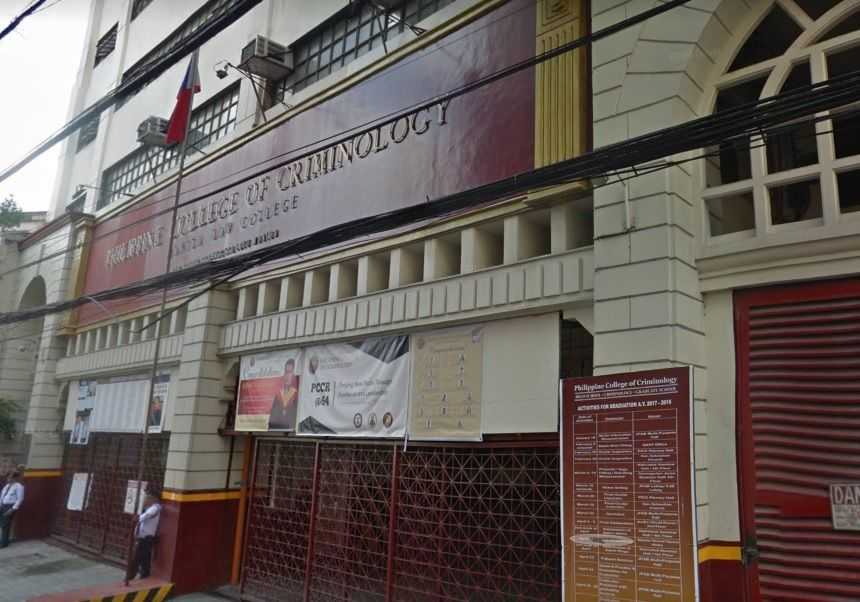
The Philippine College of Criminology (PCCR) has expressed support for National Police Commission (NAPOLCOM) Commissioner Rafael Vicente “Ralph” Calinisan’s call for strict compliance with traffic laws, following a reported incident involving a PCCR intern allegedly riding a motorcycle without a protective helmet.
In an official statement, PCCR said it firmly supports Calinisan’s position, stressing that aspiring law enforcement officers must demonstrate respect for the law even before entering the police service.
“As an institution entrusted with developing future law enforcement professionals, PCCR maintains that those who aspire to enforce the law must first demonstrate and abide by it,” the college said.
“We do not condone violations of traffic laws or any conduct inconsistent with the discipline, integrity, and professionalism expected of our students,” it added.
PCCR said an institutional investigation is ongoing to establish the facts surrounding the reported incident and determine possible accountability.
The college is also coordinating with Silinyador PH to obtain relevant information and clarify the circumstances of the incident. Any disciplinary measures, it said, will be implemented in accordance with institutional policies and due process.
The controversy follows Calinisan’s earlier warning that traffic violations committed by criminology students and interns could jeopardize their prospects of joining the Philippine National Police (PNP).
In his previous remarks, Calinisan called for greater accountability among aspiring law enforcement officers and urged the public to report traffic violations to NAPOLCOM so authorities could identify and address reported misconduct.
He also emphasized the need to screen future police officers properly, improve criminology curricula, and prevent institutions from prioritizing diplomas over the development of competent and disciplined graduates.
“Salain ang dapat salain. Ayusin ang curriculum. Wag diploma mill. Nationbuilding is everyone's responsibility,” Calinisan said.
PCCR said it has long implemented monitoring measures and issued memoranda reminding students to comply with traffic laws and institutional regulations.
The college added that it has strengthened its Office of Student Discipline to improve monitoring, enforcement, and the imposition of appropriate disciplinary action against students found violating applicable laws and school policies.
PCCR also cited road safety discussions during the recently concluded Philippine Cybercriminology Summit 2026 as part of its efforts to promote responsible conduct and public safety.
With more than 5,000 criminology students, the institution cautioned against treating an alleged violation involving one individual as representative of its entire student population.
“Nevertheless, the College will neither dismiss nor trivialize any reported violation. Every substantiated incident shall be addressed through appropriate disciplinary measures, consistent with institutional policies and due process,” it said.
PCCR further confirmed that its president is in direct communication with Calinisan’s office to strengthen coordination and ensure appropriate institutional action.
The college also acknowledged the role of the public and social media in promoting transparency but called for responsible reporting based on verified information.
“Public vigilance and institutional accountability must go hand in hand,” PCCR said.
PCCR said it remains committed to developing “competent, ethical, and disciplined future law enforcement professionals” and vowed to address substantiated violations in accordance with its policies and due process.
