

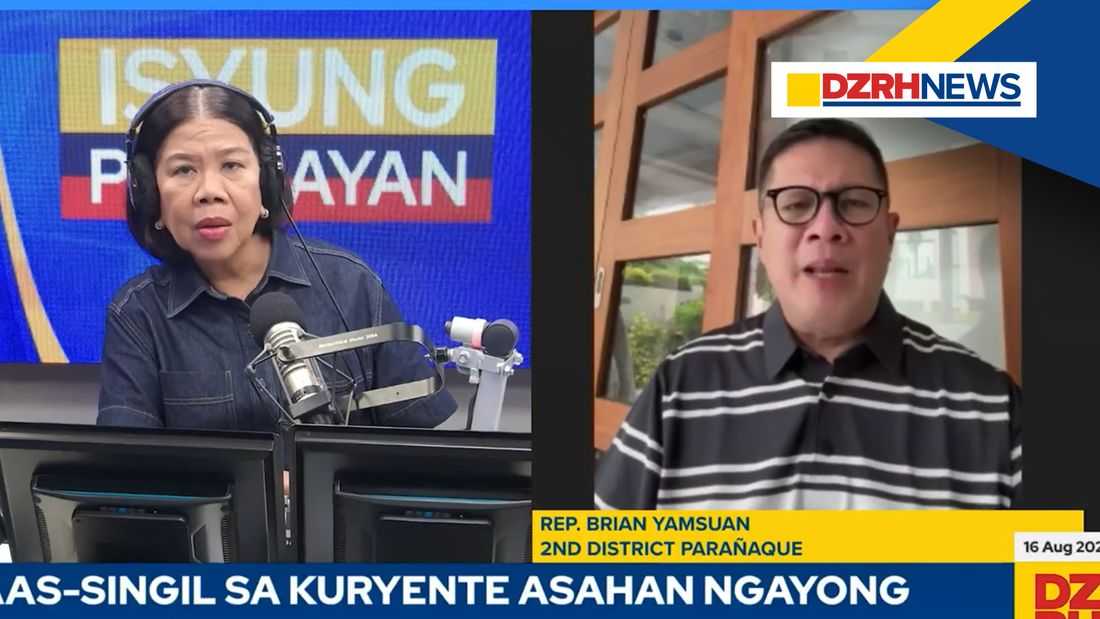
Parañaque 2nd District Representative Brian Yamsuan is pushing for a long-term, science-based urban planning strategy to address recurring flooding in Parañaque, saying the problem goes beyond drainage and requires a comprehensive approach to land use, infrastructure, and environmental management.
In an exclusive interview with DZRH’s Isyung Pambayan, Yamsuan said the government needs a comprehensive master plan that considers local land use, zoning, infrastructure, and the factors contributing to flooding.
“Ito kasi kailangan long-term solution, Kailangan yung science-based urban planning na ang titignan natin. Kasi kailangan may comprehensive master plan na tayo na tututok talaga dun sa yung focus niya, yung local land use, yung zoning, yung infrastructure,” Yamsuan said.
He proposed a “B.E.H.” approach, which stands for Behavioral, Environmental, and Historical factors, to guide flood-control planning.
Yamsuan said the behavioral component should examine population growth, settlement patterns, and waste disposal practices that may contribute to blocked waterways. The environmental aspect, meanwhile, should study how water flows, where it collects, and the condition of catch basins, drainage systems, and creeks.
“Every flooding incident na titignan mo, data yan eh. Data yan na pwede mo magamit para masolusyonan mo yung problema,” he said.
For the historical aspect, Yamsuan noted that Parañaque's natural characteristics must also be considered in planning and development.
“Kasi kung titignan mo ang Parañaque, historically, ano talaga siya, wetland siya. Asinan yan, asinan 'to kasi. Naturally talagang low-lying conditions,” he said.
Yamsuan also emphasized the importance of proper zoning and land-use policies in determining where structures and businesses should be allowed to operate. He pointed to the proposed Parañaque Spillway, which would connect Manila Bay and Laguna de Bay, as one possible measure being studied to help address flooding.
He cited flood-management practices in other countries, including open spaces and parks in Copenhagen, advanced drainage systems in Singapore, and underground water detention facilities in Japan, as examples that the Philippines could study and adapt.
“Hindi pa pwedeng lagay lang tayo ng lagay ng proyekto na walang overall solution sa lahat ng problema natin,” Yamsuan said.
He stressed that flooding requires cooperation among neighboring localities, including Parañaque, Muntinlupa, Las Piñas, Bacoor, and San Pedro, to ensure that flood-control projects are coordinated and that public funds are used effectively.
“Kailangan magtulong-tulong kaming lahat upang maisaayos namin yung mga programa para yung pera ng taong bayan hindi nasasayang,” he said.
