


Charmaine Cayabyab, 20, can hardly recall the first time that her mother left the country to work overseas. Details on the day of her mother’s first flight to Qatar were fuzzy; with her only being around 10 or 11 years old, she said that what she remembers clearly was feeling upset and questioning why her mother had to work in a different country, or when she would come home. These questions, as she explained, were the things she had in mind, all while longing for her mother’s presence growing up.
“Kasi nag lo-long po tayo sa mother’s presence natin. [Every] now and then, hindi pa rin nagbabago ‘yung feeling na masakit kasi kailangan mag-ibang bansa si mama. Pero kailangan i-accept din at the same time kasi nga, kung hindi, walang mapapakain,” she explained.
“Hindi po kami mapapakain ng mababang sahod dito sa Pilipinas,” she added.

Charmaine Cayabyab had always longed for her mother's presence growing up.
Filipinos have a long-standing history of migration to various countries in search of employment or to provide better living conditions for their families. In the 1970s, the late President Ferdinand Marcos Sr. introduced the Labour Export Policy (LEP) to address the crisis of joblessness, underemployment, and poverty, while reaping economic benefits from the dollar remittances of migrant workers.
The LEP was created as a temporary solution. Once the crisis of socio-economic unrest had been solved, the said intervention would eventually be withdrawn. Decades later, the LEP continues to be used as a means for economic survival.
According to the Philippine Statistics Authority (PSA), there were about two million overseas Filipino workers (OFWs) recorded from 2022 to 2023. More than half of the said population are women who are mainly engaged in elementary occupations.
Charito Cayabyab, 51, is a mother of three and a domestic helper working in Doha, Qatar. She is also Charmaine’s mother and had previously worked in the Philippines, taking on different jobs to help out her husband.
“Before siya mag abroad, nasa probinsya po kami. And si mama, iba’t iba ‘yung racket niya. Taga benta ng isda, taga laba ng kahit ano po..sobrang hardworking talaga ni mama,” Charmaine recalled.
Despite juggling several rackets, Charlito admitted that earning minimum wage in the Philippines is not enough.

Charmaine recalls her mother taking on different jobs to help the family out.
Migration and Motherhood
“Hindi po kasi sapat ang sweldo sa Pilipinas, dahil alam niyo naman po na mura lang ang sahod dyan [sa bansa],” Charito stated, citing this as the reason why she and her husband decided that one of them should work overseas.
According to Charito, they had initially planned for her husband to work overseas. However, it was she who ended up getting a call back from an agency she applied to, after her husband did not pass the medical examination to be a seafarer.
Although it was a difficult process, Charito said the only thing she prayed for at the time was for her to pass all the requirements, including being deemed fit to work, specifying how she had to travel everyday from Las Piñas to Pasig City.
“Noong time na ‘yon hindi ko inisip yung pagod, hindi ko rin inisip yung pera. Basta inisip lang namin matapos lahat yung pag process [ng requirements],” she said.
The test results indicated that she was fit to work, which meant that she would be flying out of the country for work soon. Although Charmaine could hardly recall the day her mother first flew to Qatar, Charito could vividly remember their conversation at the time.

Charito Cayabyab says she's very thankful for her three children for being understanding.
“Nung time na yon, sabi nila, ‘wala ka na mama.’ Sabi ko, ‘hindi naman ako mawawala. Kumbaga, wala lang ako sa tabi niyo,’ sabi ko sa kanila,” Charito recalled.
“‘Yun sinabi ko sa kanila, [na] para sa inyo naman ito. Hindi naman ako naghahanap-buhay doon sa ibang bansa dahil lang sa aking sarili. Para sa inyo po ito,” she added.
What Remains at Home
Charmaine and her siblings grew up only seeing their mother once a year, a common experience for children with OFW parents. Because their father is also busy working, Charmaine said that it was her “ate” (elder sister) who mostly attended her and her brother’s school events. From an early age, they understood why they had that kind of setup in their family. But like any kid, Charmaine also had moments when she missed the little things about her mom.
“Growing up, nakikita ko ‘yung mga friend ko na kasama ‘yung mama nila. Kunyari [nag] top sila sa school. Siyempre, as a kid, nainggit ako,” she expressed. “Nainggit ako sa mga batang uuwi sa bahay nila galing school, na hahanapin nila ‘yung mama nila, ‘yung papagalitan ka pagka pasaway [ka].”

A portrait of the Cayabyab family.
Even if they communicate through video call, Charmaine said that there are times when she wishes she could see her mother’s reaction past a phone screen. She recalled her mother’s proud reaction when she showed the certificate she had from getting second place at a school quiz bee. “‘Yun yung gusto ko nafi-feel pagka may na-achieve ako kaysa sa video call lang.”
Instead of discouraging her, the experience became a source of motivation, pushing her to excel academically to honor her mother’s sacrifices.
A particular milestone that Charmaine wished her mother witnessed was her Senior High School graduation. She said that her sister cried and felt that her mother would have cried too if she were there with them.
According to Charmaine, she had several achievements, especially during 11th Grade. “And siyempre as a kid, ‘yung mga mama nila andon noong Grade 11. ‘Yung proud na proud kahit walang medal, paano pa kaya ‘yung sa akin, na hindi naman ganoon karami pero I think proud pa rin naman sa akin si mama kahit ganoon, kahit wala siya doon. Kaya okay lang,” she stated.
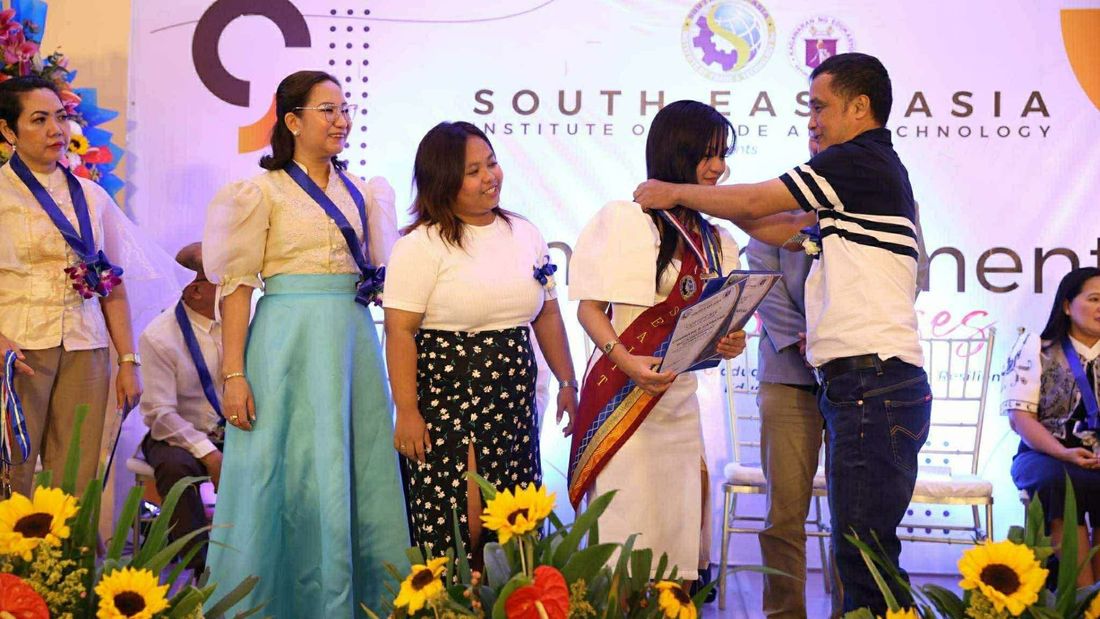
Charmaine was accompanied by her father and elder sister onstage during her Senior High School graduation.
Although their parents did not pressure them to excel, Charmaine carried a different load.
“Kasi iniisip namin na gusto ko lumaki agad..para magka work na din ako. Para makatulong sa bahay. Para makatulong sa pagpo-provide and makauwi na si mama [dito sa Pilipinas] eventually,” she said.
Celebrating without Mama
Charito would often fly back home in the middle of the year, either in June, July, or August, as it coincides with school vacation in Qatar. For a month, she gets to spend time with her children and husband.
There is no occasion whenever she comes home, she said. Her children’s birthdays fall in March, December, and November; While Christmas and New Year’s are celebrated during the final month of the year. She also mentioned being unable to attend her children’s graduation ceremonies.
However, there was a time that they celebrated her 50th birthday in advance while she was home.
“Sabi nila, ‘mag celebrate na lang tayo dito mama habang wala pa yung birthday mo, tutal this year is your birthday. I-celebrate na lang natin.’ Kasi nakauwi ako ng August noon, September 1 bumalik na ako [sa Qatar],” Charito said.
Although she cannot celebrate most occasions with her family, she said that her children do not hold any grudges against her and are very understanding when it comes to such matters.
“Very thankful po ako sa aking mga anak dahil ganun po sila. Hindi po sila yung mga very demanding,” she expressed.
Charito recalled that there was a time when she saw Charmaine’s exam results because the latter’s account was linked to hers.
“Yung result po ng exam or mga pre-test niya, naandito po sa akin. Nakikita ko po. Nag notify po sa akin. Kaya sabi ko, anak galingan mo pa, alam ko namang kayang-kaya mo ‘yan,” Charito said.
“Wala silang ibang hiling kundi ‘yun lang. Mga kaunting mga halaga [ang] hinihiling lang nila. Iyon, binibigay ko naman din kasi ayaw ko rin naman na sila po ay kumbaga ma-disappoint sa mga [kahilingan] nila,” she added.
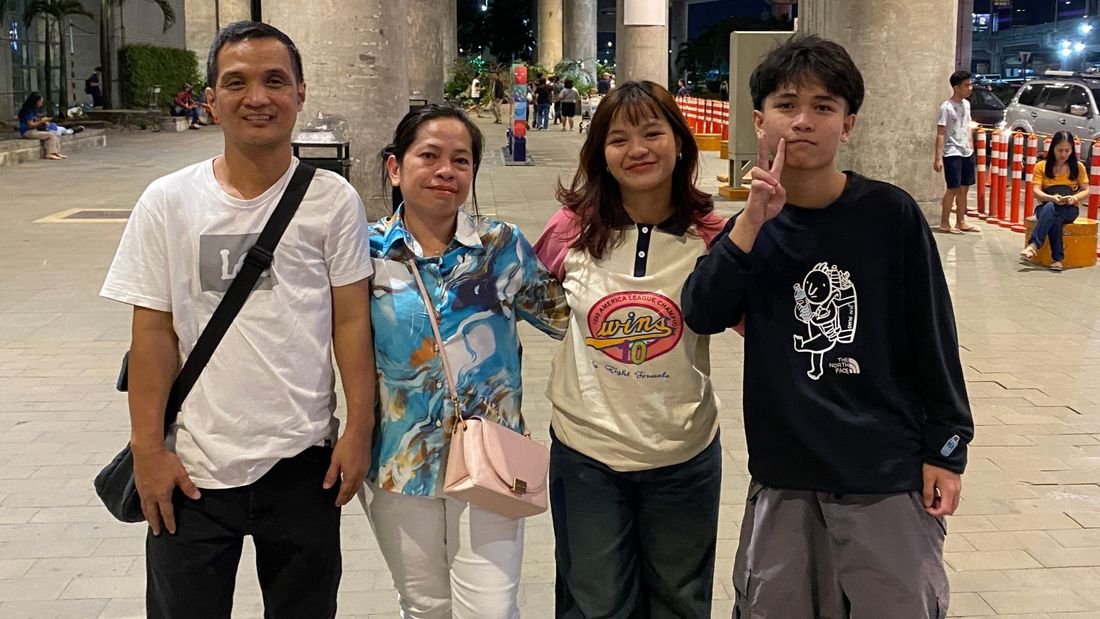
For Charmaine, her biggest goal remained the same throughout the years: have her mother come home for good.
Filipino migration, however impressive for the country’s economy, understates the effects it has on children who often grow up apart from one of their parents. A Social Weather Stations (SWS) survey in December 2022 found that 7% of Filipino households have a family member currently working overseas as an OFW. Meanwhile, another 7% of the surveyed population said they are seeking work abroad, with Canada topping the survey and Qatar falling into the sixth most-mentioned country.
In a society where individuals are often lauded for their resiliency and being “madiskarte” (a resourceful or strategic person), a silent call for the government echoes through. For Charmaine, families don’t always have to work around the circumstances that they are given.
“I want to thank you [mama] for this opportunity and this interview. Kasi makikita ng mga tao kung gaano ka-hardworking, hindi lang si mama, kundi lahat ng OFW,” Charmaine expressed. “Again, hindi ko naman ito ni-ro-romanticize and hindi ko ini-encourage lahat ng mga Filipino na mag-ibang bansa din.”
“It’s a call din para sa government natin na matagal nang hinaing ng mga manggagawa na dapat taasan ang sahod para hindi na din maranasan ng ibang bata ‘yung nararanasan ko. Gayundin sa mga ina at ama na kailangan mag-sacrifice para lang makapag-provide,” she said.
An Ideal Celebration
If Charito could come home for Christmas, Charmaine said she would want to celebrate it in their province with their extended family. They would order lechon and set up a karaoke machine because her mother is fond of singing, she said. And although celebrating Christmas or any occasion as a complete family is important, Charmaine said that she would always reminisce about a particular event.
“Kung may babalikan po akong memory, siguro po ‘yung every time na uuwi siya. Iba po kasi ‘yung ngiti, ‘yung saya pagka uuwi si mama. Para siyang nanalo sa lotto. The same thing sa aming mga anak niya,” she recalled.
“We’re the happiest pagka andito po siya sa Pinas,” she added.
WATCH THE FULL INTERVIEW
