
In today’s fast-moving digital landscape in the Philippines, social media has become more than just a space for news and entertainment—it has turned into a powerful battleground for information, opinion, and influence. As political discussions intensify and online content spreads at lightning speed, concerns over misinformation and biased narratives continue to grow.
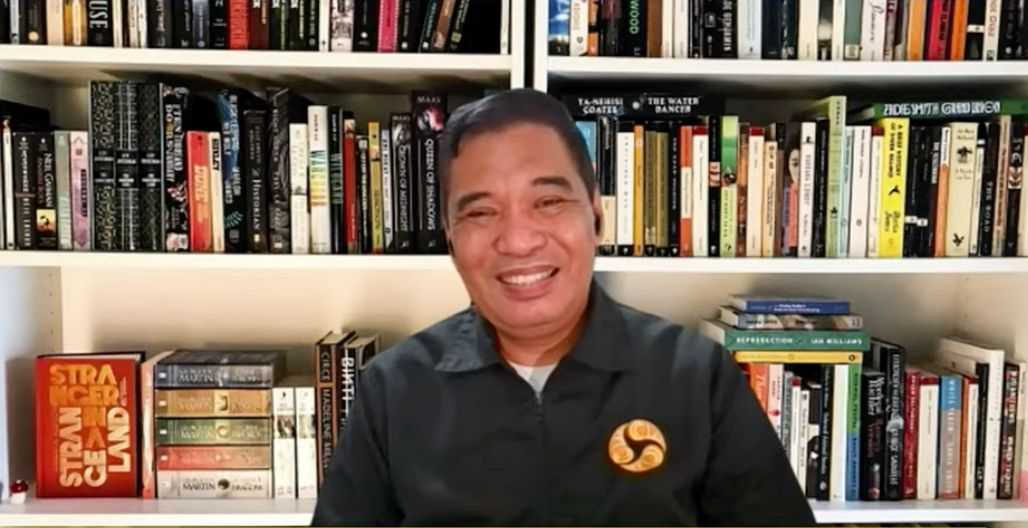
Against this backdrop, Journalism Professor Danilo Arao of the University of the Philippines explained the emergence of “hyperpartisan vloggers” and their role in shaping public perception in an increasingly polarized media environment.
In an interview on DZRH on Sunday, Arao described hyperpartisan vloggers as content creators who prioritize narratives aligned with their political or personal interests, often at the expense of truth and accuracy.
“Wala silang pakialam kung tama o mali ang impormasyon basta ito ay naaayon sa kanilang naratibo,” he said, linking this behavior to the concept of confirmation bias in communication theory.
Arao warned that disinformation has become a source of income for many online personalities, not only in the Philippines but also globally. He described the current information environment as “volatile and vulnerable,” with audiences more susceptible to manipulation due to increasingly sophisticated methods of spreading false information.
He added that some groups deliberately distort narratives to discredit legitimate media institutions.
“May nakikinabang sa disimpormasyon dahil nais nilang guluhin ang naratibo at i-discredit ang media,” he said.
Gaps in official communication, he noted, also contribute to the spread of fake news, as the lack of accessible and timely information from the government leaves room for speculation and misinformation.
Political interests and viral content
Arao said disinformation is often driven by political interests, including early positioning for future elections such as in 2028. He emphasized the importance of asking, “Sino ang nakikinabang?” when evaluating questionable content online.
He also described social media as a “double-edged sword”—a platform that can inform but can also be weaponized to spread falsehoods.
Content that triggers strong emotions such as anger, fear, or shock tends to gain more traction, making it easier for misleading information to go viral.
Professional media vs. hyperpartisan vloggers
Arao highlighted key differences between professional journalists and hyperpartisan vloggers.
He said journalists are guided by ethical standards and are expected to correct their mistakes transparently.
“Nagkakamali rin ang media, pero ina-acknowledge at kino-correct ito. May accountability,” he explained.
In contrast, he noted that hyperpartisan vloggers often refuse to admit errors, sometimes deleting incorrect content without issuing corrections or apologies.
He stressed that journalism is anchored on factual and contextual accuracy, while hyperpartisan content often lacks a clear commitment to truth.
Strengthening media literacy and accountability
To combat disinformation, Arao underscored the need for stronger fact-checking efforts, as well as broader media literacy and education initiatives. He called for collaboration between news organizations and academic institutions such as the University of the Philippines.
He also urged continued engagement with social media platforms to promote responsible gatekeeping of information.
For media practitioners, Arao emphasized the importance of critical reporting, asking tougher questions, and ensuring transparency—particularly in disclosing ownership and potential conflicts of interest.
He encouraged journalists to continue learning and adapting, regardless of experience.
“Dapat siguraduhin natin na yung media literacy at yung media education ay kinukuha ng lahat, including journalists and media workers. Huwag nating isipin na porke matanda na tayo o mga beterano na tayo ay hindi na natin kailangang matuto,” he said.
