
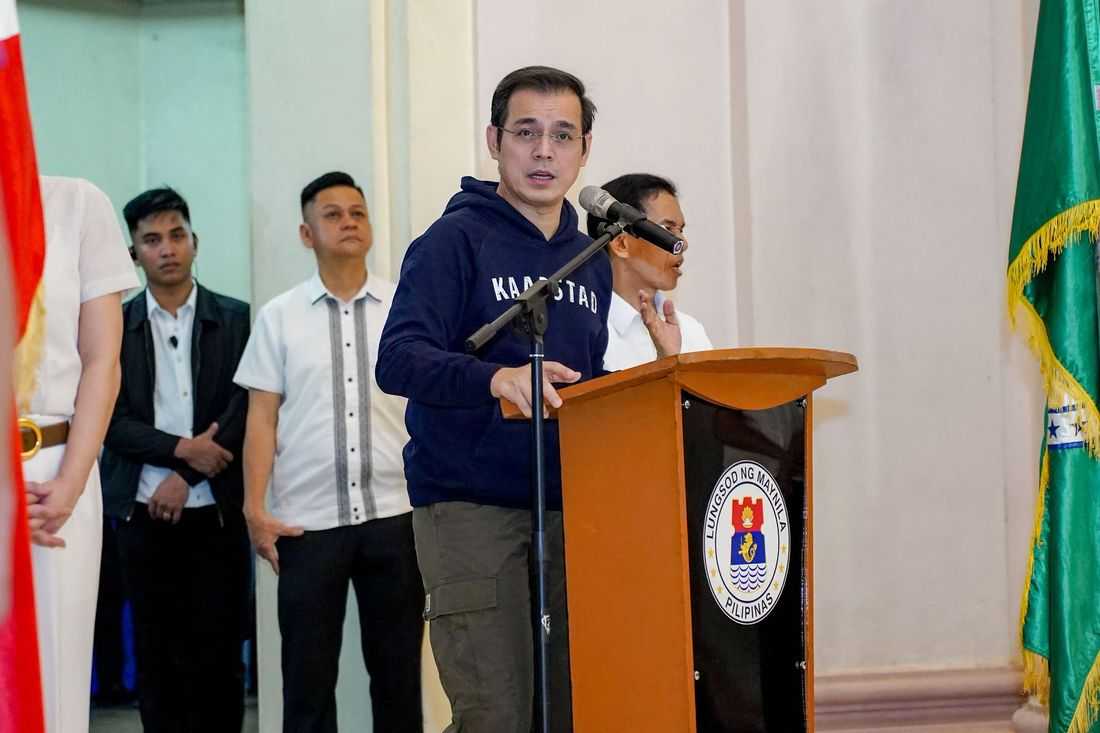
The City Government of Manila on Monday, October 5, officially began implementing its enhanced No Contact Apprehension Program (NCAP 2.0), with Mayor Francisco “Isko” Moreno Domagoso warning motorists—including government employees—that traffic violations will no longer be easily evaded.
“You cannot argue with technology. We may argue with our enforcers, but with technology, huli. Sa huli, walang lusot,” Domagoso said during the city’s flag-raising ceremony.
The mayor recalled that the program was first implemented during his previous term and resulted in hundreds of thousands of motorists being apprehended for traffic violations.
Under NCAP 2.0, upgraded high-resolution cameras will be used to capture clearer images of traffic violations.
However, the city government clarified that a camera capture alone does not automatically constitute a violation. Each incident will first undergo review and validation by authorized NCAP personnel before a Notice of Violation is issued.
Fines and penalties will follow the Metro Manila Traffic Code of 2023, while motorists who wish to contest a violation may file a protest online through the NCAP portal.
Valid fines may also be settled online or in person at the local government unit where the violation occurred.
Domagoso urged motorists, particularly government workers, not to ignore notices sent to their homes.
“Huwag na huwag ninyong tatalikuran ang notice na darating sa inyong bahay dahil hindi niyo na ho matatakbuhan iyan at iyan ay mag-a-accumulate lang ng penalty,” he said.
The mayor also emphasized that NCAP 2.0 is intended to apply equally to motorists regardless of social or economic status.
“Protektado ang mahihirap, protektado ang middle class, at protektado ang mayaman sapagkat dito sa non-contact, lahat pantay-pantay,” Domagoso said.
He added that the system would also minimize opportunities for motorists to negotiate directly with traffic enforcers over violations.
“Wala na kayong mapapakiusapan or maaareglong enforcer,” he said, while also urging traffic enforcers to comply with traffic rules and enforcement procedures.
Domagoso reiterated that the program applies to everyone, including officials and employees of the government.
“Ang non-contact apprehension ay aplikable sa lahat ng tao, anuman ang katayuan nito. Kaya tayong mga nasa pamahalaan ay maging ehemplo nawa ng pagsunod sa mga batas trapiko,” he said.
