

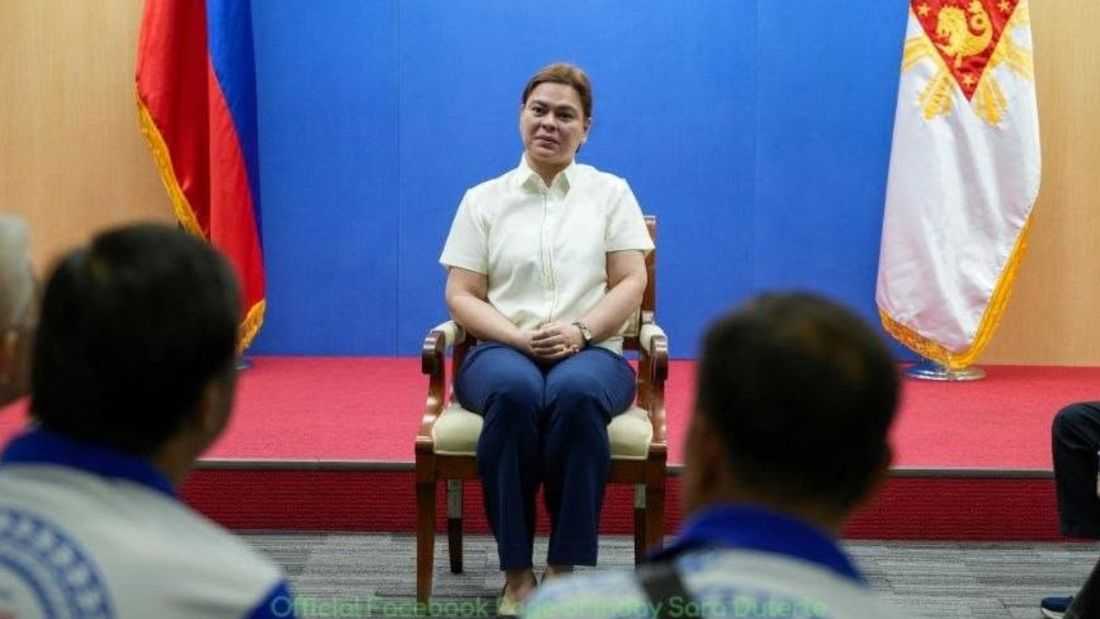
Vice President Sara Duterte has no immunity from criminal prosecution and may face a separate grave threats case despite the ongoing impeachment proceedings against her, Atty. Domingo “Egon” Cayosa, a former president of the Integrated Bar of the Philippines (IBP) said on Monday.
Speaking on DZRH’s Dos Por Dos, Cayosa said the Constitution grants temporary immunity from suit only to a sitting Philippine president, not the vice president.
“Pwede naman na kasuhan pa rin siya ng grave threats sapagkat ang Vice President naman hindi immune sa suit if she is in office,” Cayosa said.
He explained that impeachment and a criminal case are separate proceedings with different purposes, courts, legal bases and standards of evidence.
Impeachment is the constitutional process for removing a high-ranking government official from office, while the grave threats case is a criminal proceeding before a Regional Trial Court and is based on Article 282 of the Revised Penal Code, Cayosa said.
He added that the grave threats allegation may serve as an example of an alleged betrayal of public trust in the impeachment proceedings, but the criminal offense itself remains separate from the impeachment charge.
“Yung impeachment, ‘yan lang ang pamamaraan kung mataas na opisyal ka ng gobyerno kung paano ka maaaring tanggalin sa puwesto,” Cayosa said.
Cayosa said the difference also extends to the required level of proof. Impeachment requires convincing evidence, while a criminal case requires proof beyond reasonable doubt because a conviction may result in imprisonment and other penalties, including perpetual disqualification from holding public office.
In contrast, an impeachment conviction results in removal from office and does not carry imprisonment as a penalty, he said.
Cayosa also said the rules on double jeopardy and forum shopping would not prevent the grave threats case from proceeding because the impeachment and criminal proceedings involve different forums, processes, evidence and outcomes.
“It will not apply, yung double jeopardy dahil nga doon sa nabanggit kong mga rason, magkaibang korte, magkaibang proseso at magkaiba ang resulta, magkaiba ang ebidensya,” he said.
He said it would also not create a legal conflict if Duterte were convicted in the criminal case but acquitted in the impeachment proceedings, noting that impeachment is not purely judicial but also has a quasi-political character.
Cayosa further pointed out that an impeachment decision is final and cannot be appealed to the Supreme Court, while a criminal conviction by a trial court may be appealed to the Court of Appeals and, in appropriate cases, to the Supreme Court.
He said there is therefore no legal obstacle to proceeding with the grave threats case while the impeachment proceedings are ongoing.
“Oo, pwedeng sabay,” Cayosa said when asked whether the two proceedings could proceed simultaneously.
