
CAIRO/DUBAI, July 15 (Reuters) - The U.S. struck Iran's coastal defenses and missile sites on Wednesday after reimposing a naval blockade of its ports, while Iran threatened to shut off more regional energy exports, saying it was engaged in an "existential war" with America.
The latest escalation comes days after a fragile truce collapsed, raising the specter of a return to full-scale war, though analysts generally see that as less likely.
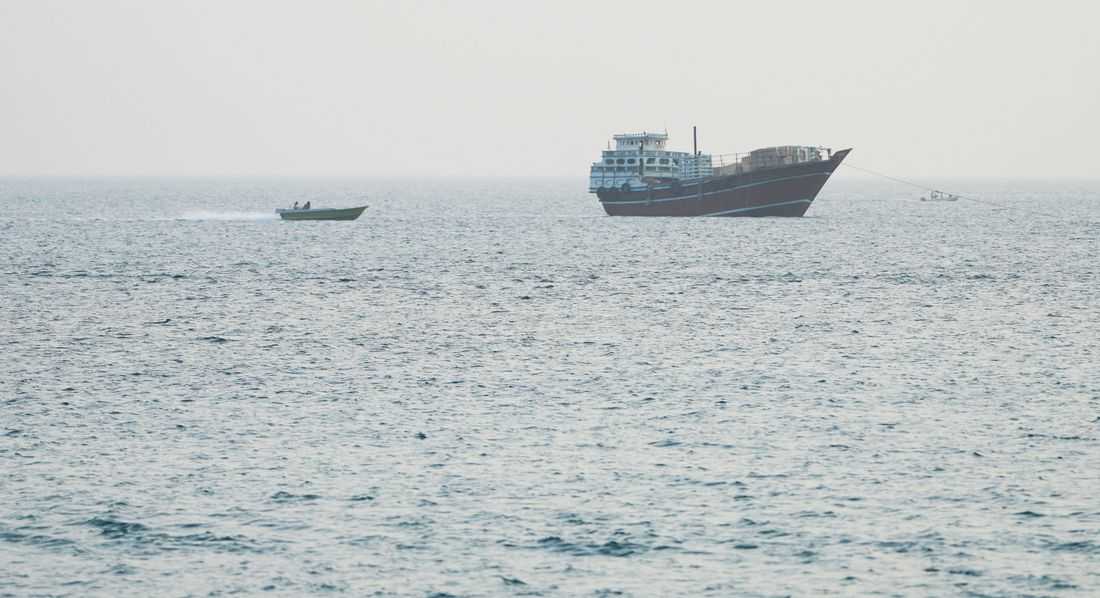
Hostilities have intensified since Iran said late on Saturday it had closed the Strait of Hormuz. Military operations are also keeping ships from transiting the vital artery, which carried about a fifth of global oil and gas shipments before the war. Brent crude oil, the international benchmark, closed at a one-month high at $84.95 a barrel on Wednesday.
U.S. Central Command said the military had attacked coastal defense systems and cruise missile storage and launch sites on Iran's Greater Tunb Island starting around 6 a.m. EDT (1000 GMT), and had completed the wave of strikes within around 90 minutes.
Nine hours later, Central Command reported a second wave of strikes.
"The strikes are targeting Iranian military capabilities used to threaten vessels freely transiting through the Strait of Hormuz, an international waterway vital to global commerce. The U.S. military is holding Iran accountable at the Commander in Chief's direction," Central Command said on X.
Three U.S. officials told Reuters that U.S. strikes aimed at forcing open the strait are also targeting Iranian military capabilities the U.S. would want to destroy before executing more complex operations.
The U.S. military also said it disabled an unladen oil tanker attempting to sail toward Iran's Kharg Island after it ignored multiple warnings, firing Hellfire missiles into the ship's smokestack. Since resuming a naval blockade against Iran on Tuesday, the U.S. has redirected two ships and disabled another, the military said.
Following the latest round of strikes, Iran's Mehr news agency said four locations around the city of Ahvaz came under attack, just inland from the northern end of the Persian Gulf, as did Bandar Abbas, Iran's principal port city on the Strait of Hormuz. In neither case were casualties reported, Mehr said. Iran's Tasnim news agency said explosions were heard in Konarak city, at the southern end of Iran on the Gulf of Oman.
U.S. projectiles also hit near Sirik and Qeshm in southern Iran, according to Iran's semi-official media.
Iranian state broadcaster IRIB, however, reported that the U.S. attacks struck near a hospital in Ahvaz that houses a pediatric cancer center, forcing the temporary evacuation of the hospital. Families have come out to the streets around the hospital to care for their children, IRIB said.
After the first wave, which Iran said hit a location on its Hengam Island in the strait, Tehran's top negotiator Mohammad Baqer Qalibaf issued a statement declaring that Iranian security depended on maintaining what he called "Iranian arrangements" in the strait.
"We are in an essential and existential war with America," Qalibaf said.
The war has killed thousands of people and displaced millions, mainly in Iran and Lebanon, where conflict restarted between Israel and Iran-backed militant group Hezbollah. In July alone, U.S. attacks have killed 35 people, Tasnim reported, citing a health ministry official.
TRUMP SAYS IRAN WANTS TO SETTLE
Trump struck a triumphant note, as he has repeatedly since the U.S. and Israel started hostilities on Feb. 28, saying, "We'll have Iran defeated soon. They'll be defeated very soon."
Speaking at a roundtable event at the Pennsylvania Defense and Innovation Summit, Trump also claimed the Iranians want to "settle so badly."
"They don't like what we're doing, and they do want to settle. We'll find out whether or not we settle with them, or we just finish it off," Trump said.
On Tuesday, Trump said U.S. negotiators had been in touch with their Iranian counterparts to tell them "you better make a deal."
Iran's military spokesperson said that the only way to reopen the Strait of Hormuz was for the U.S. to comply with the 14-point memorandum of understanding that the two sides signed in June, and the implementation of "Iranian regulations" regarding ship traffic in the strait.
IRAN THREATENS OTHER SHIPPING ROUTES
Iran has been trying to assert permanent control over shipping in the strait and to impose fees on vessels passing through it, in what would be a major shift in the balance of power in a region where the U.S. has long acted as guarantor of security.
The Islamic Revolutionary Guard Corps said on Wednesday it had struck U.S. military targets in the region, including in Bahrain, Kuwait and Jordan.
Kuwait said its armed forces intercepted four missiles and 21 drones from Iran on Wednesday, but that no injuries or material damage were reported.
The interim deal signed last month was meant to lead to further negotiations including on Iran's nuclear program, and to a permanent truce, but a return to talks has faltered.
"We have no plans for negotiations at the moment and are focused on defense," Tasnim news agency quoted Iranian Foreign Ministry spokesperson Esmaeil Baghaei as saying.
(Additional reporting by Jarrett Renshaw in Carlisle, Pennsylvania, and Muhammad Al Gebaly and Hatem Maher in Cairo; Writing by Aidan Lewis, William Maclean, David Brunnstrom and Daniel Trotta; Editing by Alexandra Hudson, Ros Russell, Sanjeev Miglani and David Gaffen)
