
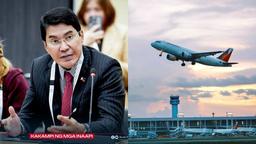
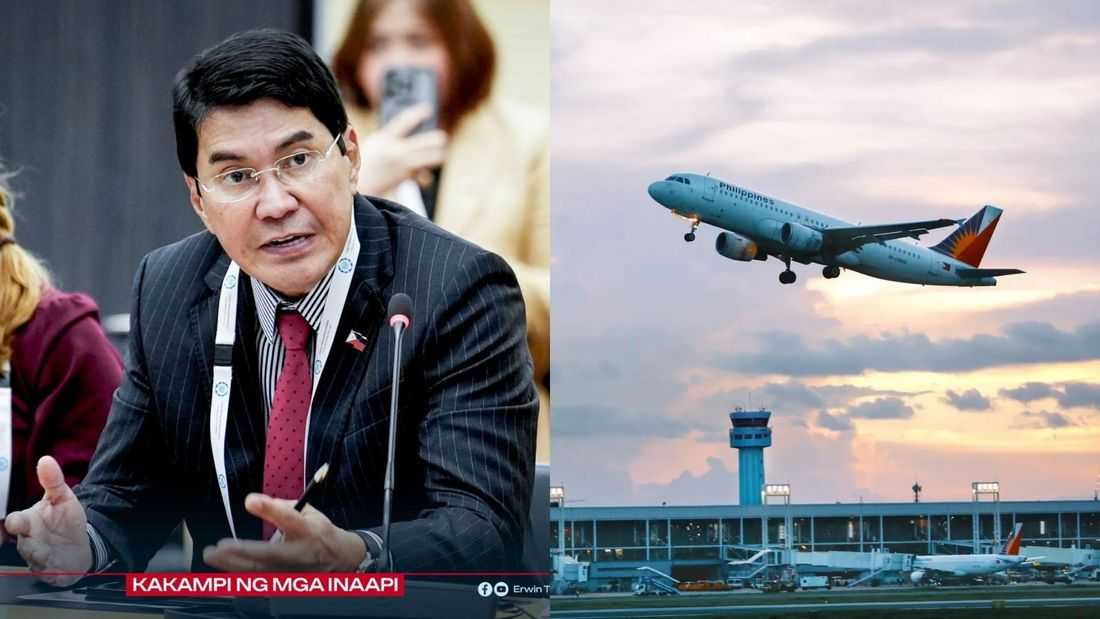
Senator Erwin Tulfo has renewed his call to abolish the country’s travel tax, saying it has long burdened Filipino travelers and made both domestic and international airfares less affordable.
In an interview on DZRH’s Dos Por Dos, Tulfo said the travel tax—₱1,620 for economy class and ₱2,700 for first-class passengers—makes it harder for many Filipinos to travel, whether within the country or abroad.
“How can the government promote local tourism if airfare is too expensive?” Tulfo said in Filipino.
“Many Filipinos haven’t even seen the beauty of their own country because of the high cost of travel.”
Tulfo explained that part of the travel tax collection goes to the Tourism Infrastructure and Enterprise Zone Authority (TIEZA) and the Department of Tourism (DOT) for tourism-related programs. However, he noted that the public rarely feels the benefits of these funds.
“If the collections truly went into improving roads and facilities in tourist destinations, people wouldn’t complain,” he said. “But many still don’t see where these funds are going.”
The senator also supported calls to integrate the travel tax into airline ticket prices, citing frequent cases of travelers being caught off guard at airport counters when informed that the tax has not been paid.
“It’s stressful—especially for families traveling together,” Tulfo said. “Until the bill removing the tax is passed, it should be included in the total ticket cost.”
Tulfo said removing the travel tax altogether would make airfares more affordable, help boost domestic tourism, and allow more Filipinos to visit destinations across the country and internationally.
“Some families save for years just to afford one trip,” he said. “If we remove the travel tax, it becomes easier for them to explore the Philippines—and that benefits local communities and the economy.”
He also urged the government to support air connectivity to lesser-known destinations like Romblon and Camiguin, which have limited flights despite their tourism potential.
“We have so many beautiful places, but people can’t reach them because flights are either expensive or unavailable,” he said. “Sometimes, it’s even cheaper to fly to Hong Kong than to Palawan.”
Under Tulfo’s proposal, the travel tax would be scrapped entirely, while the Department of Tourism and TIEZA would continue receiving funds through the national budget.
Tulfo emphasized that lowering travel costs and promoting accessibility would help strengthen the country’s tourism industry and provide more economic opportunities across regions.
