
By Trevor Hunnicutt and Saad Sayeed
WASHINGTON/ISLAMABAD, April 19 (Reuters) - U.S. President Donald Trump said on Sunday his envoys would return to Pakistan for new talks with Iran, while threatening new attacks on Iran's bridges and power plants unless it accepts his terms.
Trump said the U.S. delegation would arrive on Monday evening, a timetable that leaves just a day for talks to make progress before a two-week ceasefire ends.
"We’re offering a very fair and reasonable DEAL, and I hope they take it because, if they don’t, the United States is going to knock out every single Power Plant, and every single Bridge, in Iran," he posted on social media. "NO MORE MR. NICE GUY!"
However, there was no immediate confirmation from Iran that it would attend any new talks. Iran's Tasnim news agency reported that there had been no decision taken to send a delegation while a U.S. blockade of Iranian ports was in place.
A White House official said the U.S. delegation would be headed by Vice President JD Vance, who led the war's first peace talks a week ago. Trump's envoy Steve Kushner and the president's son-in-law Jared Kushner would also attend. Earlier, Trump had told ABC News and MS Now that Vance would not go.
Iran's chief negotiator, Mohammad Baqer Qalibaf, earlier said the two sides had made progress but were still far apart on nuclear issues and the Strait of Hormuz.
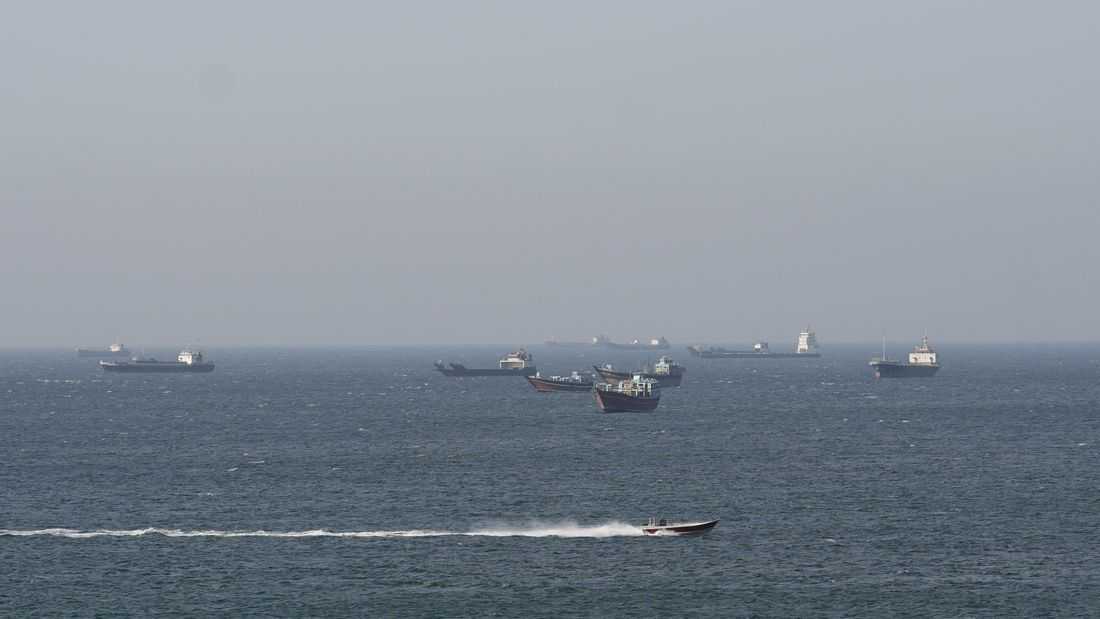
The vital shipping strait remained closed on Sunday, a day after Iran fired on two vessels that tried to cross.
Iran, which has blocked off the strait to ships apart from its own since the United States and Israel attacked on February 28, had announced on Friday it would reopen it. But it reversed that decision on Saturday after Trump declined to lift a U.S. blockade of Iranian ports.
"Iran decided to fire bullets yesterday in the Strait of Hormuz — A Total Violation of our Ceasefire Agreement!" Trump wrote in Sunday morning's post. "That wasn’t nice, was it?"
STRAIT OF HORMUZ STILL SHUT
Trump's renewed threat to hit Iran's power plants and bridges fits a pattern of such warnings throughout the war, several of which preceded moves to de-escalate. He abruptly announced the ceasefire two weeks ago just hours after declaring that Iran's "whole civilisation will die tonight".
Iran has said that if the United States attacks its civilian infrastructure it would hit power stations and desalination plants of Gulf Arab neighbours.
Now in its eighth week, the war has created the most severe shock to global energy supplies in history, sending oil prices surging because of the de facto closure of the strait, which before the war carried one-fifth of the world's oil shipments.
Two liquefied petroleum gas tankers were seen on ship-tracking websites moving eastbound towards the strait early on Sunday morning, but the semi-official Tasnim news agency reported that Iran's armed forces turned them back. Marine traffic data showed no other movements after midnight.
Friday's announcement that the strait would reopen caused the sharpest one-day drop in oil prices in years, while stock markets hit fresh all-time highs on the expectation that the disruption would soon end. But with the strait yet to reopen, markets could face new volatility when they reopen on Monday.
Amrita Sen, founder of the Energy Aspects think tank, predicted oil prices would rise on Monday when traders returned to their desks having realised they might have been prematurely optimistic last week.
“Events over the weekend with Iran firing on merchant vessels and shutting the strait again highlight just how precarious the situation is," she said.
Thousands of people have been killed by U.S.-Israeli strikes on Iran and in an Israeli invasion of Lebanon conducted in parallel. Iran responded to attacks with missiles and drones against its Arab neighbours that host U.S. bases.
PAKISTANI CAPITAL LOCKS DOWN FOR TALKS
Two giant U.S. C-17 cargo planes landed at Pakistan's Nur Khan air base on Sunday afternoon carrying security equipment and vehicles in preparation for the U.S. delegation's arrival, two Pakistani security sources said.
City authorities in the capital Islamabad halted public transport and heavy goods traffic through the city. Rolls of barbed wire were rolled out near the Serena Hotel where last week's talks were held. The hotel told all guests on Sunday to leave.
Pressure for a way out of the war has mounted on Trump as his fellow Republicans prepare to defend narrow majorities in Congress in the November midterm elections, with U.S. gasoline prices high, inflation rising and his own approval ratings down.
When U.S. and Iranian negotiators met last weekend in Islamabad, Washington proposed a 20-year suspension of all Iranian nuclear activity, while Iran suggested a halt of 3 to 5 years, according to people familiar with the proposals.
A statement from Iran's Supreme Leader Ayatollah Mojtaba Khamenei said Iran's navy was ready to inflict "new bitter defeats" on its enemies.
Apart from the two-week ceasefire in the Iran war set to expire early on Wednesday, Israel and Lebanon announced a separate ceasefire last week.
More than a million Lebanese were displaced by the Israeli invasion, which Israel said was in pursuit of Hezbollah, a powerful Shi'ite armed group allied with Iran that fired across the border in support of Tehran.
A French soldier serving in a U.N. peacekeeping mission in Lebanon was killed, and three personnel from the mission were wounded, two of them severely, in an incident U.N. officials said was probably caused by Hezbollah fire. An Israeli soldier was also killed in a separate incident, the Israeli military said.
(Reporting by Reuters bureaus; Writing by Susan Heavey, James Mackenzie and Peter Graff; Editing by Sergio Non, William Mallard, Alex Richardson and Tomasz Janowski)
