
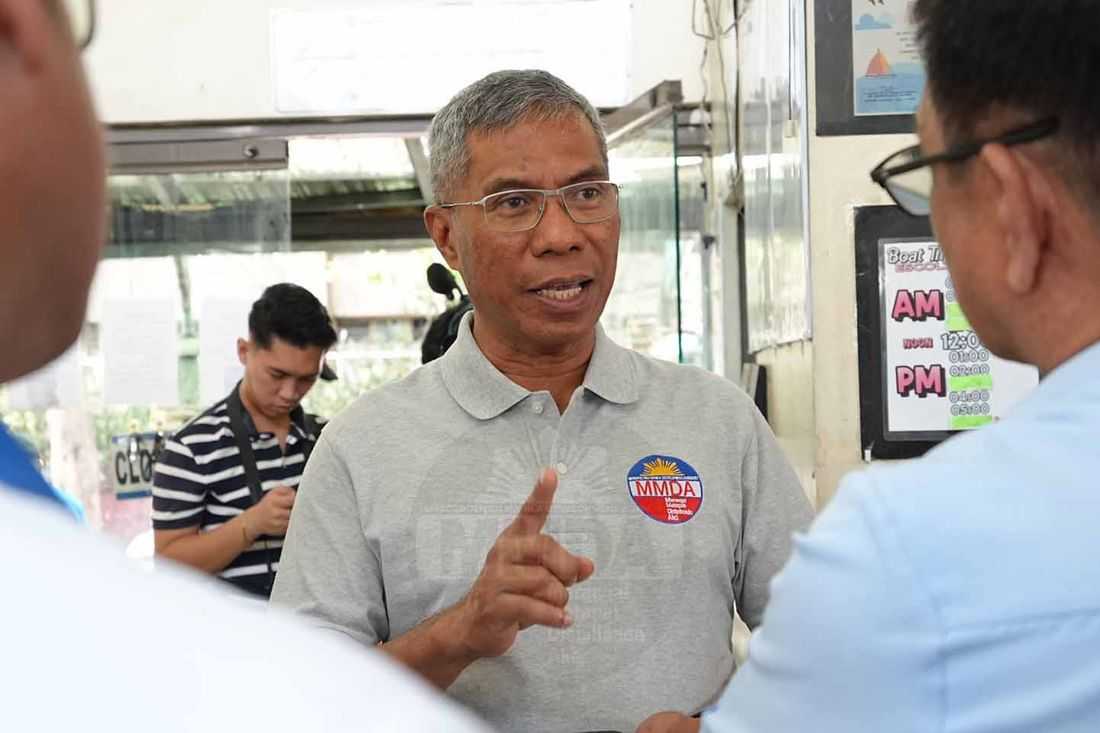
Metropolitan Manila Development Authority (MMDA) General Manager Nicolas Torre III called on government agencies, private companies, and schools nationwide to take quarterly earthquake drills more seriously as part of preparedness efforts for a strong quake expected to hit Metro Manila dubbed “The Big One."
During an interview on DZRH'S Damdaming Bayan, Torre emphasized the need for realistic and consistent participation in earthquake preparedness exercises, particularly in densely populated institutions such as schools.
“Hinihikayat namin ang lahat ng agencies involve, private sectors. Lalong lalo na at isa rin sa ineemphasize natin ang mga eskwelahan natin sapagkat ‘yan po ay may densely packed na mga buildings sa oras ng klase,” Torre said.
“Talagang hinikayat natin ng mga involved dyan na talagang seryosohin at talagang gawin na para bang ito ay makatotohanan. Para pagdating ng aktual ay talagang alam na at muscle memory na lang, alam na ng mga tao kung papaano ang gagawin,” he said.
Torre also highlighted residents in high-rise buildings, particularly condominiums in Metro Manila, as one of the agency’s “primary concerns” in earthquake preparedness.
“'Yung sa mga condominiums talaga, isa yun sa ating mga primary concerns,” he said.
He urged residents to familiarize themselves with building exit points and evacuation plans, including whether they should move upward or downward depending on their location during an emergency.
“Siguraduhin lang po na familiar sila kung saan ang exit points, kung saan ang kanyang evacuation points at kung halimbawa sa ganitong floor sila, ano ang utos sa kanila, pupunta ba pababa o pupunta pataas,” he said. “Para hindi na sila mag-panic pagdating ng actual na incident.”
He further suggested that residents physically practice evacuation drills, including descending from high floors, to better understand the challenges involved.
“At isang pinaka palagi kong meron remind sa ating mga kababayan, subukan nyo po, practice nyo po... Kung hindi mo rin lang magawa ang plano na ibigay sa'yo, parang wala na rin plano,” he added.
Torre also reminded building administrators, maintenance teams, and safety officers to ensure that emergency systems are functional, including ventilation systems in stairwells and emergency exits.
“Pag ang air vents na yan ay hindi gumana ang kahit ventilation at mapuno yan ng usok at pag may sunog, isang malaking problema rin,” he warned.
'Duck, cover, and hold'
The MMDA reiterated the importance of the basic earthquake safety protocol: “duck, cover, and hold.”
He emphasized that these steps are crucial during the initial shock of an earthquake, when most injuries occur.
He also advised the public to familiarize themselves with building safety features upon entry, including exits and emergency procedures, to ensure automatic responses during real emergencies and to avoid panic.
Oplan Metro Yakal Plus
Torre also discussed MMDA’s preparedness program for a major earthquake scenario, known as “Metro Yakal Plus,” which is designed in coordination with local government units (LGUs) and national agencies.
“Ang MMDA ay mayroong Metro Yakal Plus ‘yan po ang ating plano para po sa paghahanda sa dito sa the 'Big One,’” he said.
Under the plan, Metro Manila is divided into four quadrants—north, east, south, and west—to ensure self-sufficiency in case major infrastructure, including bridges, becomes unusable.
The North Quadrant includes Quezon City, Caloocan, Valenzuela, San Juan, and Mandaluyong, with evacuation sites such as the Veterans Golf Course, UP Diliman, and the Quezon Memorial Circle.
The East Quadrant, identified as a high-risk area due to the West Valley Fault, covers Pasig and Marikina, with designated evacuation areas including the Philsports Arena and Marikina Sports Center.
The West and South Quadrants include Manila, Malabon, and Navotas, with designated open evacuation areas such as the Intramuros Golf Course.
Southern Metro Manila areas including Makati, Taguig, Pasay, Parañaque, Las Piñas, Pateros, and Muntinlupa are assigned to evacuation and coordination sites such as Villamor Air Base.
Torre said these open areas will be used to establish evacuation centers, care facilities, and communication hubs, including essential services such as electricity, water, and communications.
He added that MMDA continues to coordinate with LGUs and national agencies to ensure structural standards are followed and that emergency response systems remain interoperable.
“Before ng the 'Big One' [malakas na lindol na tatama sa Metro Manila] ang MMDA ay nakikipag-coordinate sa mga LGU at sinisiguro na ang lahat ng mga standard [sa mga straktura] ay nasusunod together with the concerned national offices at national agencies at pagkatapos kami rin ang nagfa-facilitate ng preparations at nagcoordinate para may siguradong redundancy, interoperability at mga gamit ng bawat LGU ay puwedeng magamit, applicable at kayang i-operate ng iba pang mga LGUs,” he said.
