
Many of the Christmas traditions Filipinos observe today, though seemingly modern, are deeply rooted in the country’s layered history. From customs to cuisine, the season reflects just how much the Philippines has been a cultural melting pot shaped by centuries of influence.
With dishes rooted in Spanish, Chinese, and other foreign traditions, Filipino Christmas fare tells a story of adaptation, while staying true to local taste, available ingredients, and communal values.
Hamon
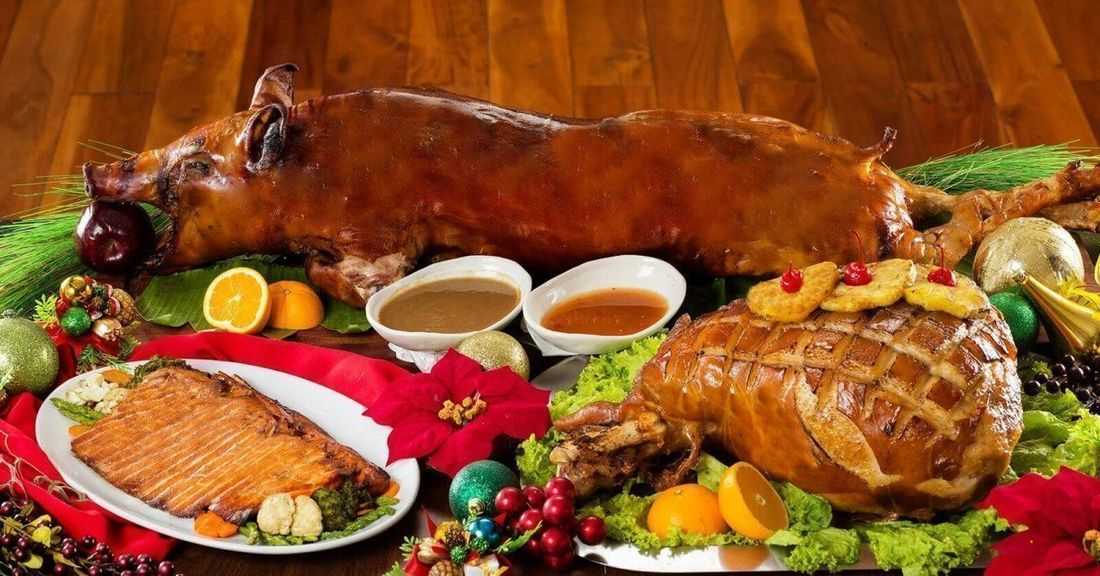
Hamon, dubbed the Star of the Noche Buena, is derived from the word “jamon” in Spanish, who imparted the tradition of serving them at our Noche Buena tables.
According to food historian Jaime Salvador Corpuz, the preserved meat—kept fit for consumption through the long journey from Spain—was presented at feasts following the fast on the evening of Jesus’ birth.
As a mainstay at Friars’ Christmas dinners, hamon became a status symbol. These days, it represents the fruit of the year’s labors, said Corpuz.
Lechon
The word “Lechon,” derived from the Spanish word “leche” for milk, originally meant a suckling pig roasted whole. Filipinos, however, prefer their lechon to be fully-grown pigs roasted over an open charcoal grill, said a health and wellness retailer.
Prior to the arrival of the Spaniards, pigs had already been introduced to the peoples of Southeast Asia and Oceania by the Chinese, who also taught them to cook and roast the animals.
Aside from Christmas time, Lechon is a must-have for the best of occasions.
Lumpiang Shanghai
It isn’t a celebration without the classic Lumpiang Shanghai. It’s present for almost all sorts of parties—whether it be birthdays, baptisms, or the much-awaited Noche Buena.
Lumpiang Shanghai originated as Popiah, which is made with cabbage and other vegetables and traditionally eaten during the Spring Festival in Fujian, China—and not in Shanghai, contrary to its name.
Chinese traders introduced the rolls to the Philippines, where locals gave the dish their own spin, combining meat and vegetables to make fillings, according to a cold store and Philippine importer and retailer.
Pancit
In Filipino tradition, noodles symbolize long life, according to a multinational food and beverage company. A popular Filipino food channel adds that pancit, like Lumpiang Shanghai, came from the Chinese. In fact, its name was derived from the Hokkien phrase “pian i sit,” which roughly translates to “something cooked fast” or conveniently. There are many kinds of pancit, like Pancit Bihon Guisado, cooked with pork, chicken, carrots, snow peas, cabbage, and celery leaves.
Another kind of pancit is the Pancit Malabon, from the City of Malabon. It resembles the Pancit Palabok but features the flavors of the coastal area: shrimp, smoked fish flakes, squid, and, occasionally, oysters and mussels.
Leche Flan
According to a well-known Filipino recipe channel, Catholic missionaries had to find a use for egg yolks, after the whites were used in the construction of Philippine churches (it proved a strong adhesive when mixed with quicklime).
Blended with milk, the yolks were made into “Leche de Flan” or “Flan Milk.” Under Spanish rule, the dessert was a chilled custard with caramelized sugar. With the arrival of the Americans came canned food products like condensed milk and evaporated milk. When incorporated into leche flan, these ingredients produced the rich, dense taste and texture familiar today.
Queso de Bola
The Dutch introduced Filipinos to the Queso de Bola when they fought the Spanish for the Philippines’ colonization, according to the International Food Exhibition. The Edam Cheese, which kept well during extended voyages, was traded by Dutch naval officers not only in the Philippines but in countries such as Mexico, Belize, and Venezuela.
The cheese became the most popular type worldwide between the 16th and 18th centuries.
