
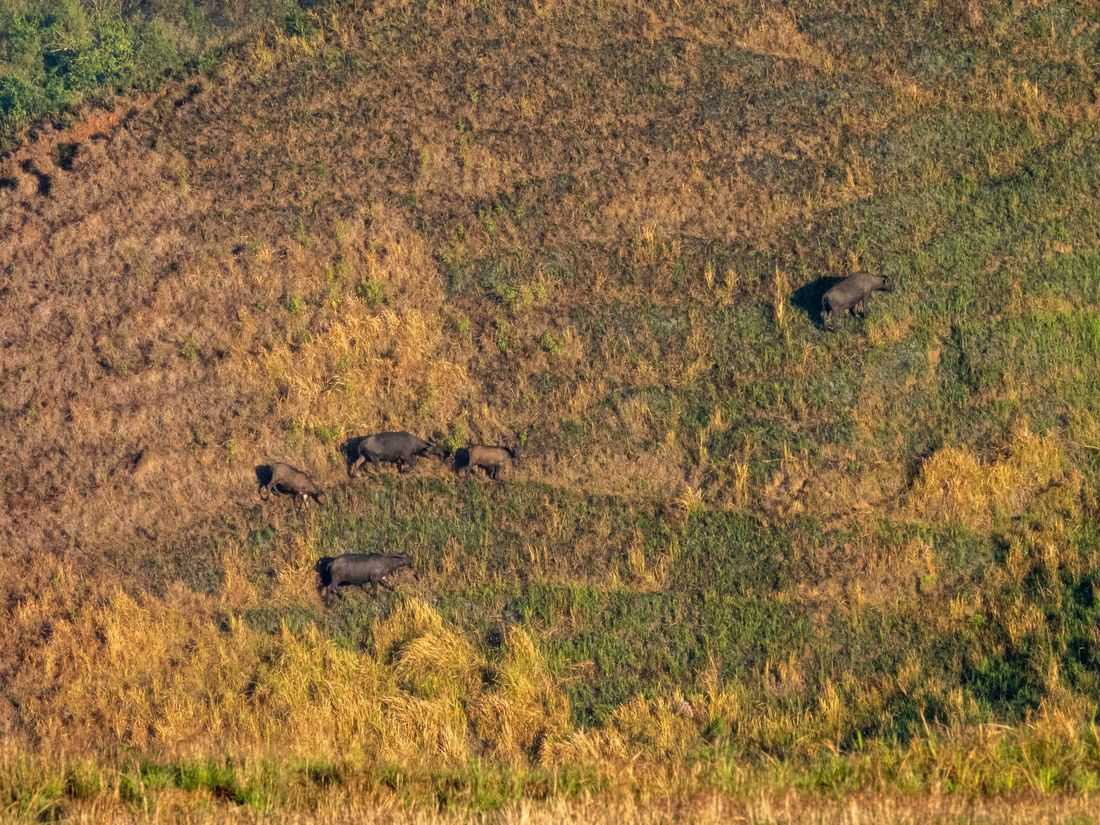
The Department of Environment and Natural Resources (DENR)-MIMAROPA recorded 425 tamaraws during the 2026 Annual Tamaraw Population Count conducted from April 15 to 20 in the core zone of the Mounts Iglit-Baco Natural Park (MIBNP).
Through the Tamaraw Conservation Program Office (TCPO), the latest count represents a 12 percent increase from the 380 tamaraws recorded in 2025 using the same standardized monitoring method.
According to the agency, the latest count confirms that MIBNP remains home to the country's largest known remaining wild population of the critically endangered tamaraw, highlighting the continued success of conservation initiatives in the protected area.
DENR attributed the increase to sustained habitat protection, scientific monitoring, and the continued collaboration among Indigenous Peoples (IP), local communities, local government units, conservation organizations, academic institutions, and other partner agencies.
The annual population survey was carried out simultaneously across multiple vantage points over five days by trained observers from the DENR, the Mounts Iglit-Baco Natural Park Protected Area Management Office, local government units, partner agencies, academic institutions, non-government organizations, and Indigenous Peoples.
"All vantage points recorded sightings this year, including areas with no observations in 2025. The survey also documented adults, sub-adults, yearlings, and calves, indicating ongoing recruitment within the monitored population," DENR-Mimaropa said.
The agency emphasized that the Annual Tamaraw Population Count is a long-term monitoring program that has employed a standardized methodology since 2000, allowing for consistent year-to-year comparisons.
It added that complementary research and monitoring initiatives conducted by conservation partners, using different scientific approaches, continue to strengthen the scientific basis for tamaraw conservation and management.
The tamaraw (Bubalus mindorensis), found only on the island of Mindoro, is classified as critically endangered. Conservation authorities continue to implement protection measures to ensure the species' long-term survival in its natural habitat.
