
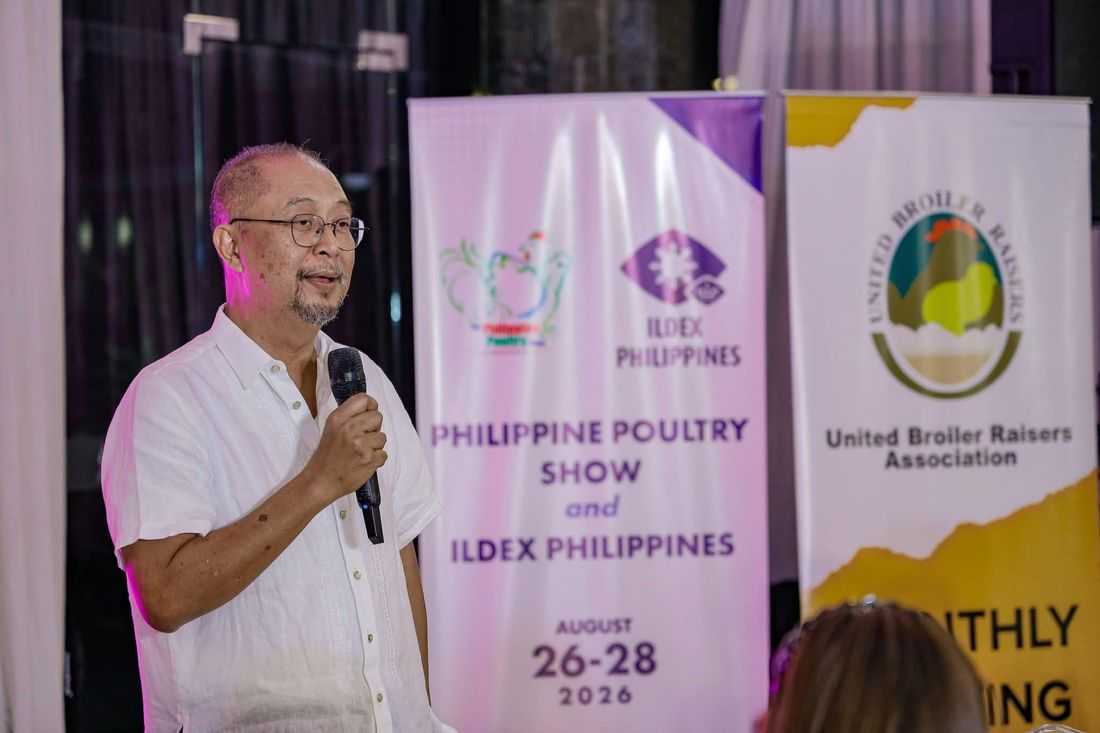
Despite a stable supply of chicken heading into the holiday season, the local poultry sector continues to face significant headwinds driven by weak consumer purchasing power, high operational costs, and an influx of imported goods, according to the United Broiler Raisers’ Association (UBRA).
During an interview on DZRH on Sunday, UBRA Chairman Atty. Bong Inciong pointed out that while farmgate prices fluctuate based on seasonal breeding cycles and preparations for the Christmas holidays, the broader economic reality reflects a profound "disconnect" between farmgate and retail prices.
According to Inciong, many small and medium-scale producers have been forced to exit the industry over the past decade due to unsupportive economic policies and a reliance on liberalized trade frameworks modeled after the Washington Consensus.
He contrasted the Philippines' open trade stance with neighboring countries like Indonesia, Malaysia, and Thailand, which he noted maintain robust agricultural support systems and utilize sanitary and phytosanitary measures to protect local producers.
The "disconnect" between farmgate and retail prices
Inciong highlighted that while farmgate prices can experience sharp shifts—ranging from ₱120 to over ₱140 per kilo depending on the region—retail prices in wet markets often remain disproportionately high, frequently hitting ₱190 to ₱220 or more.
"Kaya lamang ang realidad na kailangang kilalanin ng pamahalaan ng bayan at lalo na ng mga ekonomista natin yung tinatawag naming disconnect doon sa farmgate at saka doon sa retail," Inciong said.
He added that market behavior is heavily dictated by shrinking consumer budgets, which are largely absorbed by surging costs for electricity and fuel rather than food.
"Kasi ang realidad niyan ang buong economy buong value chain namin talagang apektado nung pagbaba ng kakayahan nating mamimili... parang nag-agawan doon sa kakarampot na budget na ng mamimili para dun sa kung anong pagkain ang bibilhin nila at kung anong at kadalasan yan karamihan ng budget nahigop na ng krudo nahigop na ng kuryente," he explained
Shift toward liberalized importation policies
Addressing broader structural issues, Inciong criticized the government's heavy reliance on tariff reduction and massive importation as a means to control inflation, arguing that it fails to deliver on its promises and instead damages local industries like poultry and swine.
"Mahal na mahal ho nila yung turo na yan. Ang pag-asa nila pagka binabaan mo ang pinaha mo ng imported mapipilitan yung local na maging competitive at liligaya lahat. Hindi ho ganon sa totoong buhay," Inciong remarked.
He stressed that despite facing similar or even higher nominal tariffs, regional neighbors prioritize direct support and stringent quarantine controls to shield their local food producers from unfair external competition.
Holiday outlook and unpredictable market trends
As consumers brace for the holiday season, Inciong refrained from making definitive predictions regarding retail price spikes or potential shortages of chicken, noting that multiple variables—including shifting feed costs, the looming threat of El Niño on corn production, and unpredictable volumes of imported stocks—make forecasting extremely difficult.
"Hindi ko papangangasa yan na magsabi ng ganyan. Ah mapanlinang na ako pagka sinabi kong ganon kasi wala akong kontrol doon... napakalikot ho ng mga pangyayari," Inciong stated when asked about expected retail prices heading into December.
UBRA maintains that while the supply of broiler chickens remains adequate to meet demand, the fundamental issue lies in declining consumer purchasing power and a value chain strained by high production costs and intense competition from hundreds of accredited importers.
Watch the full interview here:
