
By Ankur Banerjee
SINGAPORE, Sept 18 (Reuters) - Asian stocks rose on Friday, helped by lower oil prices while investors grappled with global central bank efforts to rein in inflation, as Japan added another rate hike, albeit with a dovish twist that pushed the yen lower.
Monetary policy is in focus this week as the over six-month-long war in the Middle East shows few signs of ending, keeping oil prices above $100 per barrel and fanning inflation fears across the globe.
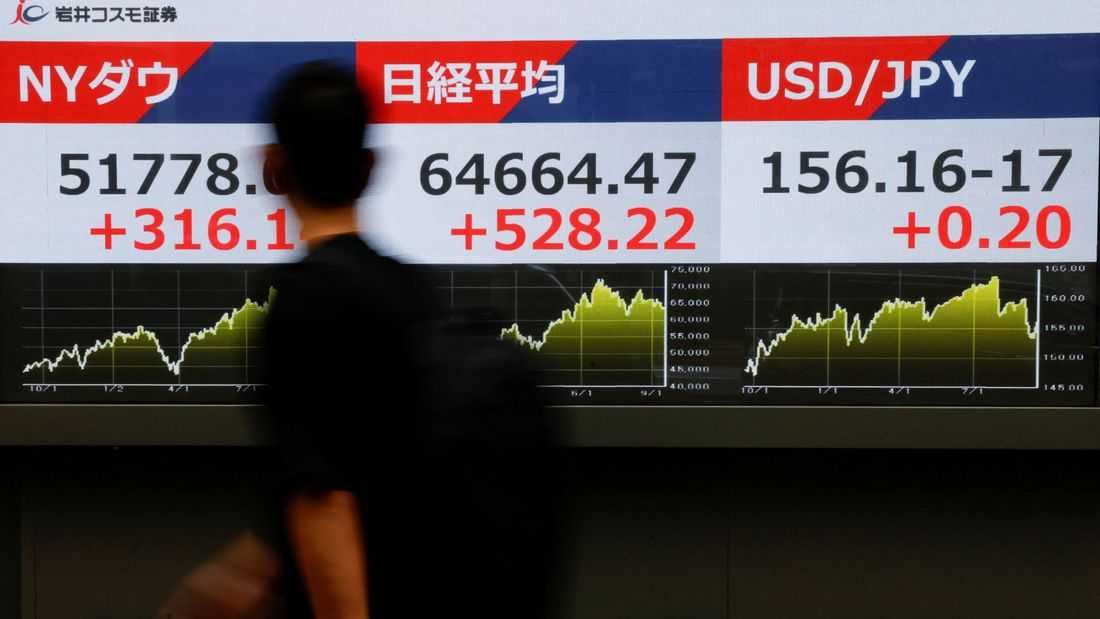
The Japanese currency weakened about 0.7% to 157.1 per dollar after the Bank of Japan raised rates to a 31-year high of 1.25%, as expected, but excited yen bears with two board members dissenting to the hike.
"The tone of the statement, along with two dissenters for the decision to raise rates, leaves lingering doubts that Japan’s central bank will be cautious in tightening monetary policy further," said Fred Neumann, chief Asia economist at HSBC.
"While back-to-back hikes appear unlikely, investors will look for clues as to whether officials are prepared to raise interest rates again in December."
The drop in the yen helped the Nikkei rise nearly 2%, while the Japanese 2-year government bond yields, which are most sensitive to monetary policy expectations, fell 4 basis points to 1.82%.
European stock futures slipped 0.35%, indicating a lower open.
YEN'S REALITY CHECK
The yen rallied sharply this month on expectations of a faster pace of hikes from the BOJ and early signs of repatriation from Japanese investors but has given up some of those gains as the US central bank took a hawkish turn.
The spotlight will now be on BOJ Governor Kazuo Ueda when he holds a news conference at 3:30 p.m. (0630 GMT) to explain the decision, with the risk for the yen to head back to 160 levels if markets deem him to be not hawkish enough.
Prashant Newnaha, senior rates strategist at TD Securities, said the BOJ reiterated its concerns that underlying inflation could deviate upwards from its 2% target, but "we don't see a smoking gun supporting a back to back hike in October".
"We stick with our call for rate hikes roughly every quarter with the next 25bps hike in December," he said.
The BOJ decision wraps up the series of major central bank meetings in which policymakers have ratcheted up hawkish rhetoric.
The Bank of England warned on Thursday it may have to hike if the Middle East war drags on while the Fed raised rates on Wednesday for the first time in three years and flagged more in the coming months. The European Central Bank last week also cautioned about the need for further tightening as it raised rates.
Adding to the chorus of hawkish voices, Australia's top central banker said on Friday some of the upside risks to inflation flagged by policymakers appeared to be materialising.
Michele Bullock, governor of the Reserve Bank of Australia, said a key question facing policymakers at its policy meeting this month would be whether three rate hikes this year would be enough to bring inflation back to the 2%-3% target.
RETREATING OIL PRICES LIFT SENTIMENT
Hopes of alternative ways for oil supply from the Middle East to reach markets pushed Brent crude futures down as much as 1.5% to $103.29 a barrel even as concerns about strikes between Saudi Arabia and Yemen's Houthis lingered. [O/R]
Investor sentiment was soothed by a Reuters report, citing three Iranian sources familiar with the matter, that said China has asked Tehran to help rein in the Houthis after their military blitz over the past week.
Bond prices also steadied after another brutal selloff this week that took the 10-year US Treasury beyond 5% to its highest since 2007. It was last at 4.936%. [US/] [.N]
MSCI's broadest index of Asia-Pacific shares outside Japan rose about 1%. Tech-heavy South Korea's KOSPI surged over 2%.
The euro was steady at $1.148, but on course for a 1% drop for the week, its biggest drop since June. [FRX/]
(Reporting by Ankur Banerjee in Singapore; Editing by Christian Schmollinger and Sam Holmes)
