
“Do not sleep when your stomach is full.”
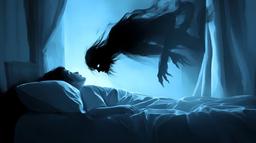
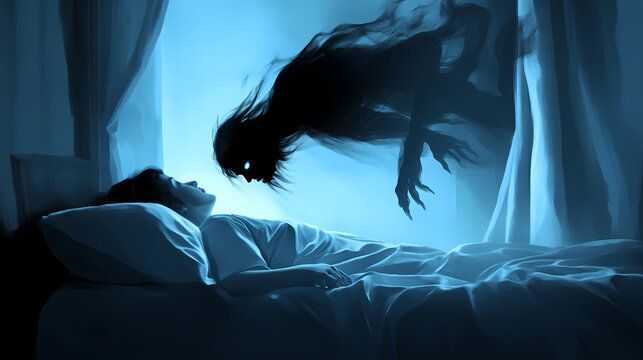
In many Filipino households, this familiar warning is associated with bangungot and fears surrounding sleep. One unsettling phenomenon is sleep paralysis, a state in which a person feels awake but temporarily cannot move or speak. Some may also experience chest pressure or see shadowy figures, making the episode feel frighteningly real.
In Filipino folklore, such experiences may be linked to supernatural beings like the Batibat, a creature from Ilocano mythology believed to sit on a sleeping person’s chest or face, causing terrifying nightmares.
But what actually happens during sleep paralysis? Is it a supernatural encounter, or does science offer another explanation?
Sleep Paralysis
Sleep paralysis is a sleep-related phenomenon in which a person temporarily cannot move or speak while falling asleep or waking up. It occurs when the brain becomes conscious before the body has fully emerged from the muscle paralysis associated with rapid eye movement (REM) sleep.
During REM sleep, the brain produces vivid dreams while most voluntary muscles are temporarily inhibited. This prevents us from physically acting out our dreams. Sometimes, however, awareness returns before this paralysis ends.
As a result, a person may feel awake but remain unable to move for several seconds or minutes.
Common symptoms include:
- Inability to move or speak despite feeling conscious.
- Chest pressure that may feel as though someone is sitting on top of the body.
- Hallucinations, such as seeing shadowy figures or sensing an unseen presence.
- Fear and panic caused by the inability to move and the vividness of the experience.
Although frightening, isolated sleep paralysis is generally “harmless and temporary.“
Paranormal beliefs
Some people interpret sleep paralysis as an encounter with spirits or malevolent entities, especially when they experience chest pressure or feel that someone is watching them. Others associate these episodes with 3:00 a.m., a time popularly connected to paranormal activity.
In a discussion on Expert's Opinion, paranormal investigator Theo Philus explored the different interpretations of sleep paralysis.
While these experiences may feel supernatural, there is no reliable scientific evidence that sleep paralysis is caused by spirits or demonic attacks. Its symptoms can be explained by the overlap between dreaming and waking awareness.
Myths
Myth 1: A spirit is sitting on your chest.
In Filipino folklore, this sensation is associated with the Batibat. Science explains that chest pressure and temporary immobility can occur during sleep paralysis. These symptoms do not establish the presence of a supernatural being.
Myth 2: Sleep paralysis happens only at 3:00 a.m.
Sleep paralysis can occur when falling asleep or waking up at different times. There is no established scientific evidence that 3:00 a.m. has a special connection to the condition.
Myth 3: Sleeping on a full stomach causes bangungot.
This is a traditional belief rather than an established medical explanation. Sudden death during sleep can have different causes, and it should not automatically be attributed to eating before bedtime.
Myth 4: Bangungot is always caused by acute pancreatitis.
Acute hemorrhagic pancreatitis is one possible explanation for some cases, not a definitive cause of every sudden death during sleep.
Bangungot
Although sleep paralysis is generally harmless, bangungot can refer to a much more serious medical concern: sudden, unexplained death during sleep.
According to Makati Medical Center's article, Acute Hemorrhagic Pancreatitis: Unraveling the Bangungot Mystery, one possible medical explanation for some cases of bangungot is acute hemorrhagic pancreatitis.
Acute hemorrhagic pancreatitis is a severe form of pancreatic inflammation that involves bleeding and can lead to life-threatening complications, including organ failure. Common causes of acute pancreatitis include gallstones and heavy alcohol consumption.
MakatiMed discussed research involving sudden deaths attributed to acute hemorrhagic pancreatitis, including cases in which symptoms had not previously been recognized. However, this does not prove that pancreatitis explains every case of bangungot. The exact causes of sudden death during sleep can vary and require medical investigation.
A traditional belief holds that eating heavily before bedtime causes bangungot. However, there is no established evidence that sleeping with a full stomach directly causes sudden death. Heavy meals may worsen acid reflux or digestive discomfort, but these effects are different from acute pancreatitis.
The important distinction is that sleep paralysis and bangungot are not the same condition. Sleep paralysis involves temporary muscle immobility during the transition between sleep and wakefulness, while bangungot, in the context of sudden death, raises a separate and serious medical concern.
How can sleep paralysis be prevented?
Although sleep paralysis cannot always be prevented, healthy sleep habits may help reduce the likelihood of episodes.
- Maintain a regular sleep schedule. Go to bed and wake up at consistent times.
- Get enough sleep. Most adults need seven to nine hours each night.
- Manage stress. Relaxation techniques may help improve sleep quality.
- Create a comfortable sleeping environment. Keep your bedroom quiet, dark, and comfortable.
- Consider your sleeping position. If episodes occur frequently while sleeping on your back, try sleeping on your side.
- Seek medical advice when necessary. Frequent episodes, excessive daytime sleepiness, or sudden muscle weakness warrant professional evaluation.
WATCH: Related video
