
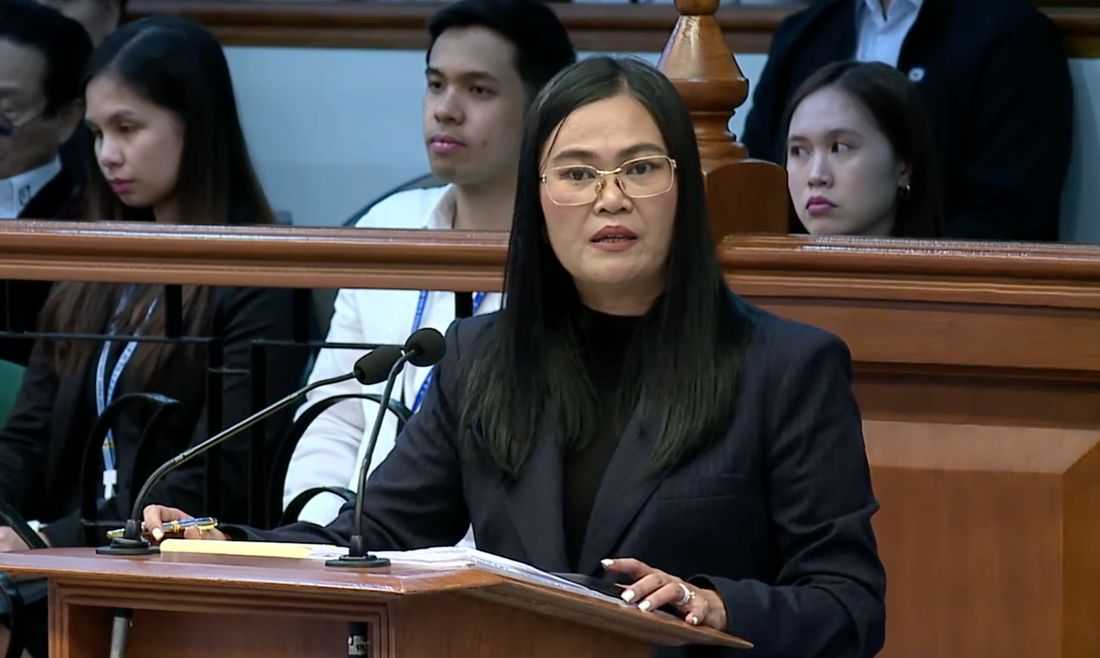
Lead defense counsel Sheila Sison on Tuesday said the prosecution’s decision to withdraw three articles of impeachment should not preempt the defense’s strategy for presenting evidence in the case against Vice President Sara Duterte.
“Whatever decision of the prosecution in terms of withdrawing all these articles should not preempt the decision of the respondent,” Sison said during the 38th day of the impeachment trial.
She argued that the defense should be allowed to determine the evidence it would present and the time needed to do so.
“Kung may ipepresenta po kaming ebidensya—or that we will be certain number of days para i-present ang mga ebidensya na ‘yon, let the respondent decide. Because I think it is her right to secure her case from the allegations already propounded and exposed to the public before this Court, Your Honor,” she added.
This came after the Senate impeachment court allowed the House prosecution panel to withdraw Articles I, III and IV of the impeachment complaint, leaving only Article II for consideration.
Earlier, lead prosecutor Rep. Gerville Luistro manifested the prosecution’s intention to drop the three articles, which concern Duterte’s alleged misuse of confidential funds, bribery and grave threats.
Luistro said the evidence supporting Article II would be sufficient to secure a conviction. She also argued that focusing on one article instead of four would make the proceedings more practical, expedite the trial and give the Senate leeway to attend to its legislative functions.
Presiding Officer Francis “Chiz“ Escudero, however, stressed that the fundamental objective of the trial is to ensure justice.
It clarified that the relaxation of Rule 18 was intended to uphold fairness for the respondent, not to create a “free-for-all” environment. The defense should therefore be allowed to address the remaining issues in the manner it considers appropriate.
The court clarified that the withdrawal of some charges does not prevent the respondent from presenting her defense on the remaining articles. The process remains subject to the court's rules and future rulings on evidence.
