
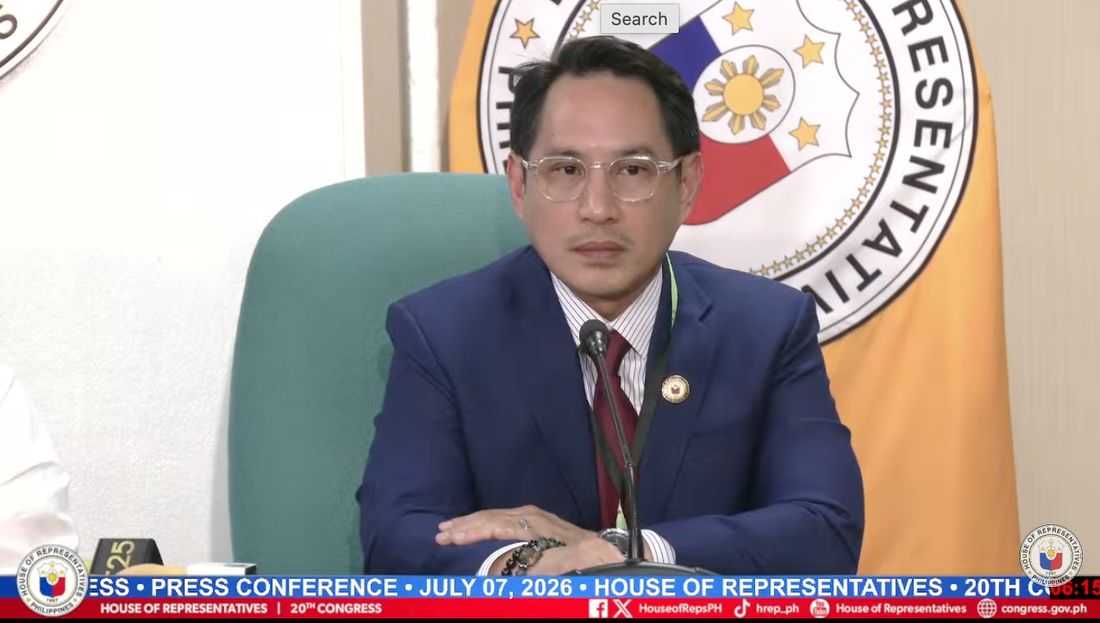
The House prosecution panel on Tuesday expressed support for Senator Francis “Chiz” Escudero’s appointment as presiding officer over the impeachment trial against Vice President Sara Duterte, asserting that the Senate is empowered to select its presiding officer.
This comes in response to Duterte’s allies having filed a petition seeking a temporary restraining order (TRO) against the trial, urging the Supreme Court to nullify Escudero’s “unconstitutional” authority.
House prosecution panel Spokesperson and La Union 1st District Rep. Paolo Ortega joked that TROs were the Duterte’s camp’s “house specialty,” which they can compose even with their eyes closed.
While they are free to question the proceeding, Ortega maintained that the mechanisms of the process have already been established previously.
“‘Yun kasi ang bread and butter nila: mag-file ng TRO. Sa tingin ko, specialty of the house na nila ‘yun. Of course wala naman pong pumipigil sa kanila… Kumbaga kahit nakapikit na po sila, expertise na po nila ‘yan. And mararapat naman po na mag-file sila kung may mga tanong sila gustong masagot, pero I believe na na-resolve naman po lahat ‘yan nung first day natin,” he told reporters during a press conference.
Panel Spokesperson and Lanao Del Sur 1st District Rep. Zia Alonto Adiong agreed that although all are free to raise matters with the Supreme Court, the amendment to the Rules of Impeachment is an “internal” rule that can be decided among the senator-judges.
“Malaya naman po talaga mag-question ang kung sino man na dumalo sa Supreme Court. Pero sa ating palagay, ay ito’y internal na rules ng Senado. Ang impeachment trial ay internal or exclusive na ibinigay na kapangyarihan ng Senado. So it also follows, logically, na ang mga miyembro ng hukom… sila din ang magde-decide kung sino ‘yung magiging presiding officer nila,” Adiong explained.
In their petition, Atty. Israelito Torreon and others cited the transcripts from the 1986 Constitutional Convention, arguing that the Constitution framers reportedly intended to have the incumbent senate president preside over the impeachment trials of all impeachable officers apart from the president.
“(The framers) may have influence, but they’re not really controlling what’s important is what’s ratified by the people. Ang ni-ratify naman po ng taumbayan kung ano ‘yung naka-spell out doon sa specific provision na iyon, doon sa Constitution,” he rebutted, confident that the Supreme Court will likely respect the Senate’s independence, considering the institution’s exclusive power to rule on impeachment complaints.
In addition, Adiong said that the Duterte camp’s filing of TROs left and right were merely attempts to delay the proceeding.
“Pasensya na po, ang Konstitusyon po at alam ng ating Senator is kung ano ‘yung mga katungkulan nila,” he said.
Torreon et al. urged the High Court to intervene, reasoning that the framers “understood and intended” to have the senate president preside in impeachment trials, with the exception of the president, whose ouster will be decided upon by the chief justice.
“Under Section 3(6), Article XI of the Constitution, while the Chief Justice of the Supreme Court presides only when the President of the Philippines is on trial, the deliberations of the Constitutional Commission—particularly Records No. 42 (28 July 1986) (ANNEX “A”)—reveal that the framers deliberately understood and intended that the Senate President, and no other, shall preside in all other cases of impeachment, including the trial of a Vice President,” they wrote.
Moreover, the group stressed that the June 3 session establishing the amendment permitting the election of another presiding officer was “procedurally infirm” due to a lack of quorum, among other factors.
