

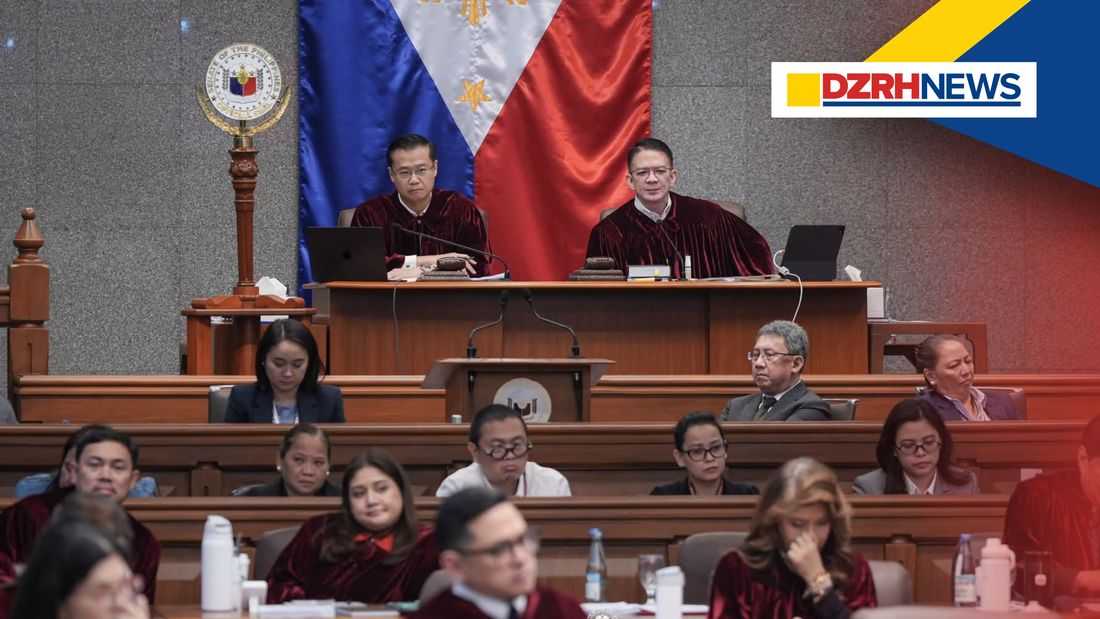
The Senate impeachment court on Monday, July 20, granted the House prosecution’s request to subpoena the bank, Bureau of Internal Revenue (BIR), and Anti-Money Laundering Council (AMLC) records of Vice President Sara Duterte in connection with the allegation of unexplained wealth under Article II of the Articles of Impeachment.
Presiding Officer Senator Francis “Chiz” Escudero ruled that the requested documents met the requirements of relevance and definiteness under the Rules of Court, saying the records are prima facie relevant and material to the allegations being examined by the court.
“The court finds that the requested documents satisfy the requirements of relevance and definiteness under the Rules of Court,” Escudero said during the proceedings.
The court emphasized that obtaining the financial records does not constitute a “fishing expedition,” explaining that the documents are being sought to establish a factual baseline in determining whether Duterte’s assets and financial transactions during her public service were disproportionate to her lawful income.
The subpoena covers records from 2007 to 2021. The impeachment court rejected the defense’s argument that the records from previous terms should not be included but clarified that the documents may only be used to establish context and cannot be used to introduce new grounds for impeachment.
“The records may be used only to establish a factual baseline and not to introduce new impeachable offenses,” the court said.
The Senate impeachment court also allowed the examination of the bank records of Duterte’s husband, Atty. Manases Carpio, citing the relevance of spousal financial disclosures under Republic Act No. 6713, or the Code of Conduct and Ethical Standards for Public Officials and Employees.
Escudero likewise granted the subpoena for AMLC records involving 19 entities and one partnership allegedly linked to Vice President Duterte as part of the prosecution’s efforts to support the allegations under Article II.
The ruling came after the House prosecution panel argued that access to the financial documents was necessary to determine whether there were discrepancies between Duterte’s declared assets and her known sources of income.
The defense had opposed the request, questioning the scope of the records being sought and arguing that the move could expand the impeachment proceedings beyond the allegations stated in the complaint.
The Senate impeachment trial against Vice President Duterte continues as the prosecution and defense present arguments, evidence, and witnesses before the 24-member Senate acting as an impeachment court.
