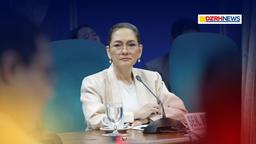
Senator Risa Hontiveros on Monday called for tighter oversight and a more equitable allocation of projects under the government’s Health Facilities Enhancement Program (HFEP), citing reports of delayed, abandoned, and non-operational healthcare facilities despite substantial public funding.
During the Senate Committee on Health and Demography hearing on May 11, Hontiveros stressed the importance of the HFEP in delivering basic healthcare services, especially in remote and underserved communities where rural health units, barangay health stations, and Super Health Centers often serve as the public’s first access to medical care.
“For many of our countrymen, especially in remote barangays, the rural health unit, barangay health station, or Super Health Center, is the first place to go when there is an emergency,” Hontiveros said.
The senator emphasized that the concern goes beyond constructing buildings, noting that many facilities reportedly remain closed, understaffed, lacking medicines, or equipped with unused medical equipment despite being listed as completed projects.
“We keep seeing ‘completed’ on paper, but failing in reality,” she said.
Hontiveros also cited findings from the Commission on Audit (COA), which pointed to recurring issues in the program, including weak monitoring systems, procurement problems, contractor non-performance, implementation delays, and concerns over the fair distribution of projects nationwide.
According to the senator, the committee aims to determine how many HFEP-funded facilities are fully operational, identify projects that remain delayed or abandoned, and explore safeguards to ensure transparency and proper use of public funds in future healthcare infrastructure projects.
The HFEP is one of the government’s major programs aimed at improving healthcare accessibility and strengthening medical services in communities across the country.