
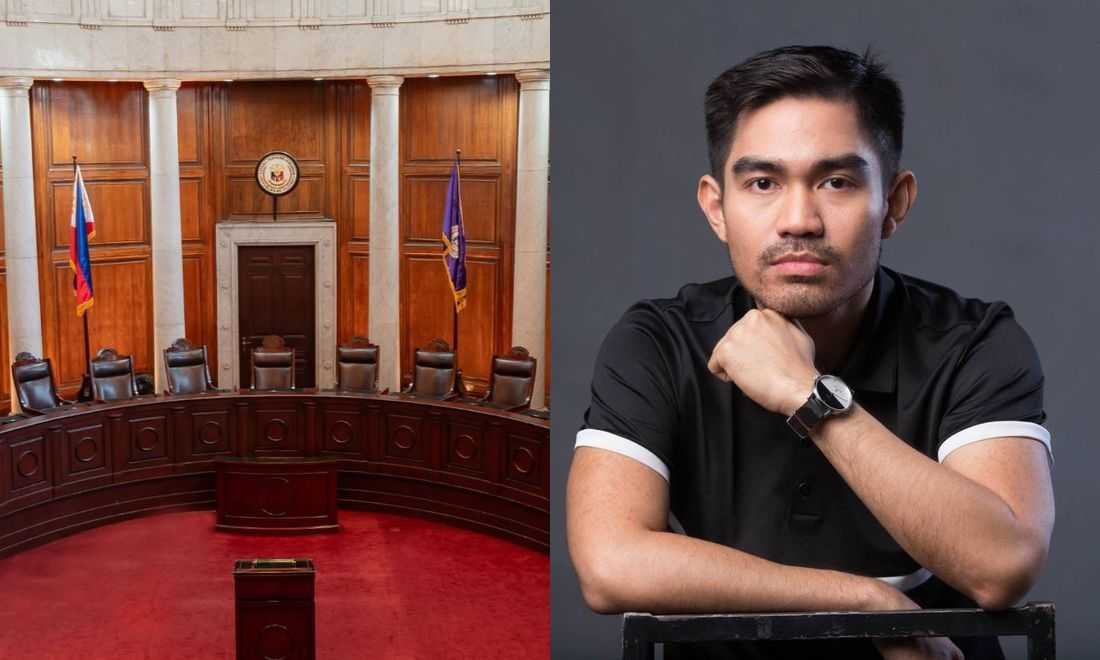
The Supreme Court (SC) has suspended lawyer Jesus Falcis from the practice of law for one year after finding him guilty of simple misconduct over a social media post containing vulgar and offensive language directed at supporters of television personality Kris Aquino in 2018.
“This is a misconduct that tends to discredit the legal profession. The mandate to use social media responsibly among lawyers strengthens the trust of the public in the legal profession and must always be borne in mind by every lawyer,“ the SC said in a 10-page decision promulgated in November 2025 but made public only on Monday.
“Respondent clearly failed to align his conduct in this mandate,“ it added.
The case stemmed from a Twitter post made by Falcis while defending his brother, Nicko Falcis, against accusations related to a qualified theft complaint filed by Aquino.
In the post, Falcis criticized Aquino’s supporters and used profane language, telling them to “check your cognitive biases” while calling them derogatory names.
"Yung mga biased na dilawan dyan, halata kayo. Sa allegations ni Kris, paniwalang-paniwala na kayo agad. Pero sa allegations namin na she threatened my brother, wala ako naririnig sa inyo? P***u kayo mga g**o haha check your cognitive biases," the tweet read.
The complaint against Falcis was filed before the Integrated Bar of the Philippines (IBP) by Jason Gene Baltao, Aquino’s former business partner, for conduct unbecoming of a lawyer.
In its ruling, the SC rejected Falcis’ justification that he used such words “out of passion to express his anger and displeasure,“ saying he could have remained within the realm of legal discourse.
"The respondent could have remained in the realm of legal discourse by showing the news articles regarding the cases they filed against Aquino and make solid arguments," it said.
"Rather, he used profanity to verbally attack what he referred to as "dilawans" or supporters of Aquino. Clearly, this behavior falls short of the expected conduct of a lawyer," it added.
The IBP found that Falcis violated provisions of the Code of Professional Responsibility and Accountability (CPRA) by using offensive language and initially recommended the imposition of a fine and reprimand.
The SC agreed with the IBP’s findings but imposed a heavier penalty, citing Falcis’ previous administrative violations, including findings of direct and indirect contempt, as well as the seriousness of his use of profane and offensive language.
"Evidently, respondent failed to take these implications and consequences into account, and in doing so, he likewise failed in upholding the directive to responsibly use social media," it said.
Under Canon II, Section 4 of the CPRA, lawyers are required to use dignified, gender-fair, child-sensitive, and culturally sensitive language in both their professional and personal dealings.
“They must not use abusive, offensive, or improper language, whether spoken or written, including on social media. Such conduct undermines the dignity of the legal profession,” the Court said.
The Court also cited Section 37 of the same Canon, which requires lawyers to ensure that their online posts, whether publicly accessible or shared with a limited audience, uphold the dignity of the legal profession, protect it from disrepute, and maintain respect for the law.
Section 36 further requires lawyers to understand the benefits, risks, and ethical implications of social media use.
In its ruling, the Court said Falcis failed to meet these standards and should have been aware of the risks and consequences of statements made on social media, including their potential to spread widely and influence various audiences, including children.
The Court also emphasized the broad reach of social media and the difficulty of restricting access to online content once it is published.
“Notably, lawyers should be cautious in their postings online. They are reminded to always practice restraint in their conduct, be it in real life or in social media. Otherwise stated, the rule of law may totally be circumvented and rendered nugatory by blatantly seeking public sympathy on social media,“ it said.
The SC explained that Falcis’ conduct constituted misconduct, which it defined as intentional wrongdoing or a deliberate violation of a rule or standard of behavior, whether work-related or not. It classified the offense as simple misconduct because there was no showing of corruption or a clear intent to violate the law.
Following the decision, Falcis said he accepted the Court’s ruling.
“I accept the wisdom of the Supreme Court to suspend me for one year. All lawyers are under the disciplinary power of the Court and I am no exception,” he said.
