

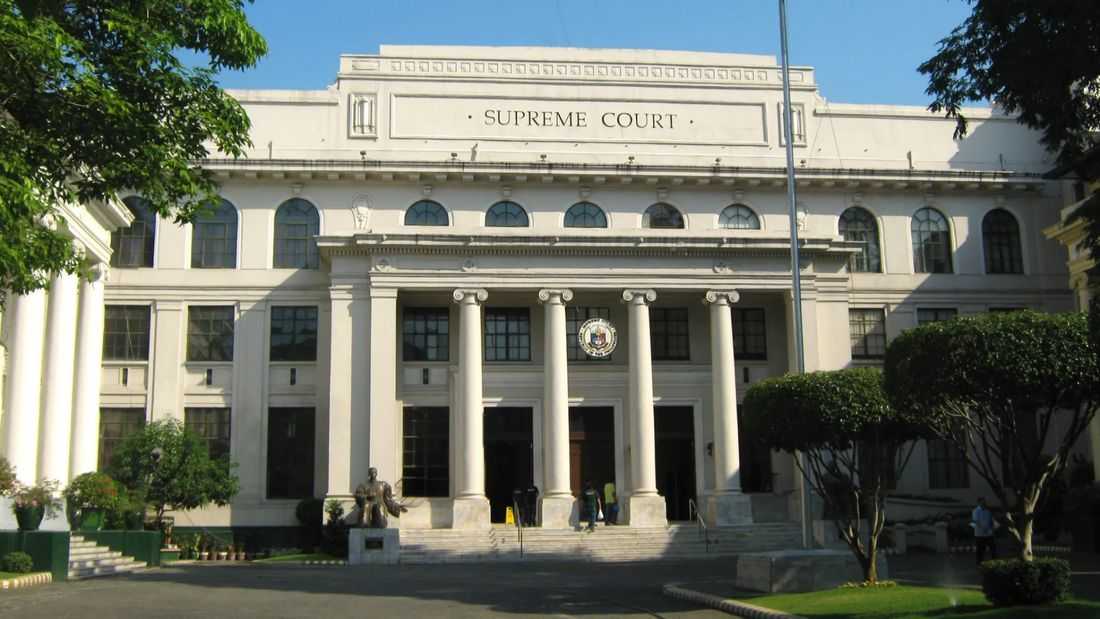
Former Integrated Bar of the Philippines president Atty. Domingo “Egon” Cayosa said the Supreme Court’s refusal to issue a temporary restraining order (TRO) on a petition seeking to block enforcement of an International Criminal Court (ICC) arrest warrant may amount to an “implied recognition” of the warrant’s validity.
Speaking on DZRH Dos Por Dos on Thursday, Cayosa said the absence of a TRO effectively allows government authorities to proceed with enforcement of the ICC warrant.
“Kahit bago nag-issue ng decision na yan o resolution na yan, ay pwede naman sapagkat the government in the conduct of its official function, presumed regular yun. Kung walang TRO, tuloy lang dapat ang pag-enforce,” said Cayosa, adding that the Supreme Court’s action made the legal situation more clear.
“So ngayon, mas malinaw na kasi mismo na ang Supreme Court na nagsabi na hindi nila pagbibigyan yung hiling ng kampo ni Senator de la Rosa na patigilin yung pag-enforce ng warrant of arrest.”
He said enforcement of the warrant could have proceeded even before the ruling, but the high court’s latest action removed ambiguity over the government’s authority.
Cayosa was responding to questions on whether the executive branch still needs a separate order from the President before implementing the ICC arrest warrant.
He said executive coordination is “theoretically required,” but noted that earlier developments appeared to prompt a temporary “stand down” after confusion during an attempted service of the warrant.
He referred to an earlier incident on May 11, when Sen. Ronald “Bato” dela Rosa reappeared at the Senate after being absent from his office for nearly six months.
Authorities had attempted to serve the warrant in the Senate premises but were unable to complete the arrest after the subject allegedly moved inside the chamber, prompting a pause in enforcement operations.
Cayosa also said possible liability could arise for individuals who may have assisted in evading arrest, citing Presidential Decree 1829, or obstruction of justice. The law penalizes acts that knowingly hinder or delay the apprehension or prosecution of a suspect.
On the question of whether ICC-issued warrants are enforceable locally, Cayosa said Philippine law does not strictly limit arrest enforcement to warrants issued by domestic courts.
He said jurisprudence has, in some instances, recognized the continuing jurisdiction of the ICC over cases initiated while the Philippines was still a party to the Rome Statute.
“Kung ang tingin ng Supreme Court, void yun, kaagad nag-TRO. Kasi nga naman irreparable injury ang mangyayari dun sa aarestuhing Pilipino na wala naman palang bisa yung ICC warrant of arrest.”
“So it is an implied recognition. At hindi pa nga nila ninalabas kasi yung kabuoan ng desisyon. I'm pretty sure na diniscuss yan dun sa mas mahabang desisyon.”
Cayosa said the Supreme Court’s decision not to issue a TRO could be read as an implied acknowledgment of the ICC process, noting that courts typically intervene immediately if a warrant is considered void.
He added that the full reasoning behind the ruling may only become clear once the Supreme Court releases its complete decision in the coming days or weeks.
