

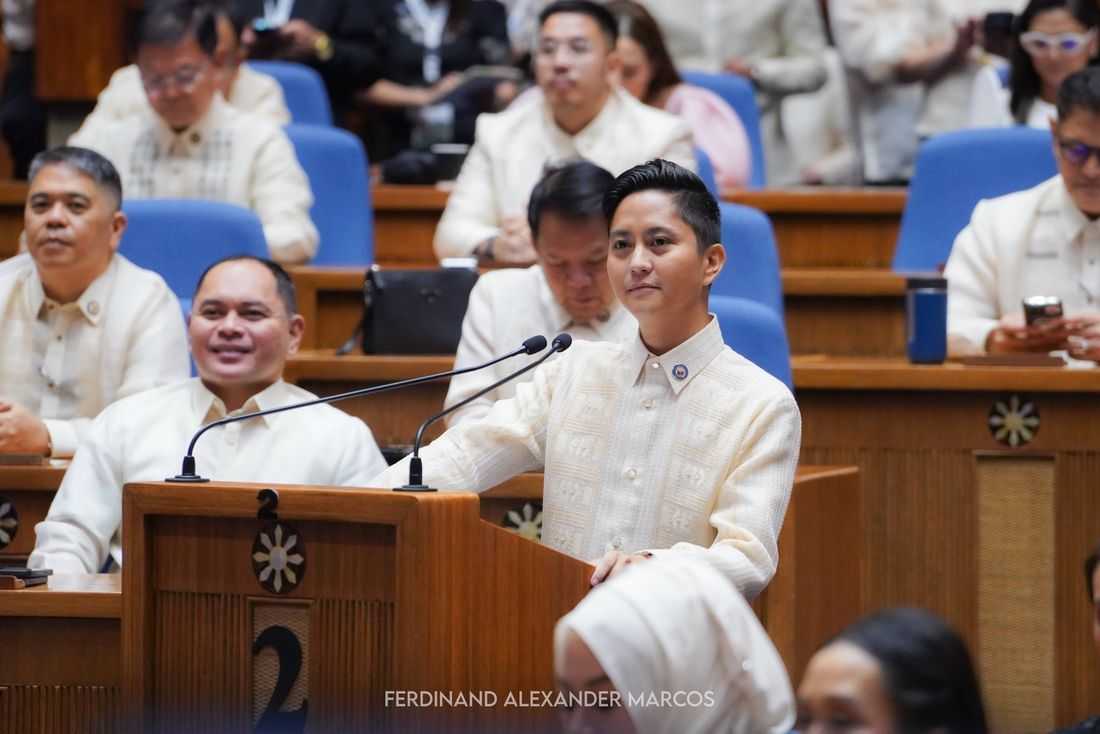
House Majority Leader and Ilocos Representative Ferdinand Alexander “Sandro” Marcos is seeking stricter accountability measures by imposing prison terms against contractors and subcontractors responsible for substandard government projects.
Under House Bill No. 2811, also known as the “Criminalizing Negligent Contractors Act,“ Marcos “seeks to criminalize gross negligence on the part of contractors and subcontractors engaged in government infrastructure projects, particularly when such negligence results in structural defects, project failures, or safety hazards that undermine the public interest.“
“Any contractor, subcontractor, or person acting on their behalf who, through gross negligence, causes the quality of work on a government project to fall below the standards prescribed in the contract, applicable laws, or technical specifications shall be held criminally liable,” the bill states.
The bill added: “Government infrastructure projects must be implemented with strict adherence to standards of safety and quality, as prescribed by law and by competent authorities.”
“These standards are not mere formalities, they are essential safeguards of public welfare, fiscal responsibility, and the long-term utility of state investments,” it stressed.
Those found guilty—including contractors, subcontractors, corporate officers, government employees, or juridical entities—can face imprisonment, fines, or both at the court’s discretion. In addition, the bill imposes perpetual disqualification from public office and any involvement in government procurement.
The proposal goes beyond mere fines or blacklisting. It mandates jail time and heavy penalties for contractors whose negligence endangers the public and wastes government funds.
Key provisions of Section 4 of the bill include imprisonment of not less than six years but not more than twelve years. Fines of no less than ₱10 million and a lifetime ban from participating in government projects.
“Gross negligence under this Act includes, but is not limited to, acts or omissions that result in material deviation from contract specifications or approved plans; compromise of structural integrity or public safety; or use of substandard materials,” the bill emphasizes.
Marcos said the bill aims to end the culture of “pwede na” (“good enough”), which often leads to crumbling roads, collapsing bridges, and unsafe public buildings.
”Further, this bill strengthens the accountability framework across the procurement and project implementation, and protects the Filipino people from the grave consequences of negligent execution of government-funded projects,” the bill reads.
