
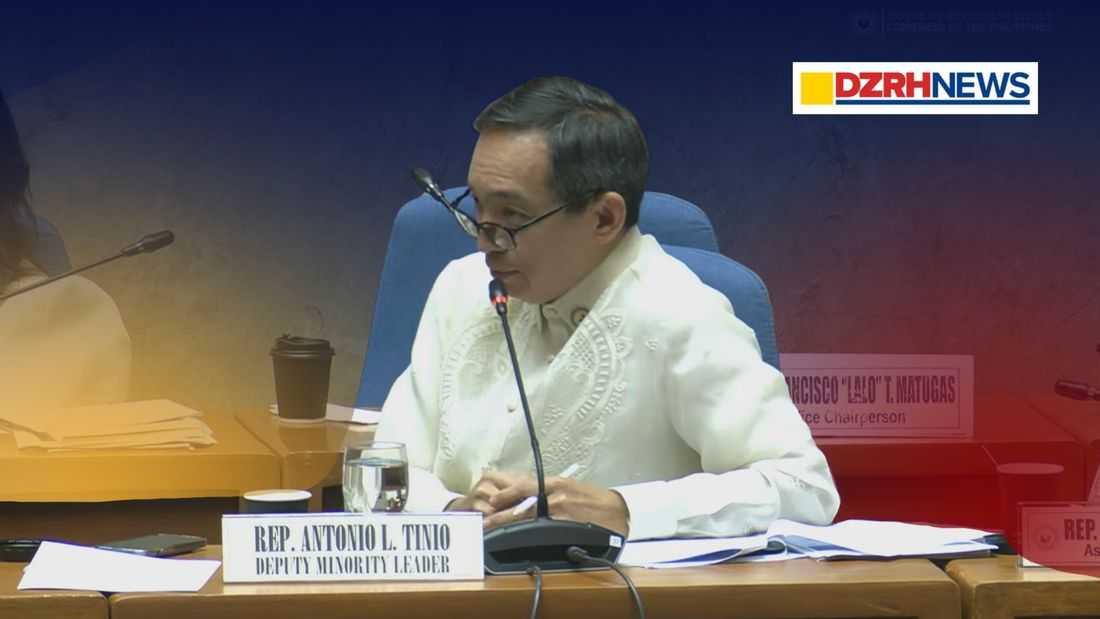
In the Legislative Energy and Development Joint Committee hearing on Monday, April 13, ACT Teachers Party-List Rep. Antonio Tinio raised concerns over the oil industry’s pricing practices and the government’s failure to implement a mandated price freeze on LPG and kerosene amid a declared national energy emergency.
During his interpellation, Tinio highlighted that the “replacement cost” pricing model used by oil companies is not universally applied across energy sectors. Citing discussions with industry representatives, he pointed out that the LPG sector follows a different system based on monthly contract prices set by Saudi Aramco.
“Hindi po universal itong model ng replacement cost,” Tinio emphasized, noting that LPG players absorb losses when prices drop and only recover in future adjustments. He contrasted this with oil firms, which he argued pass on potential losses to consumers in advance, saying the model is “bentahe sa mga players, pero disbentahe naman sa publiko.”
Tinio also questioned officials from the Department of Energy (DOE) over the apparent non-enforcement of an automatic price freeze under the Price Act, following the declaration of a national energy emergency through Executive Order No. 110 on March 24.
Citing the law, Tinio stressed that “automatic price control” should apply to basic commodities, including LPG and kerosene, during emergencies. However, DOE Undersecretary Mario Marasigan admitted that the issuance did not explicitly include a price freeze provision.
“Hindi po naglagay ng price freeze doon sa ating issuance,” Marasigan said, adding that implementation responsibilities may fall on other agencies such as the Department of Trade and Industry (DTI).
Tinio pressed further, noting the absence of any presidential exemption: “Wala nga po… So bakit po hindi niyo pinapatupad ang batas?”
He argued that without such an exemption, prices should have remained at March levels instead of rising sharply in April.
The lawmaker concluded by reiterating two key points: that the replacement cost model is a business-driven choice rather than a necessity, and that the government must revisit its implementation of price control measures to better protect consumers from rising fuel costs.
