
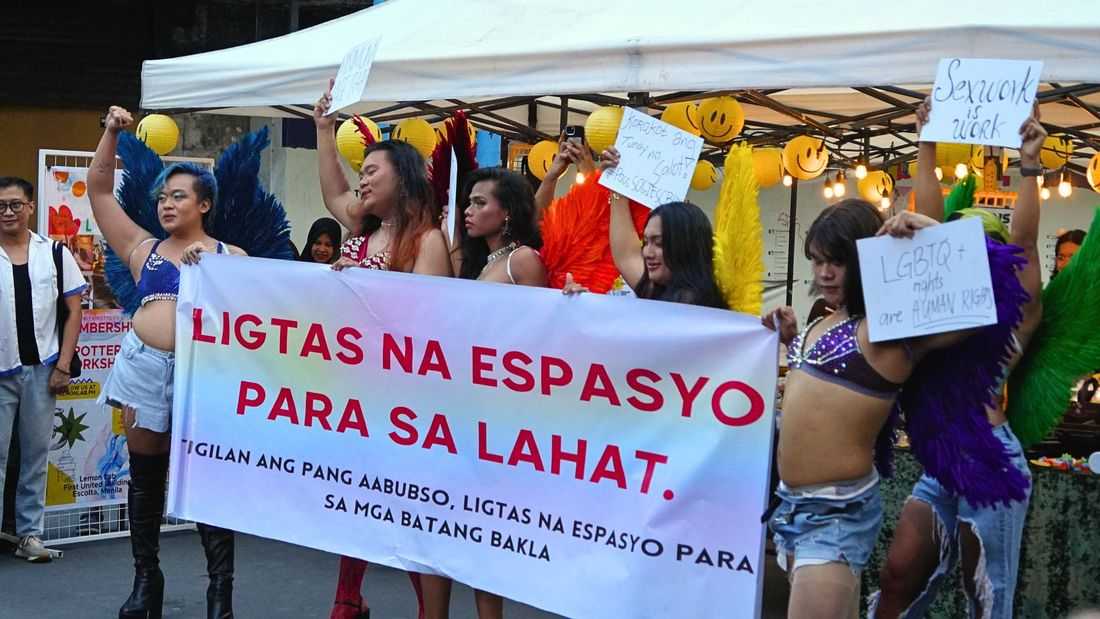
During the last Sunday of June, Escolta carried a different kind of energy.
Music spilled into the streets as rows of artist booths showcased handmade prints, stickers, accessories, ceramics, and clothing—each thoughtfully arranged to reflect the creator's unique personality and style. Friends greeted one another like neighbors, while strangers struck up conversations over shared interests, turning the historic street into a welcoming community space.
In celebration of Pride Month, "Super Queer Kalye" transformed one of Manila's oldest streets into more than just an event venue. Held as part of the community-led Pedestrian Sunday, the periodic pop-up marketplace brought together independent artists and brands alongside live DJ sets, performances, and curated food and beverage stalls.
For a day, it became a space where people gathered simply to exist together.
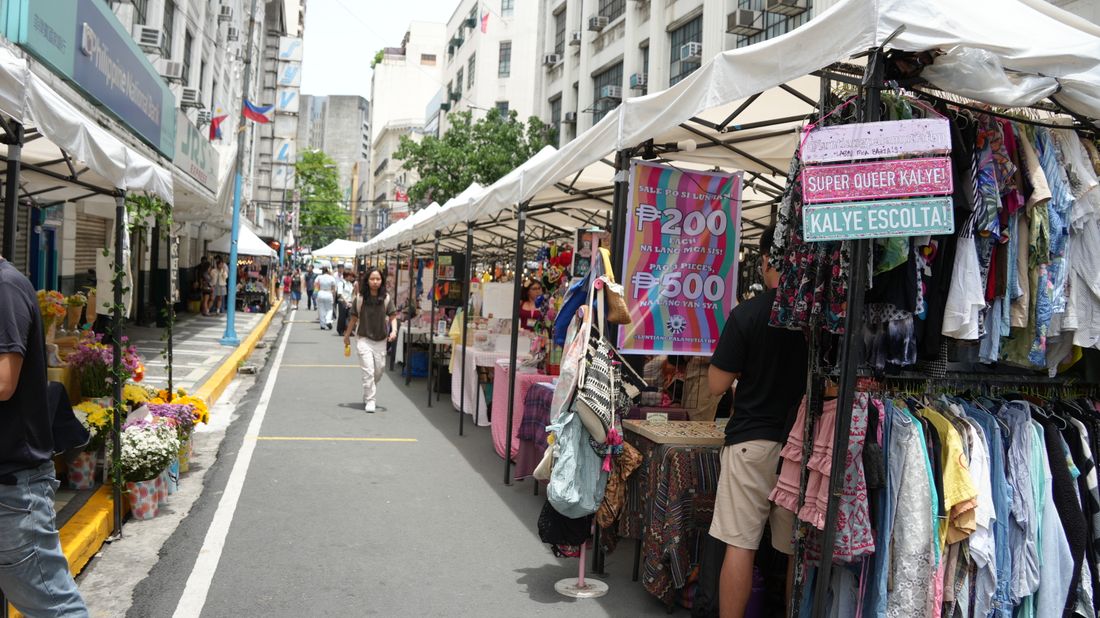
‘It’s Always a Time to Express Yourself’
For Visual Artist Lemuel Blanco—who goes by Blanco Fine Arts online—communities are not tied to a physical location, but rather something that can be built anywhere.
“I think when it comes to community, you can set it up kahit saan. Because it’s not really the place, but rather the people who are coming together,” Blanco stated.
The visual artist said self-expression often becomes the first step toward finding people who accept you.
"The way that I dress, I dress up like this because I want na kapag may makakita na iba na, 'Hala, gusto ko rin maging ganun one day.' It's always a time to express yourself. You've gotta show up as you are, and eventually you'd find your people that way."
That openness, Blanco added, is what makes spaces like “Super Queer Kalye” stand out.
"Everyone's really welcome," Blanco said. "No one's being left out. Everyone's encouraged to be part of the conversation."
Samantha, a fashion student at the De La Salle College of Saint Benilde, is the one-woman team behind “Raven’s Wardrobe.”
Her business began as a way to save up for her graduation collection. The majority of the clothing she sells is handmade and often described as “shiny” and “maximalist.”
“‘Yun talaga ‘yung style ko and I always want to give people clothes that only exist in their heads or yung ma-eexcite sila,” Samantha shared. “It’s a step up from basic clothes, and I cater to creative people talaga.”
Connection Through Art
Meanwhile, freelance artist Albert Raqueño shared how his art prints resonate differently, depending on the customer’s characteristics. However, it is through live portraits that he can have new conversations.
“I think it’s a way to have checkpoints about each other, even if hindi ko sila kilala, like, ‘Kumusta ka? Masaya ka ba?” he says.
Apart from Escolta, Raqueño said other avenues like Komiket also support local artists, adding that after the COVID-19 pandemic, individuals craved in-person interactions more.
“I feel there’s some sense of fulfillment whenever we see each other exist and then thrive at the same time. Maybe in the age of AI, for example, I feel like more and more we want to experience something real, kaya we’re happy to be artists,” Raqueño expressed.
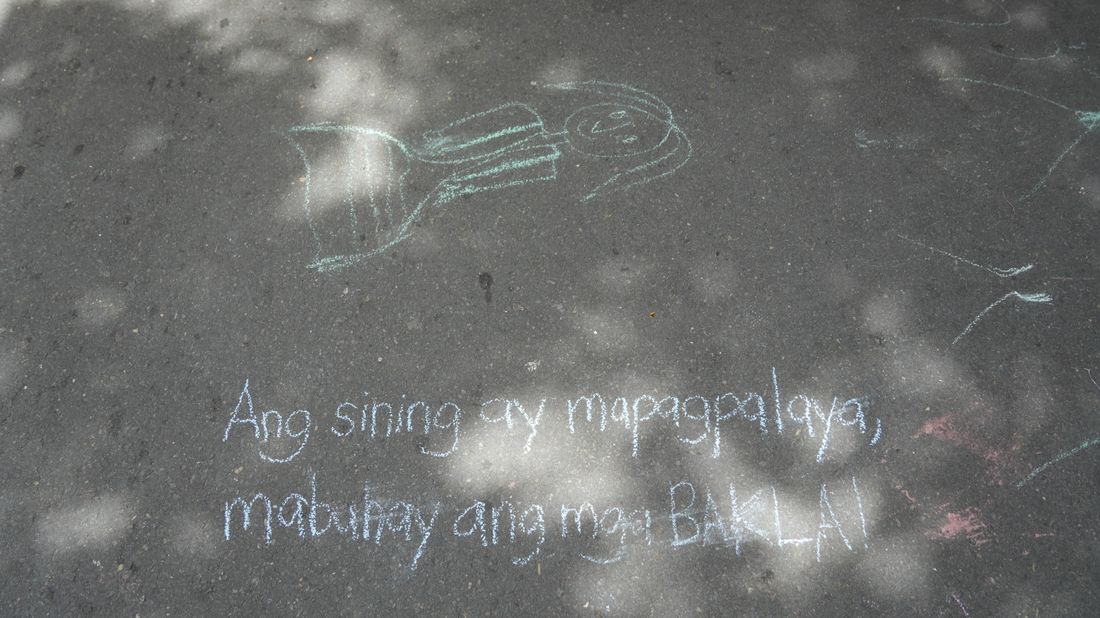
A statement written in chalk on the grounds of Escolta, Manila.
A Tribe to Call Your Own
Beyond celebration, communities also take shape through belonging. Mother Indigo Ilaya of the House of Ilaya explained that their performance is part of the ballroom culture—a subculture of the LGBTQIA+ community founded by the African-American and Latin communities in New York City in the early 1970s.
The birth of modern ballroom was deeply rooted in activism, fighting for safe spaces, and the celebration of marginalized communities.
Historically, it was where homeless or ostracized individuals found shelter, mentorship, and support through the houses. Often, these houses are led by experienced figures known as “mothers.”
“Sa ballroom, doon sila nakakakuha ng strength, doon sila nakakakuha ng community ng people na makakaintindi doon sa situation nila and ini-empower sila to do it,” Mother Indigo explained. “Whenever you’re in a ball, you feel like you’re the star. You feel like you’re always the center of the universe. And that’s the kind of empowerment na binibigay sayo ng culture na ‘to.”
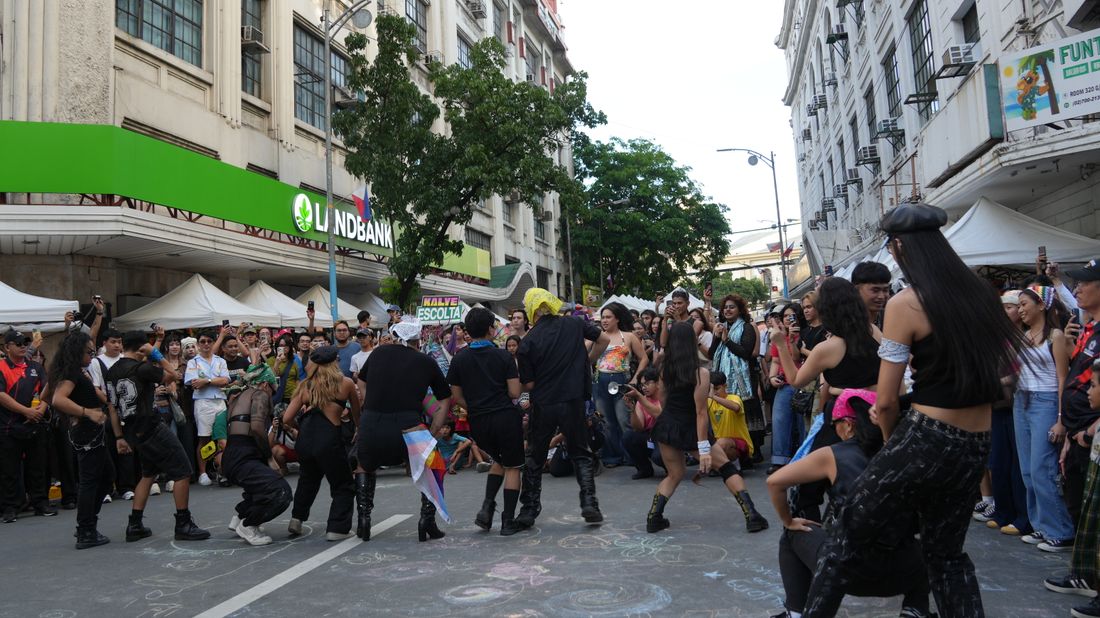
The House of Ilaya performing at Super Queer Kalye at Escolta, Manila, on June 28, 2026.
Ballroom culture stems from struggles, Mother Indigo says. In some houses, the members might have lost their jobs or have limited resources. There was a time when members came together to help a housemate who had suddenly lost their job and had no money left.
The group pooled resources to make sure the housemate had food for the week, while others helped connect them with employment opportunities. Over time, they watched that person rebuild their life.
“Wala silang assurance kung lilipad ka ba o magiging successful ka. But regardless, it’s the love that keeps them going, that keeps them helping other people, [and that] keeps them wanting to reach out na matulungan ka, at the same time, ma-ease yung problem na meron ka ngayon,” Mother Indigo expressed.
“Kasi people nowadays, you don’t wanna risk anything. With the crisis, with war, with corruption, with the distrust ng mga tao sa people. There is still humanity, I believe. That yung sense of belongingness, sense of kapwa,” they added. “I don’t exist only because of me; I exist also because of others.”
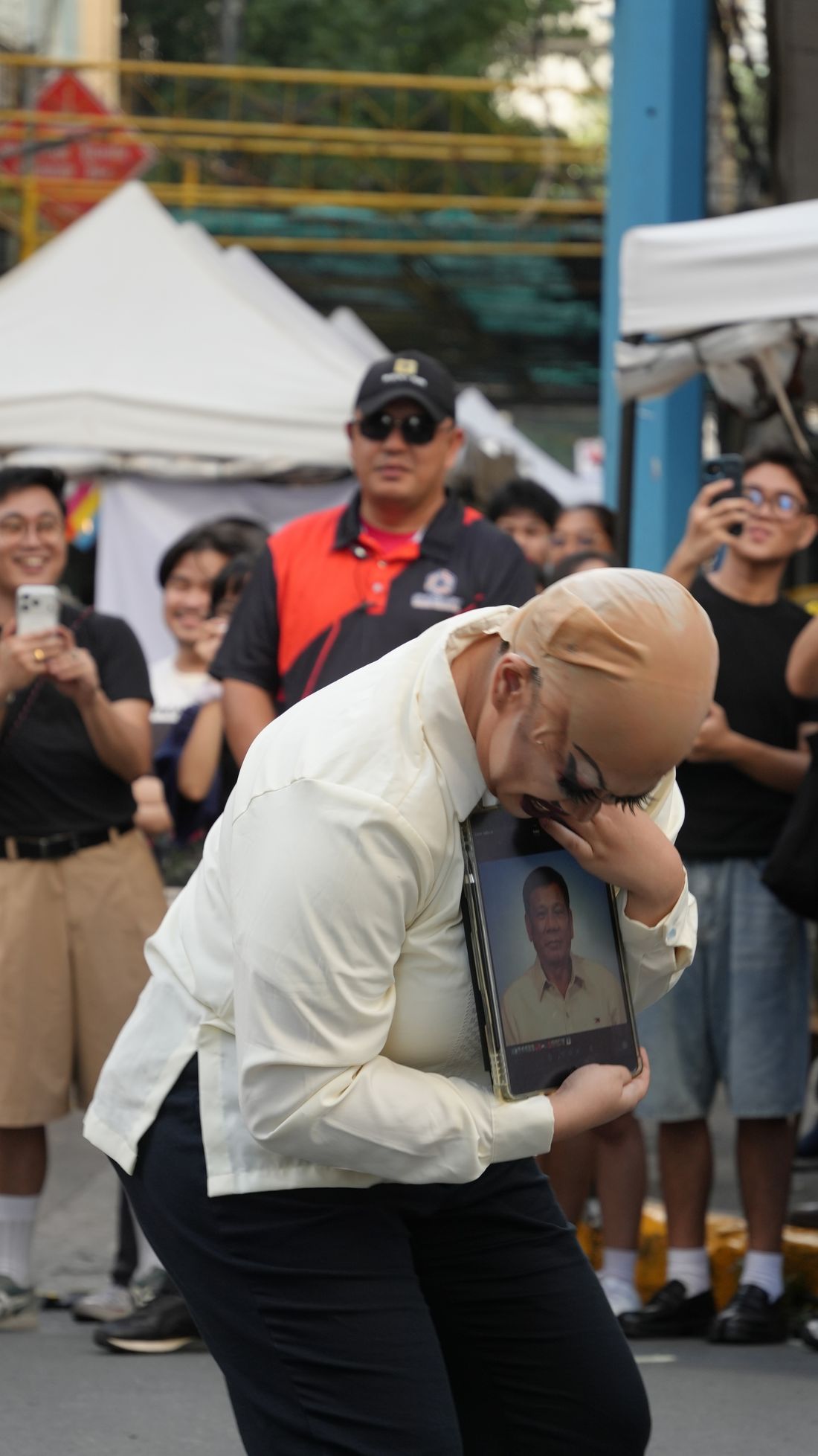
Drag King Inah Demons performing at Super Queer Kalye at Escolta, Manila, on June 28, 2026.
‘We Have a Space in this World’
As a Drag Queen, Pura Luka Vega said they have been doing drag to express themselves, to remind people that they are like everyone else. Explaining that queerness is as natural as anything.
“Let’s just remind ourselves that we have a space in this world; we are as valid and as deserving of recognition and love and all of these wonderful things,” Pura said.
For Pura, preserving and protecting spaces for creativity is equally important to creating meaningful statements and allowing individuals to express themselves freely.
Art gives you a sense of freedom, Pura says. “We need to have more of these spaces para mag-thrive pa ang sining.”
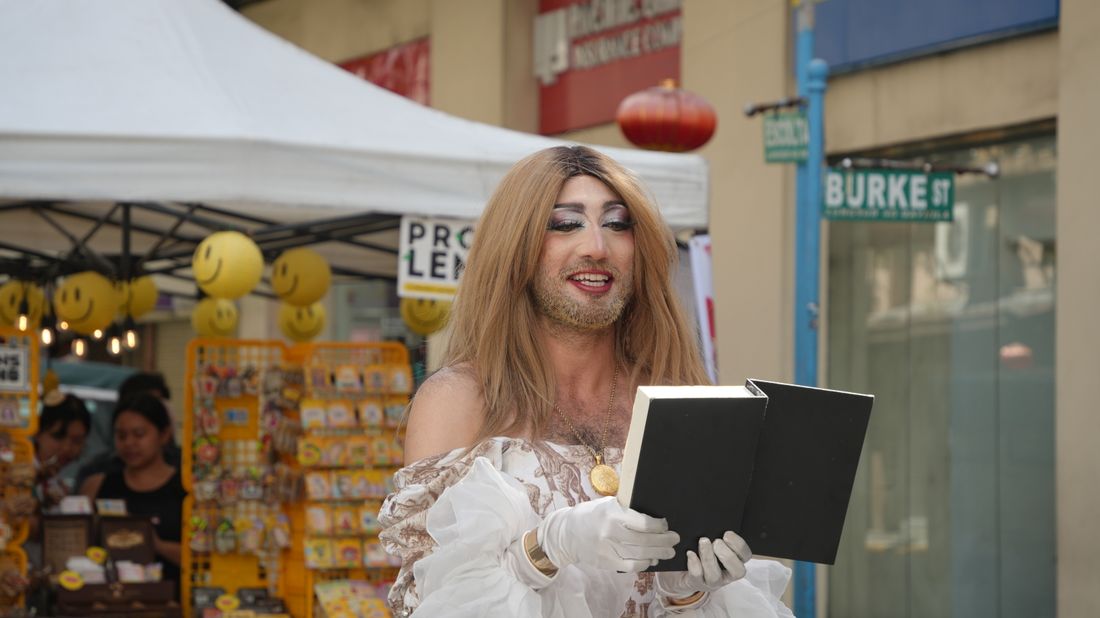
Drag Queen Pura Luka Vega performing at Super Queer Kalye at Escolta, Manila, on June 28, 2026.
“Kasi maraming Filipinos that are very talented and they need a space—queer or not, this is a welcoming space; Escolta is a very welcoming space.”
Looking ahead, Pura hopes future generations no longer have to fight simply to exist.
“We want them to feel [as] free as possible, to not feel shame regarding themselves, and loving themselves,” Pura emphasized.
Quoting the late singer Whitney Houston, Pura said, “Our children are our future. Teach them well and let them lead the way” and “learning to love oneself is the greatest love of all.”
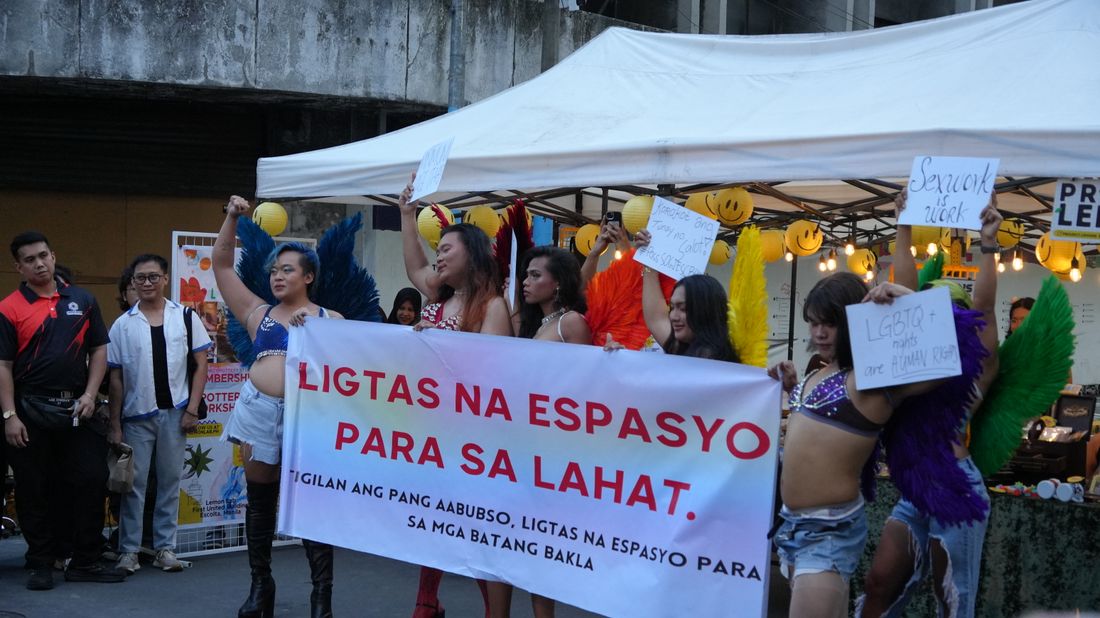
Organized by Hub Make Lab, First United Building, and Project Lemons, the event featured activities like trinket painting, a freewriting workshop, and a Queer short film screening.
For a district once known as the "Queen of Manila’s Streets" during the city’s commercial heyday, the gathering reflected a different kind of revival. Today, Escolta has become a home for artists, independent businesses, and communities that continue to redefine what public spaces can be.
A home is not always found within four walls. Sometimes, it exists in an open space where people come together and are free to express themselves without fear.
