
The House prosecution panel on Friday said the burden of evidence in the impeachment trial of Vice President Sara Duterte has now shifted to the defense after prosecutors completed the presentation of evidence supporting Article IV of the Articles of Impeachment, which involves the charge of grave threats.
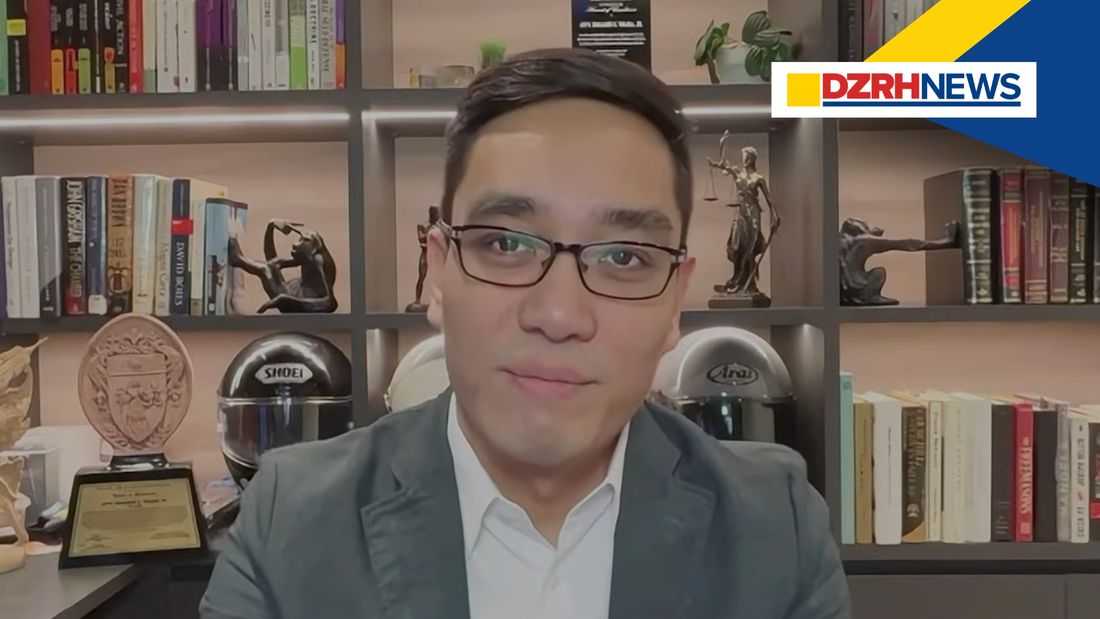
During a press conference, the House private prosecutor Atty. Benjamin Tolosa Jr. said the prosecution had already presented what it considers competent and credible evidence to establish its case, including authenticated recordings, forensic examination conducted by the National Bureau of Investigation (NBI), and the agency's official investigation.
"The prosecution has presented competent and credible evidence proving that the Vice President made statements threatening the life of the President. The prosecution has presented the proof. So now the burden of evidence now lies with the defense," Tolosa said.
According to Tolosa, the authenticated recordings containing the vice president's statements were subjected to forensic examination by the NBI, which also explained the legal basis for its finding of prima facie evidence with reasonable certainty of conviction.
He added that the impeachment court has already heard the NBI's assessment that the alleged threats constitute a serious and continuing national security concern. Tolosa also noted that the NBI created a special task force to conduct an extensive investigation into the matter and that NBI Director Melvin Matibag testified that there are already persons of interest in the ongoing probe.
Tolosa stressed that a simple denial from the defense would no longer be sufficient.
"Hindi na ho sapat ang simpleng denial. Kailangan na nilang sagutin ang authenticated recordings, ang forensic findings, ang official investigation, at ang national security assessment na nasa record na," he said.
The prosecutor emphasized that the prosecution has finished presenting evidence supporting the grave threats charge under Article IV and that it is now up to the defense to rebut those allegations by presenting its own evidence.
He added that after both sides have completed the presentation of their evidence, the impeachment court will evaluate the submissions and determine which side has presented the stronger case before rendering its judgment.
