

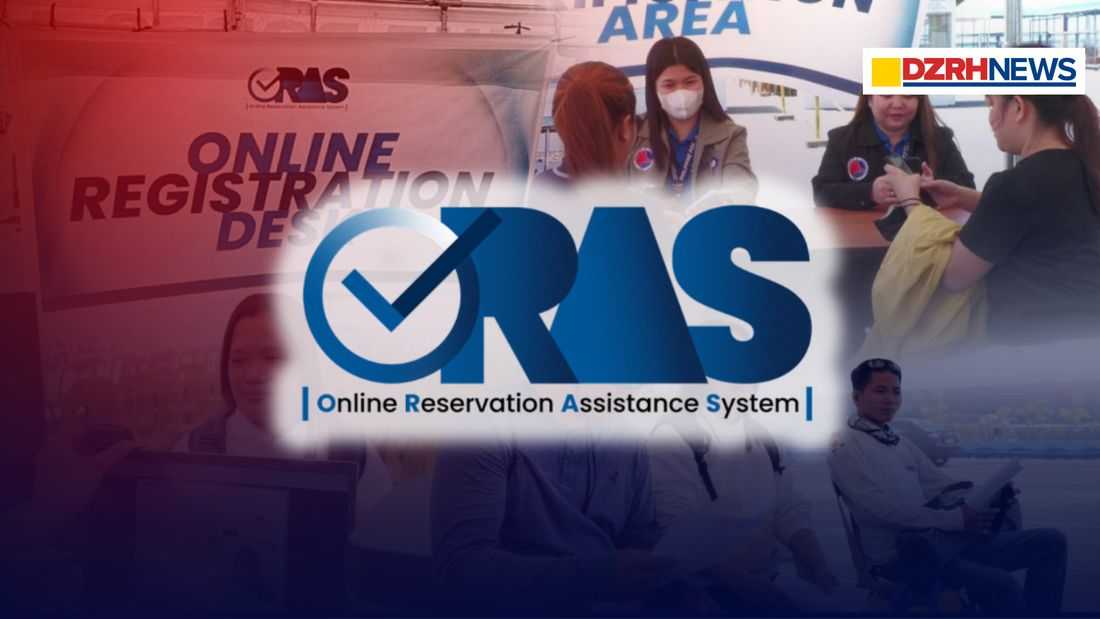
The Philippine Ports Authority (PPA) has begun testing an online reservation system in key ports to ease congestion and long queues as passenger traffic builds up ahead of the Holy Week travel period.
PPA General Manager Jay Santiago said in an interview with Dos Por Dos on Monday that an increasing number of travelers have started arriving at ports, particularly in Batangas, to return to their home provinces.
To address the expected surge, the agency launched a pilot run of the Online Reservation Assistance System (ORAS) in Batangas and Lucena ports, as well as in destinations served by routes from the two hubs.
“Nag-monitor po natin na nagsimula na po yung pagdagsa ng mga kababayan natin sa mga pantalan para po pauwi sa kani-kanilang probinsya,” Santiago said.
“Tayo po ay nag-pilot test nung tinatawag po nating online reservation assistance system o ‘ORAS’ sa mga pantalan po natin dyan po sa Batangas at sa Lucena at sa mga probinsya po kung saan po pinupuntahan ng mga kababayan natin na lumalayag po mula Batangas at Lucena.”
Under the system, passengers can reserve their trips in advance by scanning a QR code available on PPA social media pages and at port terminals. The process involves three steps: scan, choose, and reserve.
Once redirected to the ORAS website, users can select their preferred travel date, time and shipping line. They will then be required to submit identification or a selfie for verification and receive a one-time PIN. A QR code will be sent via email, which passengers must present at the port.
Santiago said travelers with confirmed QR codes can proceed directly to ticketing counters without lining up and are assured of a slot for their chosen trip.
The system, however, is limited to reservations and does not yet include online payment.
“Inuunti-unti po natin. Kung maaalala niyo po dati, sinubukan po natin yan na magkaroon po ng online ticketing system. Pero pumalag po dyan yung mga shipping line,” he said.
The pilot testing runs from March 30 to April 8. If successful, the system will be expanded to ports nationwide and implemented beyond peak travel seasons.
Passengers are required to validate their QR codes at least three hours before their scheduled trip. Santiago said this policy would allow authorities to reassign slots from no-show passengers to others waiting.
“Nagmandando po tayo ng tinatawag na operations memorandum order na kailangan pong tanggapin nila yung QR code, mandatory po yan, na kanila pong isyuhan ng ticket.”
“Kung hindi po sila magbibigay ng confirmed na biyahe na magiging parte po nitong mga confirmed schedule, hindi po natin papayagang umatrake yung barko nila kung wala po sila sa schedule.”
While ORAS is not yet directly integrated with shipping line systems, Santiago said the PPA has issued an operations memorandum mandating operators to honor QR code reservations and issue corresponding tickets.
Shipping lines that fail to comply may face administrative sanctions that could affect their operations, he added.
Santiago also assured passengers that help desks will be available at ports to assist travelers, especially those who encounter issues such as invalid QR codes or missed schedules.
“Meron po tayong help desk, lumapit lamang po sila at sinisigurado po natin na pai-issuehan po natin sila ng ticket.”
He said the Department of Transportation, led by acting Secretary Giovanni Lopez, is supporting the initiative, while coordination with other agencies and shipping operators continues to improve the system.
The PPA expressed hope that wider cooperation from stakeholders would eventually allow full integration of schedules and ticketing systems, further streamlining sea travel for the public.
