
MANILA, Philippines - Filipino cuisine continues to make waves on the international culinary stage, as two of the Philippines’ most beloved chicken dishes earned spots in TasteAtlas’ latest April 2026 ranking, the Department of Tourism (DOT) announced.
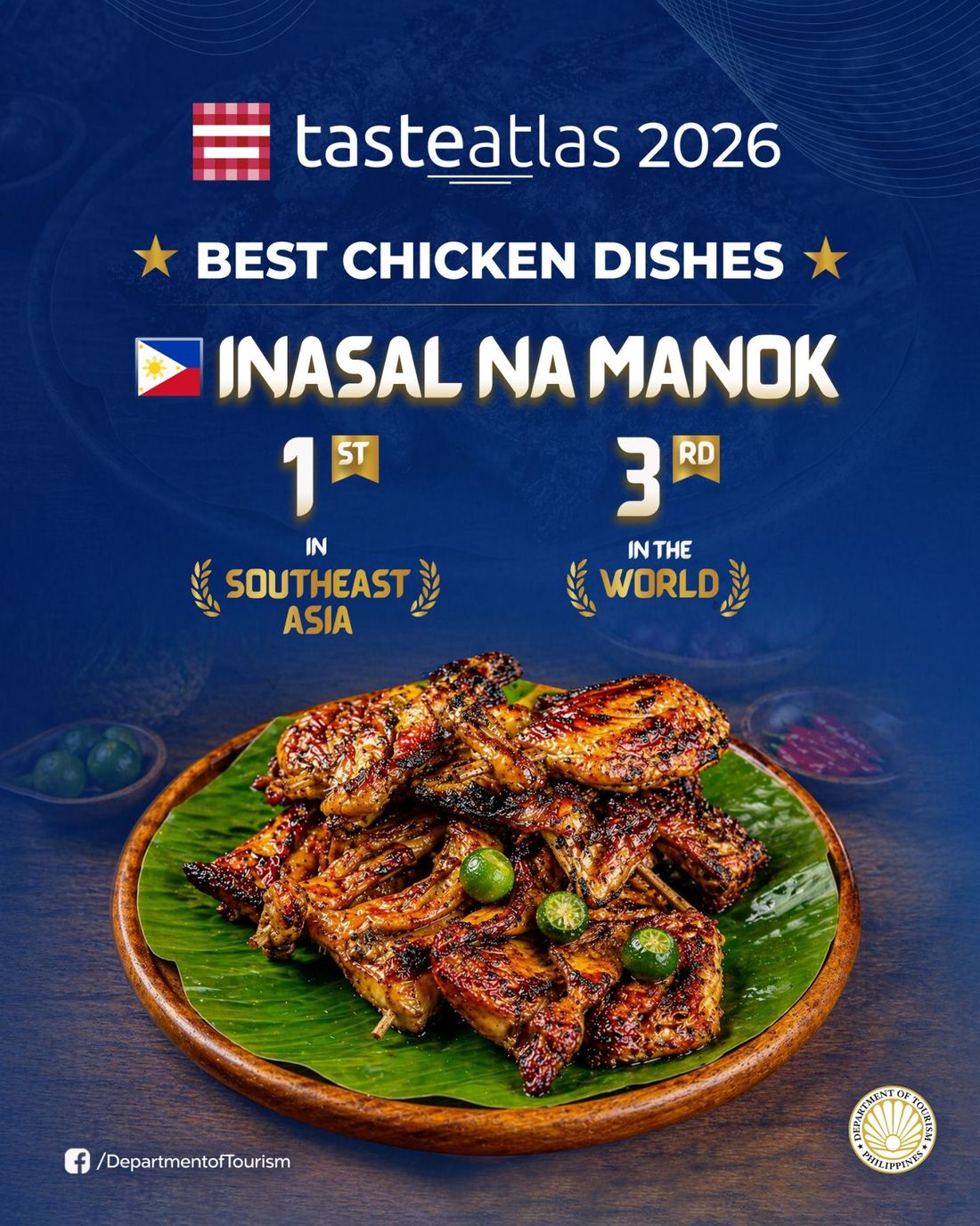
According to the Tourism Department, “inasal na manok” topped the list as the Best Chicken Dish in Southeast Asia. It also proved to be a global favorite after taking the third spot of the world’s best chicken dishes list.
In TasteAtlas’ November 2025 ranking of the best chicken dishes, “inasal na manok also topped Southeast Asia and ranked 10th worldwide.
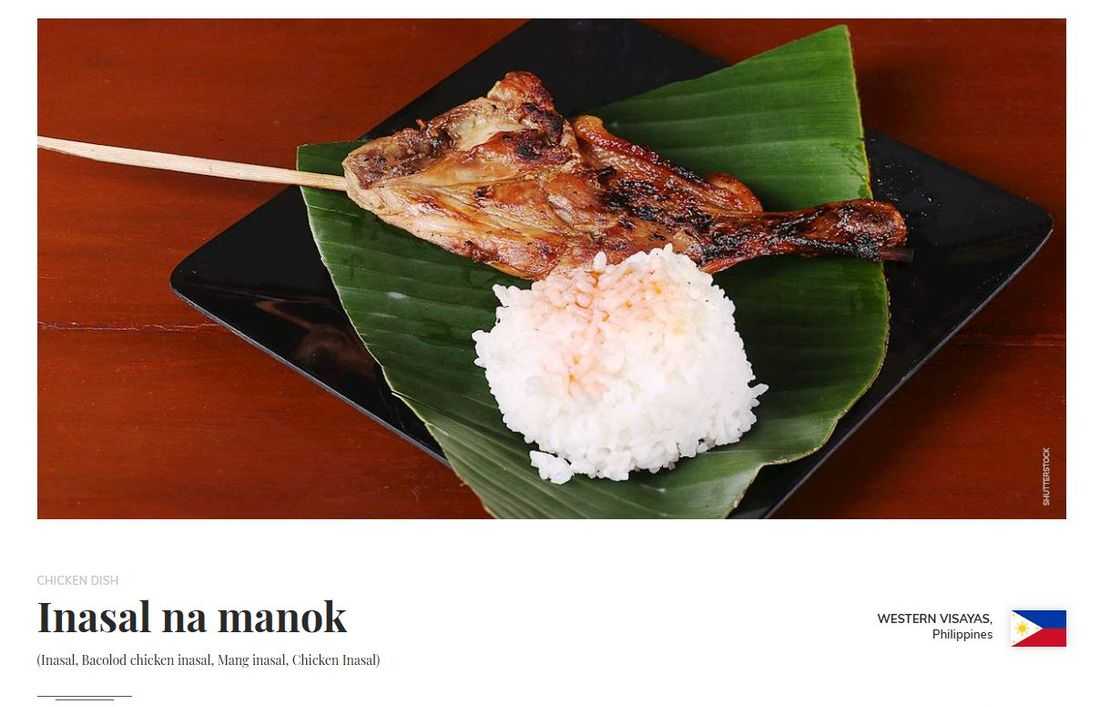
A staple of Western Visayan cuisine, inasal na manok is a distinctively Filipino grilled chicken dish known for its smoky aroma and vibrant flavor.
“[Inasal na Manok] employs various chicken cuts marinated in a mixture of vinegar and numerous spices such as lemongrass, garlic, and ginger. During grilling, the meat is brushed with the annatto-infused oil which provides the chicken with an appetizing golden color and a unique peppery flavor,” said TasteAtlas in its description.
Courtesy of Department of Tourism (DOT)
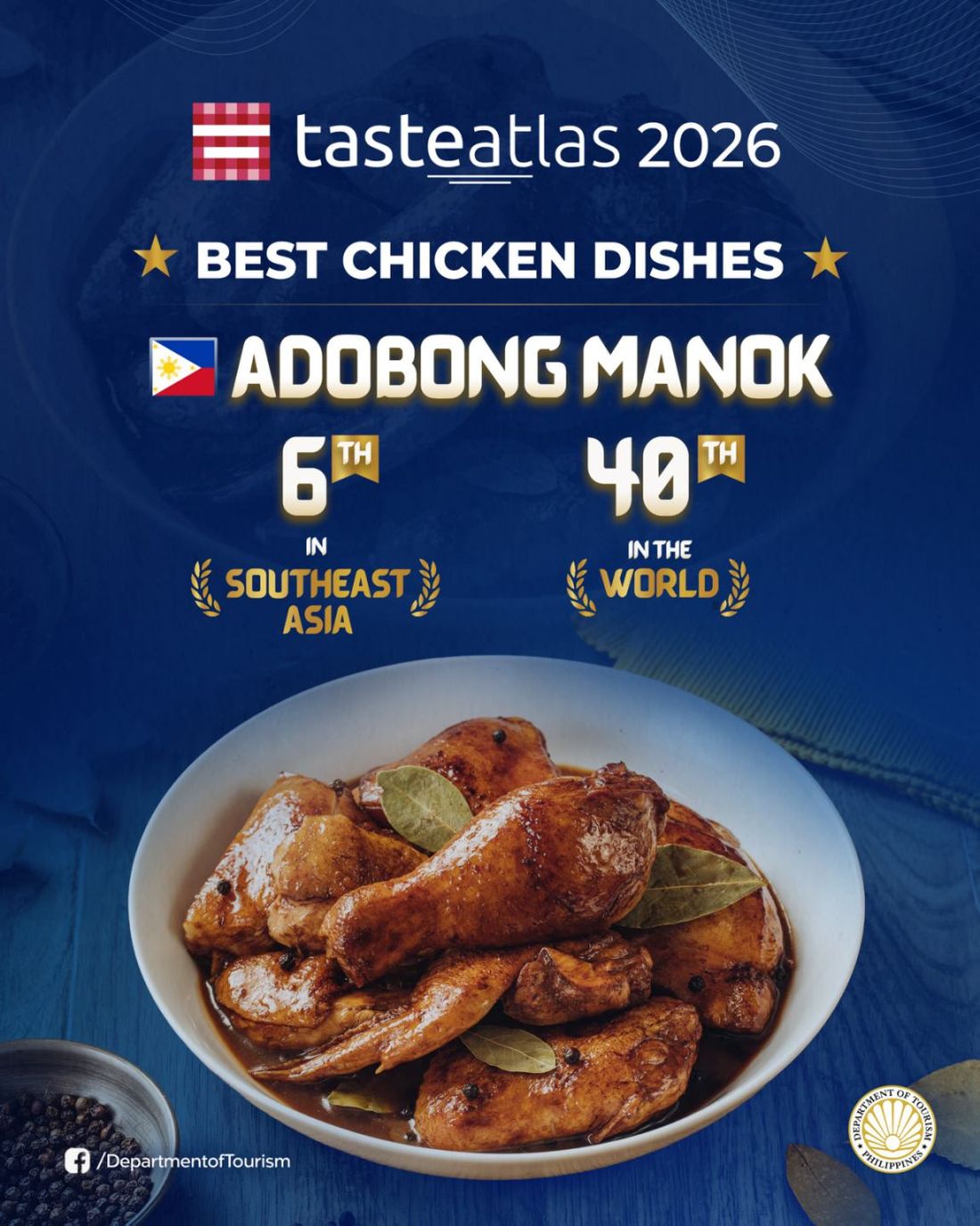
TasteAtlas also listed another Filipino favorite, “adobong manok,” which ranked sixth among Southeast Asia’s best chicken dishes, and placed 40th worldwide.
Widely regarded as a culinary symbol of the Philippines, adobong manok is known for its balance of savory, tangy, and sweet flavors, the DOT stated.
“Adobong manok is a traditional stew originating from the Philippines. This type of Filipino adobo is made with a combination of chicken, garlic, onions, bay leaves, peppercorns, oil, brown sugar, soy sauce, and white vinegar,” TasteAtlas noted in its entry on the dish.
Courtesy of Department of Tourism (DOT)
TasteAtlas is an online food and travel guide founded in 2018 that curates global ranking and reviews of traditional dishes, local ingredients, and authentic restaurants based on expert and audience feedback.
DOT Secretary Dita Angara-Mathay hailed the recognition as it elevates Filipino culinary traditions on the global stage.
“Filipino cuisine has always been a powerful expression of our identity and a meaningful driver of cultural tourism. Each dish carries the stories, traditions, and creativity of our people, offering both foreign and local visitors a deeper connection through shared flavors,” said Secretary Angara-Mathay.
The Secretary likewise highlighted the broader impact of these recognitions beyond culinary prestige.
“These recognitions also create meaningful opportunities for those in our culinary industry, from farmers and food producers to chefs and small business owners, whose livelihoods are rooted in sharing our food traditions with the world,” Secretary Angara-Mathay said.
