
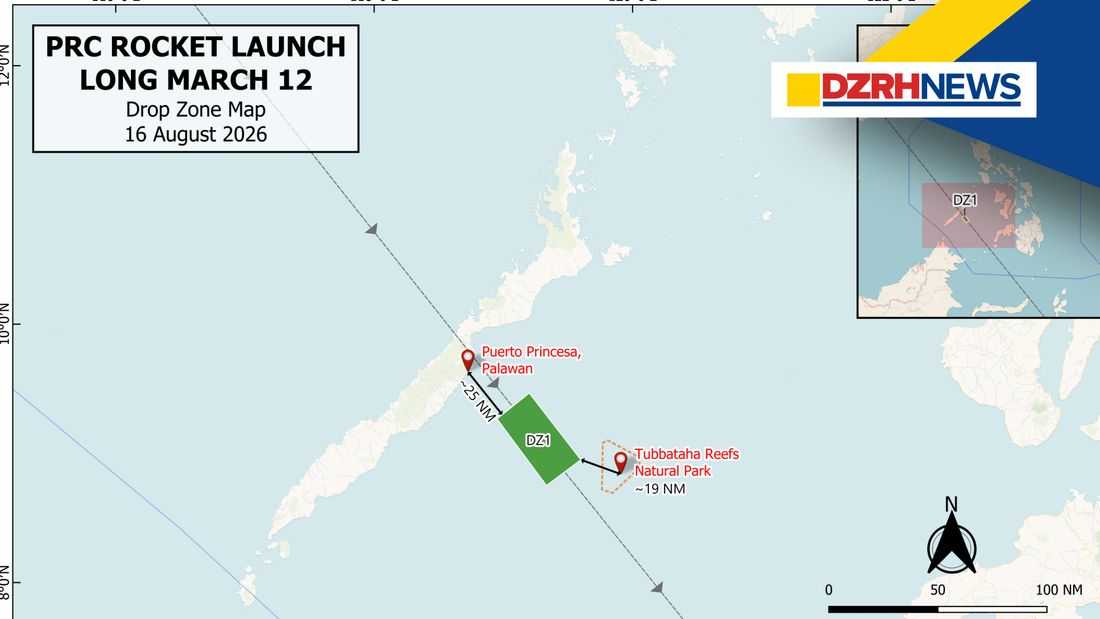
The Philippine Space Agency (PhilSA) confirmed the launch of China's Long March 12 rocket on Sunday, August 16, with the projected rocket debris drop zone located within Philippine archipelagic waters near Palawan.
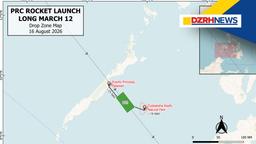
The rocket was launched from the Hainan International Commercial Launch Center in Wenchang, Hainan, at around 12:10 p.m. Philippine Standard Time. PhilSA said the identified drop zone was approximately 25 nautical miles from Puerto Princesa, Palawan, and 19 nautical miles from the Tubbataha Reefs Natural Park.
Details of the drop zone were previously disclosed through a Notice to Airmen (NOTAM) warning of an “aerospace flight activity.” PhilSA also issued a pre-launch report to relevant government agencies and authorities.
According to PhilSA, unburned rocket components such as the booster and fairing are designed to be discarded during the rocket's ascent into outer space. Although the debris was not projected to fall on land or populated areas, it could pose risks to ships, aircraft, fishing boats, and other vessels within the drop zone.
PhilSA also warned that debris could float and potentially wash toward nearby coastlines, while an uncontrolled atmospheric re-entry of the rocket's upper stages cannot be completely ruled out at this time.
The agency noted that increasing global launch activity is contributing to growing risks from rocket debris and uncontrolled re-entries, potentially affecting spacecraft, civil aviation, and people on the ground.
PhilSA urged the public to report any suspected rocket debris to local authorities and warned against touching or retrieving such materials, which may contain potentially toxic remnants of rocket fuel.
The agency also called for greater international cooperation in developing regional protocols and capabilities to protect space assets, aviation, maritime activities, and communities from space-related debris hazards.
