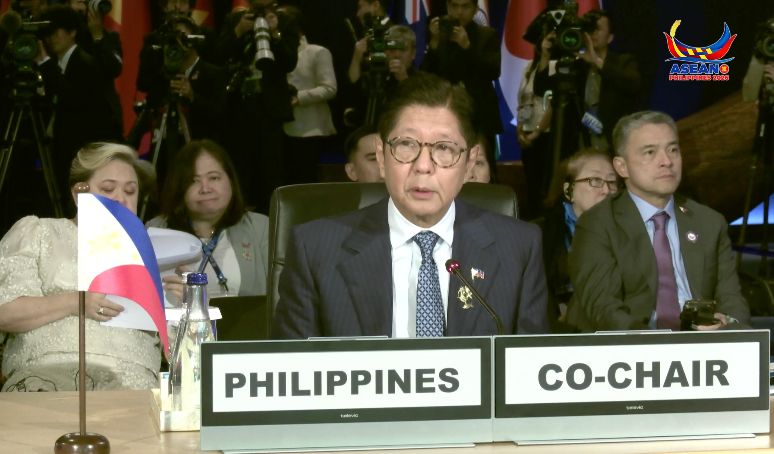
President Ferdinand “Bongbong” Marcos Jr. said the Philippines is advancing plans to establish a 'Strategic Petroleum Reserve' to strengthen the country’s energy security and prepare for potential oil supply disruptions.
Marcos announced during the 4th Asia Zero-Emission Community (AZEC) Leaders’ Meeting on Tuesday, November 17, where he emphasized the importance of oil storage and stronger cooperation among oil-producing and oil-consuming countries.
“For the Philippines, our priority is clear. We are actively advancing our Strategic Petroleum Reserve, backed by the robust infrastructure and financing required to sustain it,” Marcos said.
The President also called for greater information sharing and agreements on oil storage between producing and consuming economies to strengthen regional energy security.
He said the Philippines welcomes investments across the energy sector, including renewable energy, grid modernization, energy storage, natural gas, energy efficiency, and emerging technologies.
Marcos also underscored the need to uphold "international law to keep sea lanes open and maintain fair and transparent markets," noting that both oil buyers and sellers are affected by market volatility.
“Energy resilience is a shared global good that demands our collective commitment,” he said.
The President further highlighted the country's efforts to improve energy efficiency, citing the signing of its first Article Implementation Agreement with Singapore this year.
He also cited the issuance of the country's carbon market policy framework last month, which aims to facilitate green financing, support the Philippines' nationally determined contributions, and regulate carbon credit trading.
Marcos said the government is also implementing a national just transition framework to ensure that the shift toward a low-carbon economy generates decent jobs, prepares workers for emerging industries, and protects communities affected by the transition.
He stressed that energy security requires collective action among countries, emphasizing that the Philippines' efforts would also contribute to regional stability and resilience.
“In an interconnected world, no nation powers its future alone. Every stride that the Philippines takes toward energy security does not end at our borders. It reinforces the strength, stability and collective resilience of our entire region,” Marcos said.