
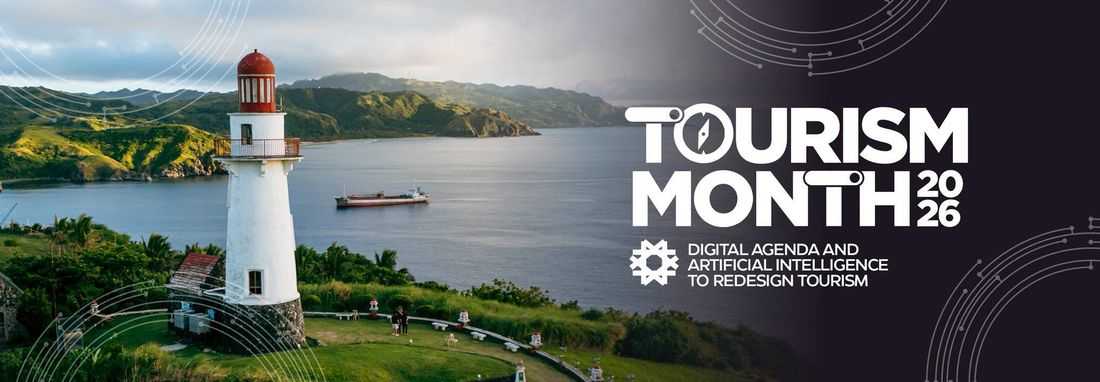
Manila, Philippines - The Philippines closes Tourism Month with a stronger ranking on the global tourism stage, as it becomes the seventh-fastest improving economy in the world this year, according to the World Economic Forum’s (WEF) 2026 Travel and Tourism Development Index (TTDI).
The country, in particular, climbed eight places to 57th out of 110 economies surveyed, according to the Department of Tourism (DOT).
“This is proof that the work we have been putting into our tourism sector, from our airports and seaports to our local markets and cultural destinations, is being felt and recognized internationally. But we acknowledge we have a long way to go, and we are working hard to ensure that every Filipino community that welcomes tourists reaps the benefits through better jobs, better livelihoods, and a better quality of life,” said Tourism Secretary Dita Angara-Mathay.
Sustainability posted the country’s largest improvement in ranking, rising from 64th to 29th in the Travel and Tourism Sustainability dimension, driven by stronger scores in nature protection and wastewater treatment, the DOT stated.
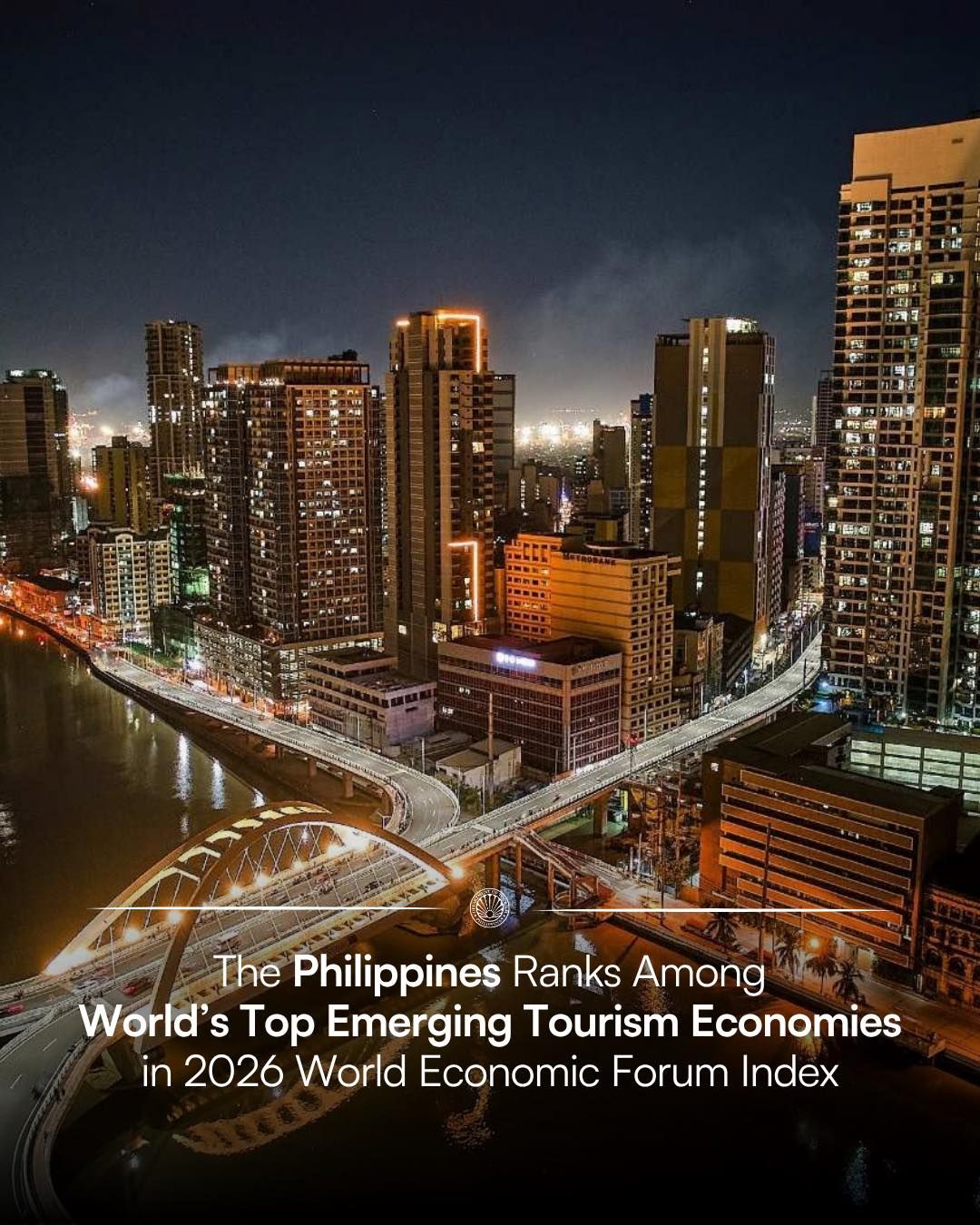
Courtesy of Department of Tourism (DOT)
Within this area, the Philippines ranked second globally in the Travel and Tourism Demand Sustainability pillar, supported by a significant increase in its score for geographically dispersed tourism, from an index score of 3.2 to 5.2 out of 7, the DOT added.
This recognition comes at the heels of the Philippines being named as the Global Dive Destination of the Year at the ADEX Big Blue Legacy Awards 2026, and the Best Dive Destination Award at the DRT Show Shanghai 2026, reflecting the government’s commitment to protecting our environment and natural resources.
“Our islands, reefs, forests, and heritage sites are what make the Philippines worth visiting. Ensuring that these treasures are protected, while responsibly managing the growth and impacts of tourism, remains our key priority to ensure that future generations are able to benefit from it,” Angara-Mathay shared.
Data from WEF also showed ground transport and port connectivity also climbed from 80th to 49th, with 26 of those places gained in the last two years, buoyed by higher ratings for seaport, public transport, and train efficiency.
According to the Tourism Department, this progress comes amid stronger collaboration between the Department of Tourism (DOT) and the Department of Transportation (DOTr), the Civil Aeronautics Board (CAB), the Civil Aviation Authority of the Philippines (CAAP), and the Department of Public Works and Highways (DPWH) on transport and infrastructure improvements across the country’s seaports, airports, rail, roads, and bridges.
The Philippines also moved from 93rd to 73rd in safety and security as homicide incidents fell from about 10.5 to 4.4 per 100,000 people. The Department credits its close coordination with the Philippine National Police (PNP) on tourist safety, including the recently cascaded manual on tourist safety and disaster response, WEF data showed.
The country’s strongest-performing dimension was policy and enabling conditions, which climbed from 33rd place in 2019 to 12th in 2026, as government spending on tourism grew from 3.1 percent of the national budget to 5.8 percent.
Culture and heritage, meanwhile, recorded the largest score increase of any of the country’s 17 pillars, rising 43 percent since 2019 and lifting the Philippines from 52nd to 38th, reflecting broader international recognition that includes five UNESCO Creative Cities, up from one in 2019.
The Philippines scored 4.08 out of 7 overall and was identified by the WEF as one of the world’s ten major emerging tourism economies, alongside China, India, Malaysia, Thailand, Indonesia, Viet Nam, Türkiye, Mexico, and Brazil.
The TTDI assesses economies across five dimensions and 17 pillars, using 102 indicators, to measure the factors that enable sustainable and resilient tourism development.
