
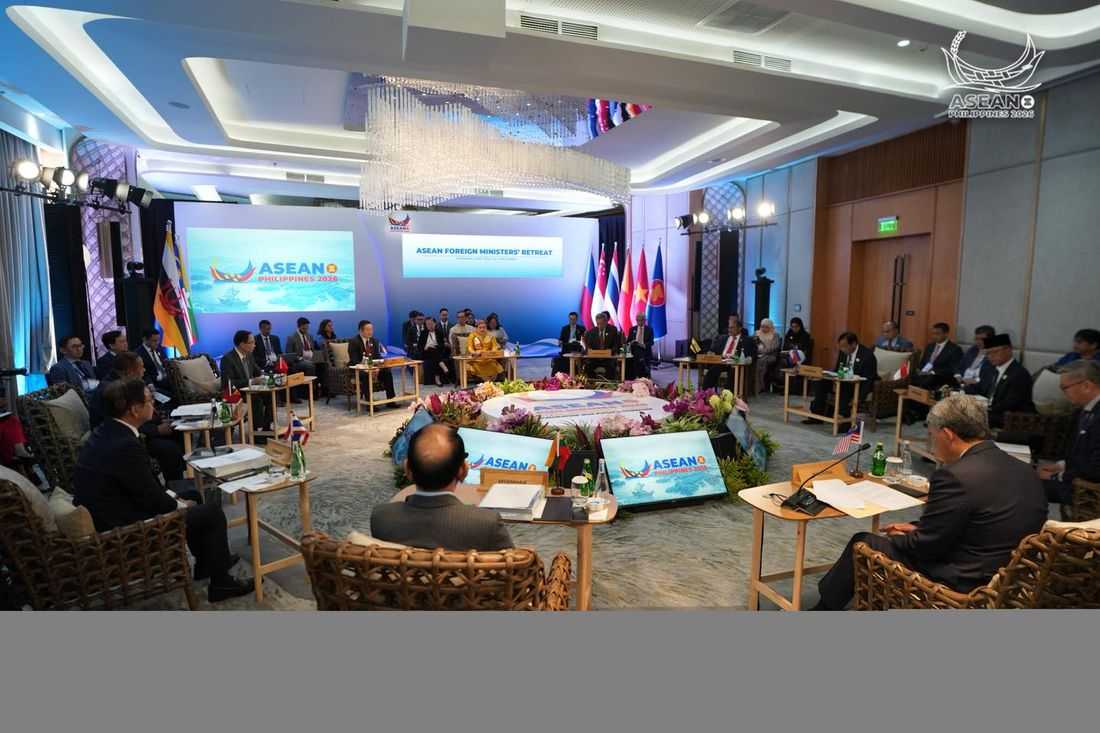
CEBU CITY - The Philippines and China held on Thursday talks on the contentious Code of Conduct (COC) and South China issues, a day after the ASEAN Ministerial Meeting (AMM) Retreat in a resort hotel in Cebu.
According to the DFA, Philippine Undersecretary for Policy Leo Herrera-Lim and China’s Director-General of the Department of Boundary and Ocean Affairs on Maritime-related Matters Hou Yanqi, discussed the implementation of an existing non-binding code between the ASEAN and China.
"Both sides had a candid exchange of views on bilateral relations, maritime-related matters, and regional and international issues of mutual interest," according to a statement by the Department of Foreign Affairs.
The Philippines last week expressed concern over the heated public exchanges between Chinese Embassy diplomats and Filipino lawmakers over issues in the South China Sea.
The DFA also earlier “made firm representations” to the Chinese ambassador, conveying serious concerns over the exchanges.
According to the DFA, this could “unnecessarily derail the diplomatic space needed to manage the tensions in the maritime domain.”
In a press briefing after the AAM Retreat in Cebu, DFA Secretary Ma. Theresa Lazaro said that she is “optimistic” that the negotiations on the COC between ASEAN and China will progress with a new strategy, with the support of the regional bloc.
“I would love, being an optimist, I would like to say that I have a high level of confidence, as being an optimist. But being a pragmatist, I would say that I cannot really predict, but this is what we are going to do as a strategy. We, the Philippines, now as Chair, will have monthly face-to-face meetings of the technical working group, and that has been a commitment, and it is a proposal, and was accepted by our ASEAN colleagues,” Lazaro said.
When asked if China has already agreed to the new strategy, Lazaro said that they are still “in the process” of talking to them but doesn’t see any difficulties with the proposed strategy.
As ASEAN Chair, the Philippines has been pushing for a “Code of Conduct” due to escalating tensions in the South China Sea, and the recent incident of “high-pressure water cannoning and dangerous maneuvers” by China Coast Guard and Navy vessels against Philippine seacrafts in the contested areas.
