
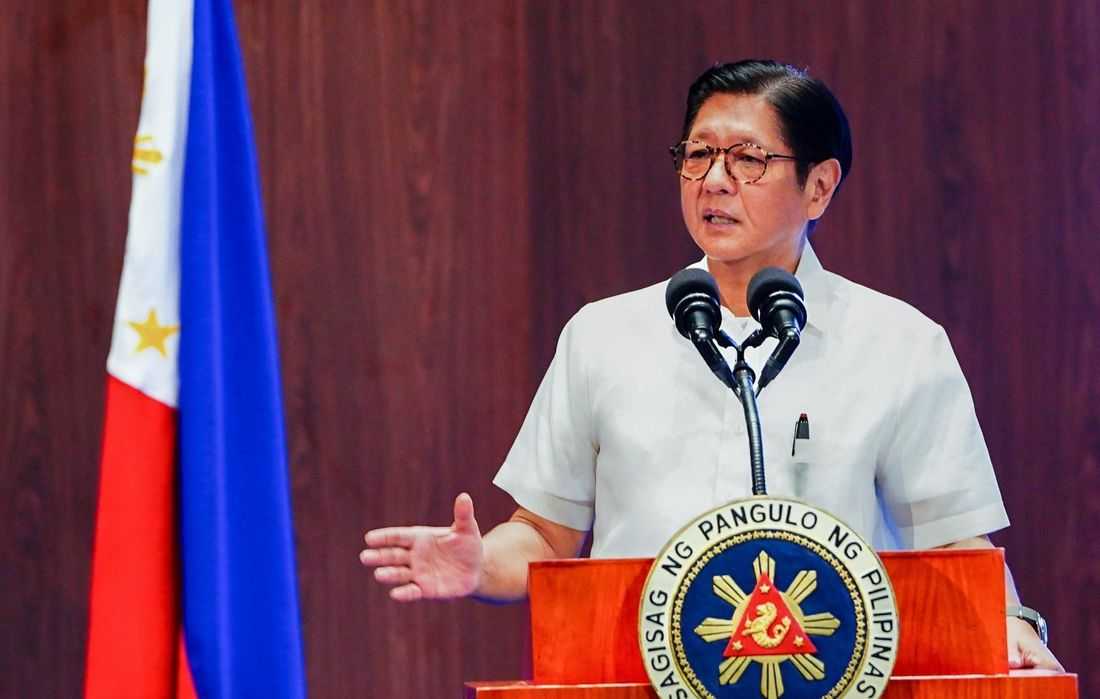
President Ferdinand 'Bongbong' Marcos Jr. emphasized the need for Southeast Asian Nations (ASEAN) member states to strengthen their supply chains and enhance trade within the region.
Speaking on the lessons learned from the COVID-19 pandemic during the Association of Southeast Asian Nations (ASEAN) Editors and Economic Opinion Leaders Forum (AEEOLF) at Makaty City on Wednesday, Marcos said the crisis highlighted the importance of more resilient supply chains, especially among ASEAN countries, according to a report by RH Leth Narciso.
“One of the great lessons that we had to do was to make more robust our supply chains. And that's what we were going about. And our supply chains to our trade partners around the world,” Marcos said.
“And with all the things that have happened, the effort to make those supply chains more robust and stronger have really run into great obstacles. And so there has been a joint understanding between member states, let's do it ourselves first. And so the supply chains within ASEAN should be strengthened. The way we do business with one another should be strengthened,” he added.
Marcos noted that only 23 percent of ASEAN’s total trade comes from intra-regional transactions, while the remaining 77 percent involves countries outside the bloc.
“I came upon a statistic where the business, the commerce, the trade that ASEAN does is only 23%, I think that's the number, about 23%, intra, intra trade. The rest of the 77% is outside of ASEAN, countries going outside of ASEAN. If we could develop that intra trade within ASEAN, I think that that would serve a great, great purpose,” Marcos added.
To address this, the Philippine president said member states agreed to prioritize strengthening trade within the ASEAN region. Among the measures being discussed are the development of a common ASEAN power grid and the standardization of importation processes to streamline transactions and improve understanding of each country’s business regulations.
“We are slowly coordinating our different agencies so that, for example, procedures for importation is pretty much standardized, that we understand how each country does business and how to deal with them. We understand what the laws are,” Marcos said.
As host and Chair, he added that these initiatives aim to restore ASEAN as a strong force in the global economy.
“And we understand what part each country will play once we try to achieve what we aspire for, which is to return as a global force in the global economy,” Marcos concluded.
