
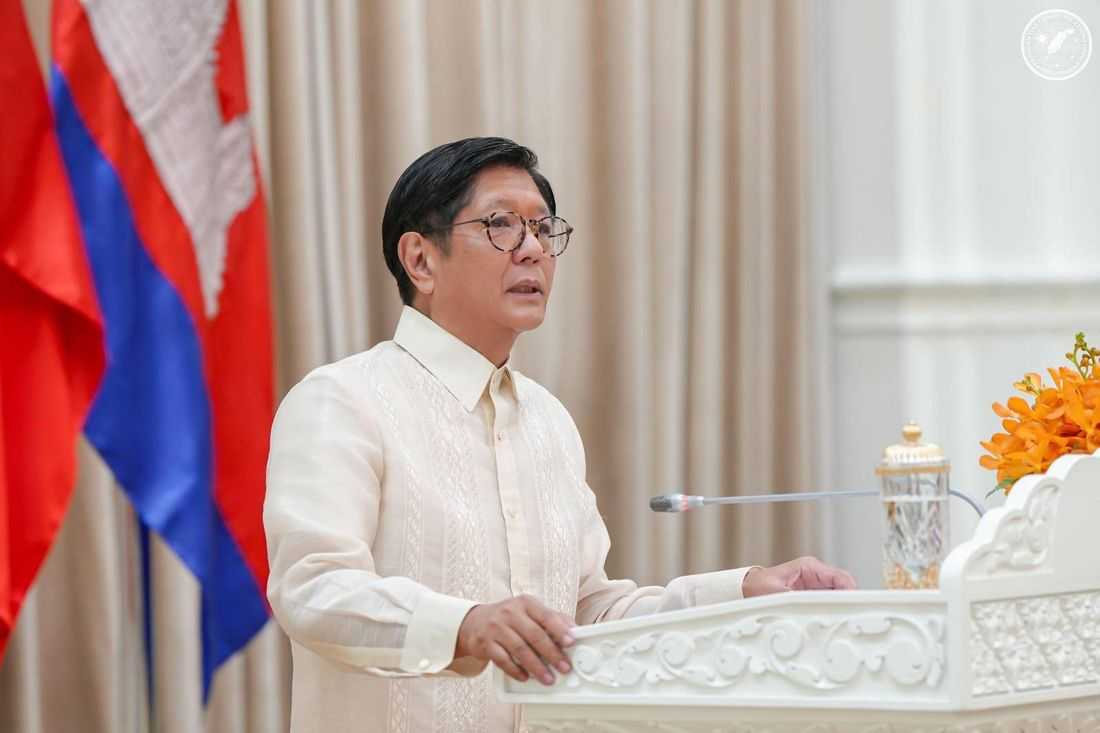
President Ferdinand Marcos Jr. and First Lady Liza Araneta-Marcos are set to undertake a state visit to Japan from May 26 to 29, upon the invitation of the Japanese government.
Department of Foreign Affairs (DFA) Spokesperson Analyn Ratonel said the trip was an important one, as it opens opportunities for talks on pressing issues such as security, maritime defense, economy, and energy resilience.
“Napakahalaga po ng biyaheng ito, sapagkat ito ang pagkakataon para makapag-usap si Pangulong Marcos Jr. at Prime Minister Sanae Takaichi tungkol sa kooperasyon ng Pilipinas at Japan sa larangan ng seguridad, maritime defense, ekonomiya, energy resilience and decarbonization, at emerging and future-oriented sectors,” she told the media in a press conference on Monday.
She added that the two leaders are also expected to discuss regional and global issues that affect both the Philippines and Japan, including ASEAN matters, challenges in the Indo-Pacific region—which she later clarified encompasses dealings with China over the disputed waters—as well as the developments in the Middle East war.
Ratonel said the President and First Lady will be received by the Emperor and Empress of Japan, who will hold a welcoming ceremony and state ball in the former couple’s honor. Then a summit meeting will be held, wherein Marcos will confer with Takaichi.
“Inaasahang mag-aanunsyo ang dalawang bansa ng mga bagong kasunduan sa defense, trade and investment, at human resources,” the foreign affairs official said.
President Marcos is also scheduled to meet with Japanese business groups and members of the Filipino community in Japan, she added.
The DFA spokesperson said the Philippines and Japan are commemorating their 70th year of normalized or restored diplomatic ties in 2026. Earlier, she also said this was President Marcos Jr.’s first state visit to the country.
As of 2025, there are 340,000 Filipinos living and working in Japan, half of this number being permanent migrants and the other half temporary migrants, which includes individuals across a number of professions such as teachers, engineers, and health care workers.
