

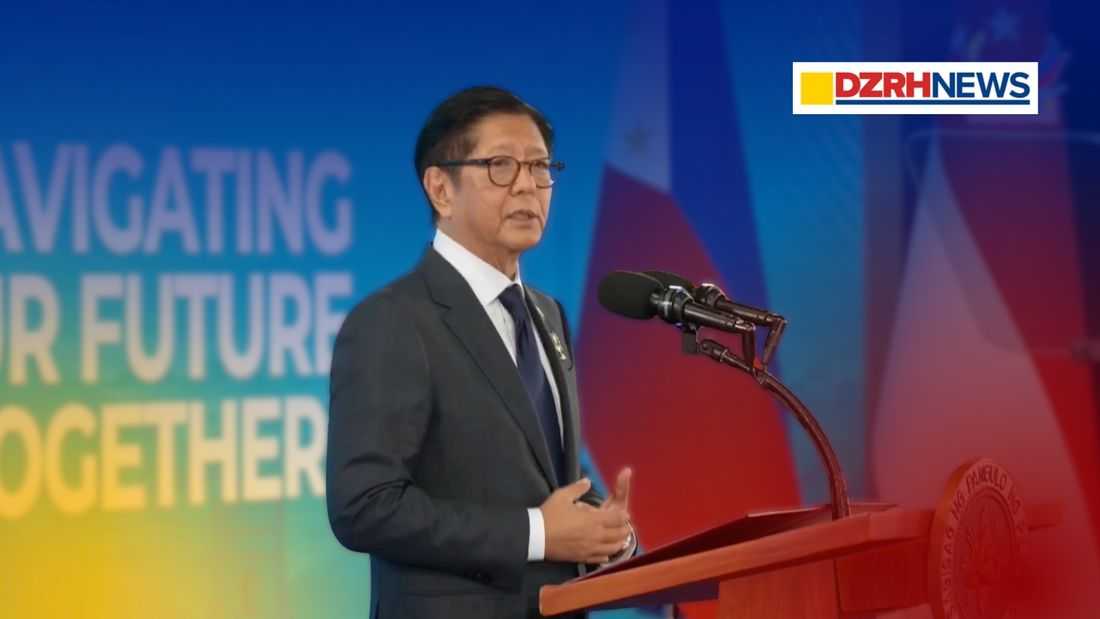
President Ferdinand "Bongbong" Marcos Jr. announced ASEAN’s support for the proposed ASEAN Maritime Center to be hosted in the Philippines, while also acknowledging growing frustration among member states over the lack of progress in resolving the crisis in Myanmar.
During a press briefing following the 48th ASEAN Summit in Cebu, Marcos said the proposed maritime center would help strengthen regional coordination in maintaining peace, safety, and freedom of navigation in the South China Sea.
“What we are working for is the continued freedom of navigation and the peaceful navigation in the South China Sea,” Marcos said. “UNCLOS is the single most important guide and principle that we adhere to.”
The president emphasized that the initiative was not aimed at confronting any particular country but rather at improving maritime cooperation among ASEAN states and other stakeholders.
The proposed center would monitor vessel traffic, illegal fishing, smuggling, and human trafficking while coordinating maritime security efforts among member countries.
“The unanimous answer was yes,” Marcos said regarding ASEAN leaders’ support for the proposal.
“The idea of the Maritime Center is to make a cohesive organization that will put together all the efforts of all the different countries.”
Marcos noted that the South China Sea remains critical to global commerce, warning that disruptions in the area could have “alarming” consequences for international trade and energy supply.
The president also addressed ASEAN’s ongoing discussions regarding Myanmar, admitting that member states remain frustrated over the lack of progress in implementing ASEAN’s Five-Point Consensus aimed at restoring peace and democracy in the country.
“We have to do something because Myanmar is not merely a trade partner,” Marcos said during the briefing. “Myanmar is part of the ASEAN family. And it is a tragedy when a family member is left out of the family.”
Marcos said ASEAN leaders held an “emotional” and “vibrant” closed-door discussion on Myanmar and agreed that new approaches may be needed to move the stalled peace process forward while maintaining ASEAN’s commitment to human rights and the rule of law.
“There are no definitive answers as yet, but we are certainly going to work on it very, very hard,” he said.
The summit concluded with ASEAN leaders reaffirming commitments to regional cooperation, maritime stability, and collective crisis response amid growing geopolitical tensions in the Indo-Pacific.
