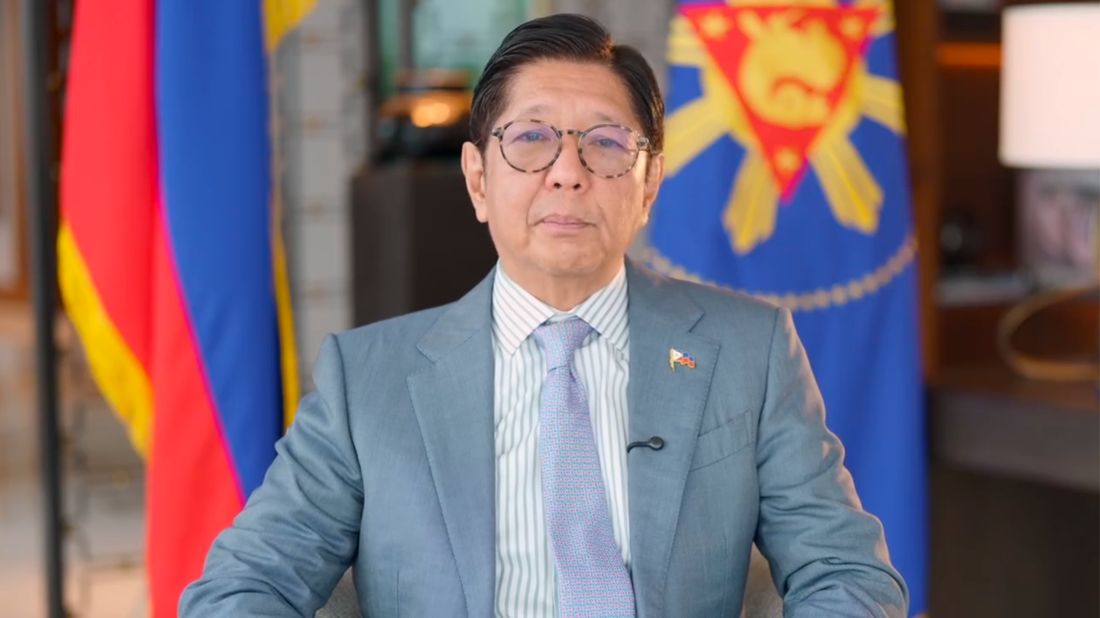
President Ferdinand Marcos Jr. said the Philippines secured concrete benefits for its people through its participation in the 33rd Asia-Pacific Economic Cooperation (APEC) Economic Leaders' Meeting in Shenzhen, China, where he pushed for open trade, stronger supply chains and greater economic opportunities for Filipino workers and businesses.
In a report following his return from China, Marcos said he attended the summit and related activities at the invitation of Chinese President Xi Jinping.
“I went to Shenzhen with a clear purpose: to help keep markets open, supply chains secure, and growth working for our people at a time of rising prices and continued uncertainty in the global economy,” Marcos said.
He said he advocated for an open, fair and rules-based trading system during the leaders' meeting, highlighting the Philippines' economic progress and its expanding network of free trade agreements.
Marcos also urged fellow APEC economies to recognize one another's educational and professional qualifications, saying this would allow Filipino workers and professionals to move across the region more easily.
As chair of the Association of Southeast Asian Nations (ASEAN), Marcos also presented the region's progress on the ASEAN Digital Economy Framework Agreement and called for wider access to affordable digital tools and artificial intelligence (AI) for micro, small and medium enterprises (MSMEs).
He stressed that AI must earn public trust, calling for interoperable and human-centered approaches to its governance across the region.
The president also underscored the importance of protecting maritime routes, saying oceans serve both as a source of livelihood for Filipino fisherfolk and as vital channels for international trade.
He said keeping these waters open and secure in accordance with international law, including the United Nations Convention on the Law of the Sea (UNCLOS), is essential to protecting regional supply chains.
Marcos also highlighted the potential of the care economy as a source of employment, noting that more than 300 million older persons are expected to live in APEC economies by 2050.
He said Filipino care facilities, nurses, caregivers and trustees across the Asia-Pacific and other parts of the world are ready to help meet the growing demand.
“Above all, I made a simple point to my fellow leaders that we will keep talking in APEC. But our conversations must translate to concrete benefits for our people,” Marcos said.
He added that regional cooperation should create jobs, empower MSMEs and open new opportunities for Philippine goods and services.
The 33rd APEC Economic Leaders' Meeting brought together leaders from across the Asia-Pacific to discuss regional economic cooperation, trade and sustainable growth.