
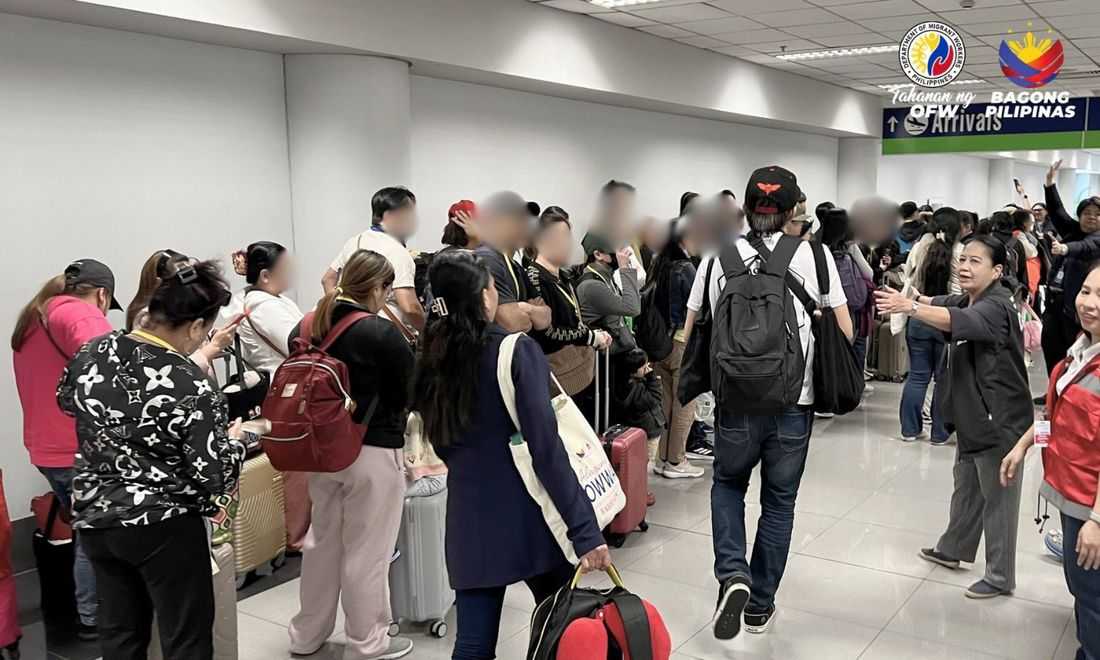
More than 3,700 overseas Filipino workers (OFWs) and their dependents have been repatriated from various Middle East posts through government-funded chartered flights amid rising tensions in the region, the Department of Migrant Workers (DMW) reported.
During the House Committee on Ways and Means hearing on Wednesday, DMW Secretary Hans Leo Cacdac said that as of April 6, 2026, a total of 3,736 individuals have returned to the Philippines through government-funded commercial and chartered flights, consisting of 2,870 OFWs and 866 dependents.
According to the DMW, seven chartered flights have already been conducted, with an additional eight to nine flights scheduled for Friday and next week.
Overall, 4,611 OFWs and dependents have been brought home through both commercial and chartered flights monitored by the agency beginning March 5, 2026.
Overall, the DMW has rendered services to 21,354 individuals, providing various forms of support.
Records showed that repatriates came from several areas across the Middle East, with the highest number arriving from Dubai with 915 individuals, followed by Abu Dhabi with 678, Qatar with 582, and Kuwait with 540.
Other recorded arrivals include:
- Bahrain — 362
- Riyadh — 302
- Al Khobar — 133
- Israel — 90
- Jeddah — 55
- Lebanon — 44
- Oman — 35
Cacdac clarified that not all returning Filipinos received financial assistance. Only those whose work was disrupted due to the conflict were eligible.
“Most notably sa Gulf state and even Israel sa sector ng hotels, hospitality, events management, transport, construction. 'Yan ang mga kadalasan na eengkwentro natin na nahintong trabaho,” he said.
To date, more than 3,000 OFWs have received financial assistance, with the agency pledging to continue aid to those affected.
The agency said the services were delivered through coordination with multiple government agencies and partner organizations to ensure returning OFWs receive immediate support and reintegration assistance, especially in providing employment opportunities for repatriated workers whose jobs were disrupted overseas.
