
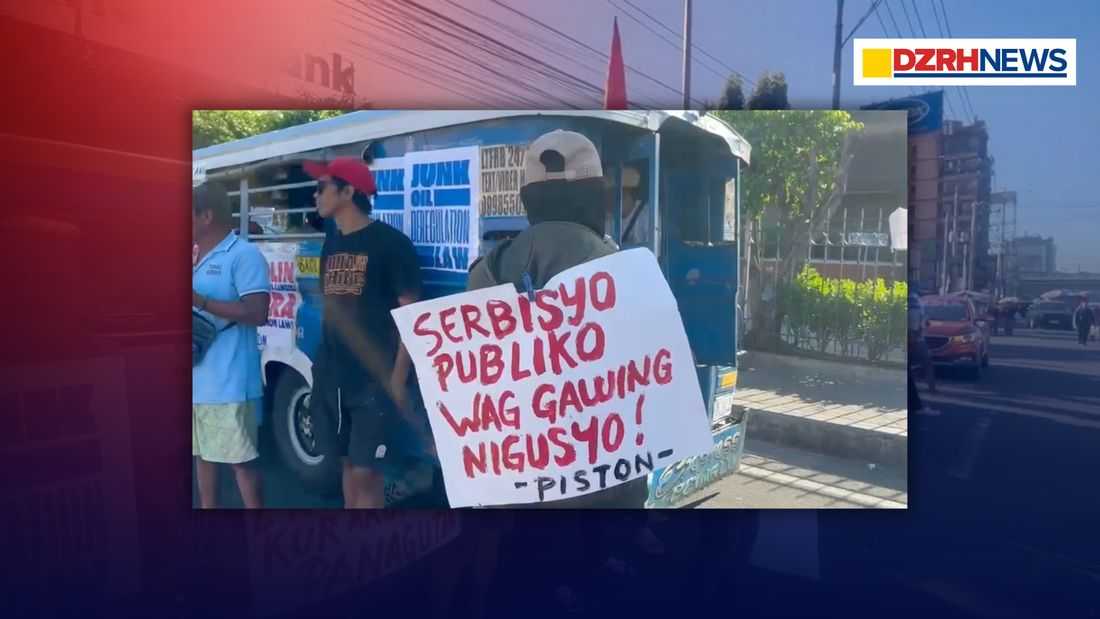
More than 1,000 jeepney drivers in southern Metro Manila staged a transport strike starting Thursday, protesting rising fuel prices and government policies they say are worsening their economic hardship.
In an interview with DZRH, PISTON National Coordinator Cerilo Latoreno said the group may extend the strike if the government continues to ignore their demands.
The protesting drivers are calling for the rollback of fuel prices to at least P55 per liter, the suspension of value-added tax (VAT) and excise taxes on oil, and the repeal of the Oil Deregulation Law.
Latoreno said drivers have been losing as much as P1,500 in daily income following successive major oil price hikes, which have significantly increased their operating costs.
As part of their protest, more than 100 drivers held a noise barrage along the service road of Roxas Boulevard in Baclaran.
The group also condemned what it described as harassment by some police officers during a protest in Sucat, Parañaque on Thursday. According to PISTON, authorities allegedly required participants to present permits and identification cards and forcibly took the microphone from a driver who was speaking.
Drivers questioned why they were being targeted by authorities instead of individuals allegedly involved in corruption.
“Lahat naman ‘yan mga ‘yan, mga empleyado ng gobyerno, tayo po ay nagpapasahod sa kanila. Na dapat sila ay magserbisyo sa atin,” Latoreno said.
Latoreno also emphasized their right to protest, saying they were not doing anything wrong and should not be subjected to harassment.
“Okay lang tayo mag-protesta, wala naman tayong ginagawang masama. Diba meron tayong freedom of rights, freedom of speech, eh bakit hinaharass [tayo] ng ating kapulisan?” Latoreno said.
“Ang dapat hinaharass nila ‘yong nagnanakaw sa kaban ng bayan, yong mga magnanakaw sa flood control project na hanggang ngayon hindi nakukulong,” he added.
The transport strike highlights growing tensions between transport groups and the government amid continuing increases in fuel prices, which have heavily impacted public utility vehicle drivers’ livelihoods.
