
Ongoing global oil supply problems amid tensions in the Middle East could eventually weaken food production and even lead to a potential food crisis in the Philippines if left unaddressed, economist Prof. Alvin Ang said on Saturday, April 11.
In an interview on DZRH's Special on Saturday, Ang warned that while the Philippines currently has sufficient food supply, the long-term outlook remains uncertain due to rising costs of fuel and agricultural inputs.
“As of na, wala naman tayong problema sa Pilipinas. Ibig sabihin po ng ating Department of Agriculture, may sapat po tayong supply matagal Ang challenge natin is moving forward in the future,” Ang said.
“Hindi tayo pwedeng magpakampante dahil magtatanim na naman tayo. So kung mahal yung ating pataba, yung inputs, mahal yung ating diesel o yung gamit natin sa tractor...Ang kailangan tingnan natin na kapag hindi kumilos, yung ating mga magsasaka, mga mangingisda ngayon, so in the future, kukulangin po tayo ng supply,” he noted.
Ang emphasized that while the situation is not yet a crisis, it could escalate if preventive measures are not taken.
“Hindi po siya crisis pero maaaring dumating doon kung 'di po natin agapan or maghanda po tayo...Kaya lang, nakikita natin yung posibilidad dahil nga sa kakulangan ng supply,” he added.
Ang explained that oil and natural gas play a crucial role beyond transportation and logistics, particularly in agriculture. Natural gas is a key component in the production of fertilizers such as ammonia and urea.
“Marami pong nakakonekta na produkto sa produktong langis. Hindi lang siya produktong ginagamit natin bilang pang sasakyan natin, pang logistics, may mga tinatawag pong downstream or yung further processing ng langis at ng natural gas, yan po, nagiging ano po yan, nagiging ammonia, urea, aluminum, etc. Yan po ang mga by-product ng natural gas primarily na ginagamit po natin sa fertilizer,” he said.
He noted that countries in the Middle East, including Qatar, are major sources of natural gas, with shipments passing through key global routes such as the Strait of Hormuz. However, disruptions in these routes have slowed the movement of supplies.
“Mahigit almost one and a half months po na wala pong lumabas na fertilizers na mga feedstock na gagamitin sa fertilizer nanganganib po yung ating mga magsasaka hindi lang sa Pilipinas,” Ang explained.
Although the Philippines primarily imports fertilizers from nearby countries such as China and Indonesia rather than the Middle East, Ang said global shortages are still driving prices up.
“Kaya lang dahil po meron nga pong kakulangan sa global supply, nagtaas na po ang presyo ng fertilizer ng mga 40%,” he said.
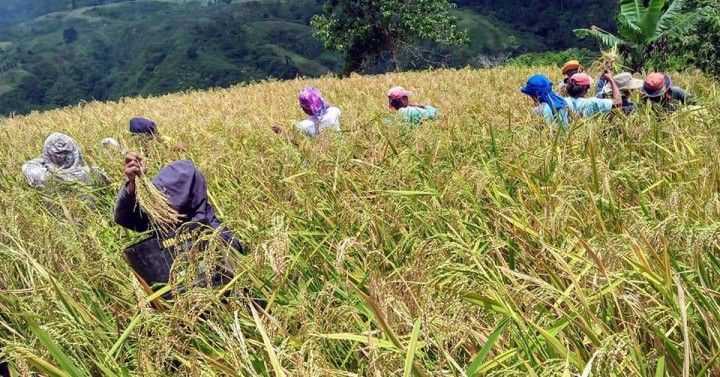
He warned that delays in the arrival of fertilizer feedstock could significantly impact farmers’ productivity and livelihoods, particularly small-scale farmers who are more vulnerable to rising costs.
“Nakakakita po tayo ng posibilidad na ang mga magsasaka na maliliit o yung small farms, hindi nila kaya yung cost,” Ang said.
“So, either hindi muna sila magtatanim, madi-delay sila, alright, dahil mahal. So, kung output o production sa tunang ani. So, dapat sa panahon po ito, isipan natin,” he said.
