
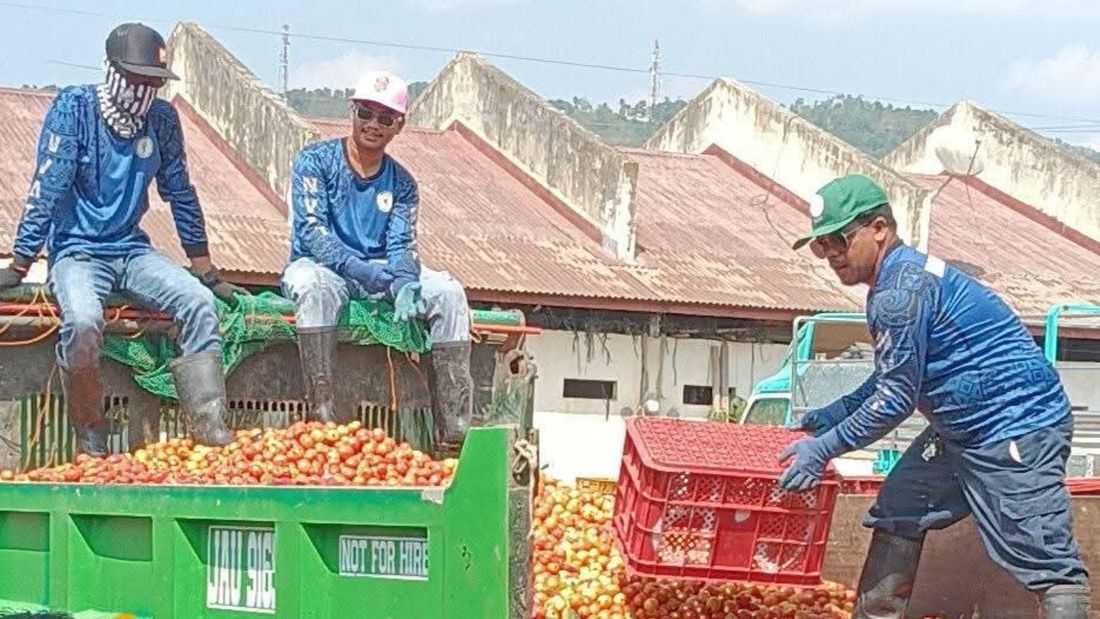
Farmers in Nueva Vizcaya have begun discarding metric tons of harvested tomatoes after failing to find buyers at the province’s primary trading hub.
The disposal took place at the Nueva Vizcaya Agricultural Trading Center in Bambang, where farmers were seen loading crates of ripe tomatoes onto trucks to be dumped. The waste specifically affected small-to-medium-sized produce that traders reportedly refused to purchase despite the quality of the crop.
The situation gained widespread attention following a social media post by a local resident that captured the farmers’ labor going to waste. The footage showed the physical and financial toll on the workers who chose to discard the vegetables rather than incur further losses by attempting to store or transport them without guaranteed buyers.
Local observers noted that the farmers appeared to be victims of a massive market glut. A simultaneous harvest across the region led to a surplus that overwhelmed local demand, causing prices to collapse to a point where the cost of packaging and fuel exceeded the potential profit.
The incident has triggered significant public sympathy online, with many calling for improved infrastructure such as cold storage facilities or better direct links between mountain provinces and urban markets. There is also a renewed push for agricultural processing centers that could convert such surpluses into secondary products like tomato paste to prevent total loss.
Department of Agriculture officials have previously encouraged crop diversification and the use of planting calendars to avoid these seasonal surpluses, yet small-scale growers in Northern Luzon continue to face high risks during peak harvest cycles.
