

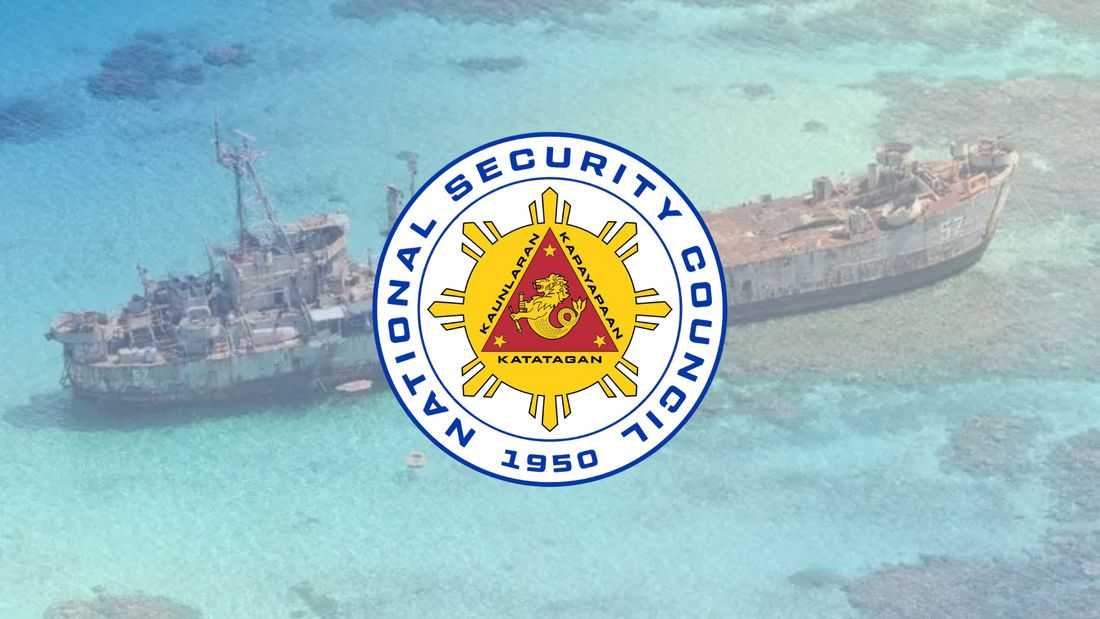
The National Security Council (NSC) confirmed on Monday that the yellow bottles recovered by the Philippine Navy from Chinese sampans by the BRP Sierra Madre at Ayungin Shoal contained cyanide.
Cyanide, the agency said, is a highly toxic chemical that causes serious and permanent damage when ingested by humans or when marine ecosystems are exposed to it.
“Laboratory analysis conducted by the National Bureau of Investigation (NBI)’s Forensic and Scientific Research Service has conclusively established that the yellow bottles seized from the sampans contain cyanide, a highly toxic chemical known to cause severe and irreversible damage to humans and marine ecosystems,” the NSC said in a statement.
“These laboratory findings remove any doubt as to the dangerous and unlawful nature of these activities,” it added.
The agency emphasized that the use of cyanide was a grave concern, as this “illegal and destructive” practice poses a threat to Navy personnel as well as the livelihood of local fisherfolk, who rely on the West Philippine Sea’s (WPS) delicate marine environment.
In addition, if intentional, the practice violates Philippine environmental laws and international obligations.
“Such actions, if proven intentional, constitute a blatant violation of Philippine environmental laws, international maritime norms, and the obligations of states under the United Nations Convention on the Law of the Sea (UNCLOS),” the NSC wrote.
The national security agency stressed that this could be considered sabotage that may result in an environmental crisis, which China may blame on the Philippines.
“We wish to underscore that the use of cyanide in Ayungin Shoal is a form of sabotage that seeks to kill local fish populations, depriving Navy personnel of a vital food source. Moreover, cyanide can damage the reef which can ultimately compromise LS 57’s structural foundations,” it said.
“If the reef is severely damaged, it not only threatens LS 57’s stability, it also allows Beijing to fabricate an environmental crisis which it can then blame on the Philippines. It has in the past accused LS 57 of polluting the shoal in an effort to distract from its own illegal activities,” it elaborated.
In response, the NSC has instructed the Armed Forces of the Philippines (AFP), the Philippine Coast Guard (PCG), and all key agencies to heighten maritime domain awareness, scale up patrols, and take all necessary measures to preempt harm and protect the country’s sovereignty.
“Let it be clear: the Philippines will not tolerate any act—whether by state or non-state actors—that endangers its personnel or the marine environment, violates its sovereign rights, or undermines peace and stability in the West Philippine Sea. The government remains resolute in defending the nation’s territory, protecting its natural resources, and upholding the rule of law,” the NSC emphasized.
Ayungin Shoal is well within the Philippines’ 200-nautical-mile Exclusive Economic Zone (EEZ), making hazardous Chinese activities in the area “irresponsible and unacceptable,” the agency said.
The bottles containing cyanide were discovered in Chinese sampans in February and October 2025.
