

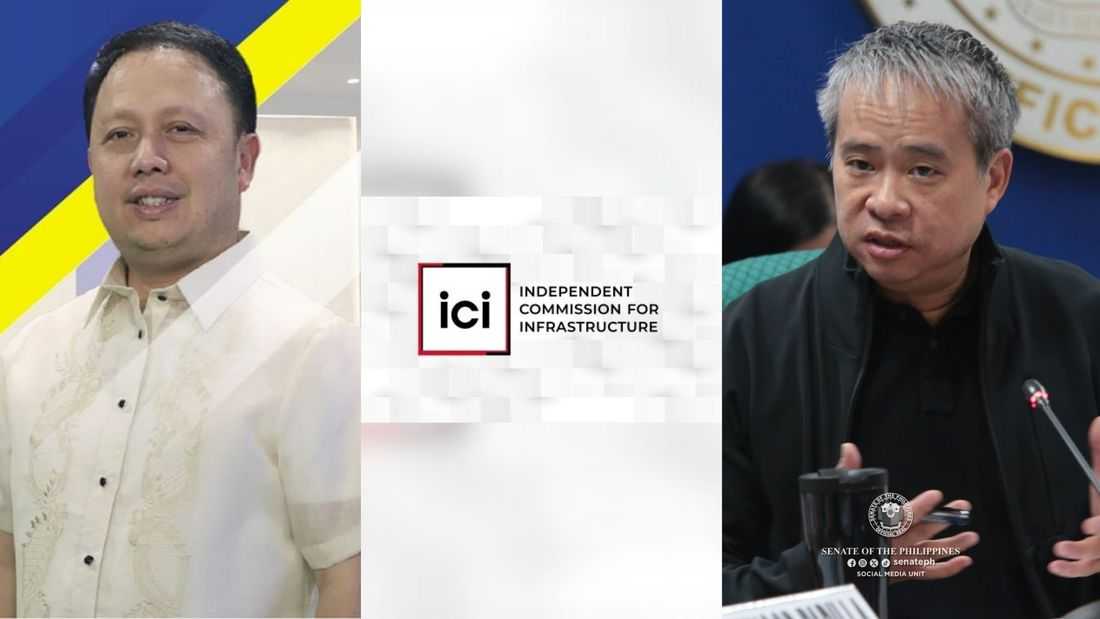
The Independent Commission for Infrastructure (ICI) said there is still no legal basis to recommend freezing the assets of senators and congressmen allegedly linked to the so-called ghost projects, explaining that the process must begin with a formal complaint before the Ombudsman or the Department of Justice (DOJ).
In an interview with DZRH’s Dos Por Dos (DPD), ICI Executive Director Atty. Brian Hosaka clarified that a freeze order is meant to preserve assets so they cannot be sold, hidden, or transferred, but the Anti-Money Laundering Council (AMLC) can only act once a complaint is filed.
“A freeze order on assets is a form of preservation so that these cannot be sold or hidden. The AMLC has jurisdiction over that. The process must start with a complaint. Until there is a complaint against any individual, the AMLC cannot act on it,” Hosaka said in Filipino.
He added that once a complaint is filed, the AMLC can go to the proper court with the help of the Office of the Solicitor General to request a freeze order or an asset preservation order from the judiciary.
When asked why only Department of Public Works and Highways (DPWH) officials and contractors were covered—not lawmakers like Senators Escudero, Villanueva, Estrada, Revilla, former Speaker Romualdez, and former congressman Zaldy Co, Hosaka said the ICI’s latest referral included only two senators and two congressmen, as others were not covered with a complaint.
“So far, those we mentioned were only two senators and two congressmen. Eventually, if there is a complaint filed before the Ombudsman, that will serve as the basis for a freeze order. Until there’s a complaint filed with the proper authority, the AMLC cannot act,” he said.
Hosaka further explained that the ICI has no access to information on whose assets were frozen by the AMLC, noting that only the council can identify the individuals affected.
He emphasized that asset freezing is only a temporary measure under the civil forfeiture process, which begins once a complaint is filed before a prosecutorial body such as the Ombudsman or the DOJ.
“Freezing of assets is temporary. We have no information on which accounts were frozen. The process usually starts upon a complaint filed before a prosecutorial body like the Ombudsman or the DOJ,” he said.
“As far as the ICI is concerned, we have only filed two cases so far, but this will ramp up. The ones we filed can already be used as basis for an application for a freeze order once there’s a proper complaint,” Hosaka added.
According to Hosaka, the ICI hearings are expected to resume next week, once the commission finalizes the guidelines for the anticipated livestream coverage of the proceedings on the alleged anomalous flood control projects.
