
Police in Metro Manila are closely monitoring bucket sales amid the threat of a Super El Niño, watching for possible hoarding, unauthorized price increases and panic buying of essential goods.
National Capital Region Police Office (NCRPO) spokesperson Lt. Col. Hazel Asilo told DZRH News that the agency, in coordination with concerned government agencies, is monitoring the possible hoarding of buckets, pails and drums following the president’s advice for Filipinos to buy buckets as part of preparations for the anticipated drought.
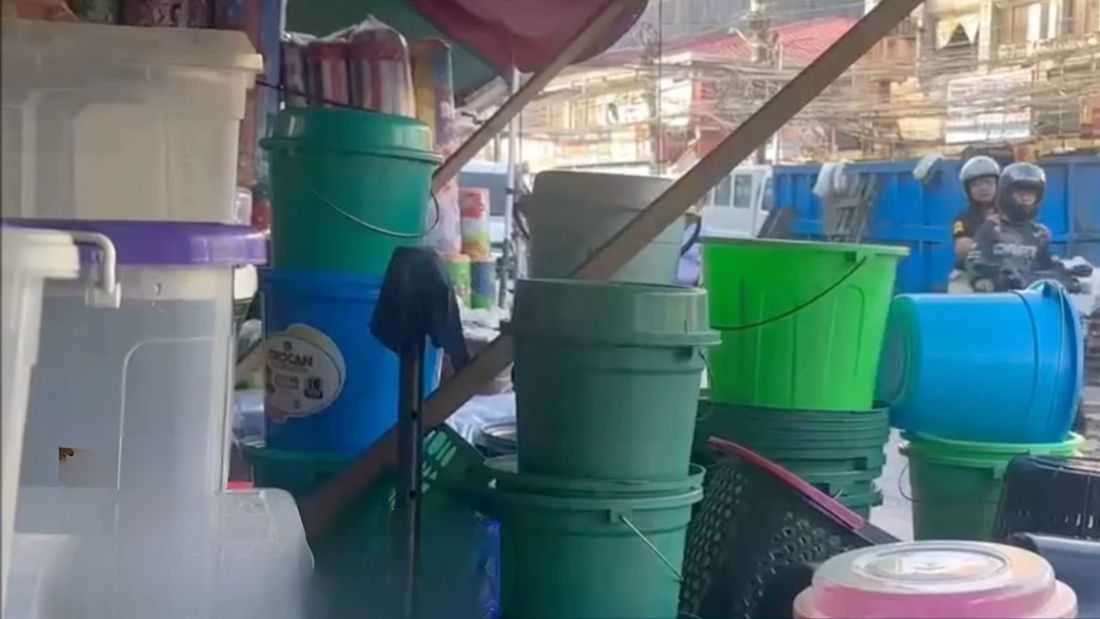
Asilo said police are keeping a close watch on major shopping areas, including Divisoria and Baclaran, where buyers have been flocking to purchase buckets.
Authorities are also checking for unauthorized price increases and will report suspected violations to the Department of Trade and Industry (DTI) and other relevant government agencies, she said.
Police are likewise monitoring possible panic buying of water, food and other essential products needed during the dry season.
Asilo added that authorities are on alert for crimes that could arise from panic buying and hoarding while ensuring that contingency measures are in place.
The president earlier urged Filipinos to buy buckets to collect rainwater as the government prepares for the potential effects of Super El Niño.
In Baclaran, bucket prices ranged from around 150 pesos for smaller buckets to as much as 900 pesos, based on available information as of writing. Vendors said buckets had become their best-selling items, with sales tripling amid growing demand.
Meanwhile, the Philippine Atmospheric, Geophysical and Astronomical Services Administration (PAGASA) has warned of the potential impacts of El Niño, which could bring prolonged dry conditions and threaten water supplies.
The World Meteorological Organization has also forecast the possibility of a particularly strong El Niño this year, which could rank among the strongest recorded since 1950.
Authorities continue to monitor market conditions and prepare measures to address potential supply disruptions and other risks associated with the dry spell.
(News update via RH Jecelle Ricafort)
