
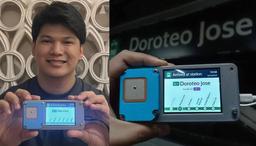
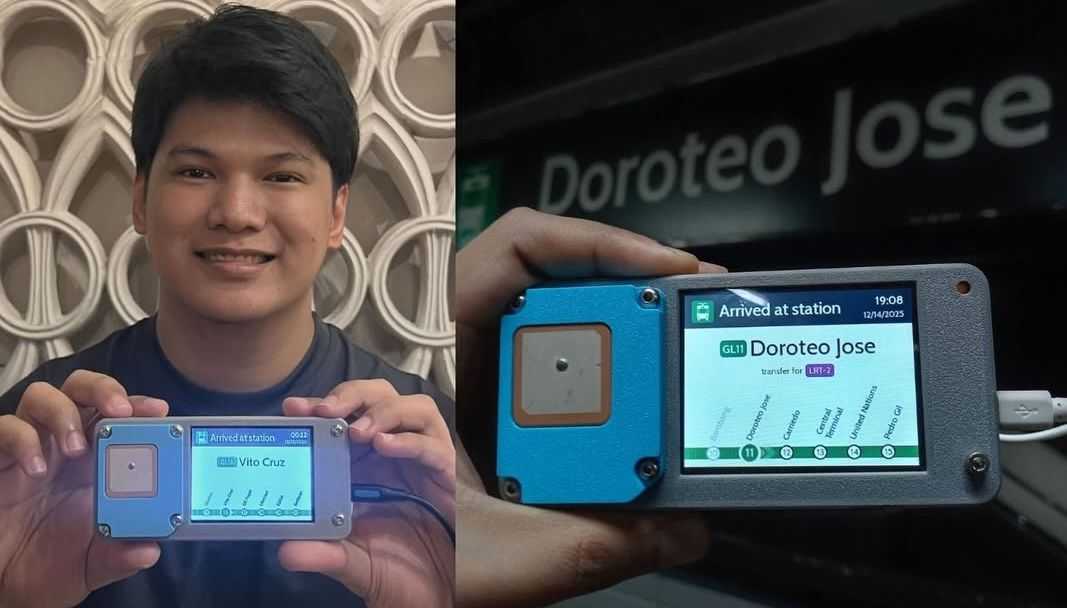
The National Council on Disability Affairs (NCDA) has recognized the initiative of fresh engineering graduate Clyde Sanmig D. Corpuz for developing an innovation aimed at improving accessibility and the commuter experience, especially for persons with disabilities (PWDs), senior citizens, and first-time riders on the country’s rail systems, including LRT-1, LRT-2, and MRT-3.
In a Facebook post, NCDA shared that Corpuz created a GPS-based Passenger Information Display System (PIDS), a handheld prototype designed to identify the real-time location and status of trains.
The system provides essential passenger information such as the current and next station, which train doors will open, available connections to other rail lines, and the direction of travel.
NCDA further emphasized that the project highlights how technology can play a crucial role in advancing inclusive mobility in public transportation.
“According to Mr. Corpuz, the project was inspired by metro systems in countries such as Japan and South Korea, where onboard passenger information display systems are consistently implemented across trains,” NCDA said.
NCDA shared that Corpuz noted that clear, unified signage and well-placed information displays significantly reduce confusion and stress among commuters—particularly first-time riders, persons with disabilities, senior citizens, and passengers who rely on clear visual and audio cues to navigate transit systems independently.
While similar onboard display systems have been introduced locally in the past, Corpuz observed that these often "fall short in terms of information depth, consistency, and accessibility, with limited space dedicated to comprehensive commuter guidance."
NCDA noted through the Corpuz prototype, he hopes to encourage wider discussion and prompt relevant institutions to invest in more commuter-centered and accessible transit solutions in the Philippines.
The NCDA welcomed the initiative, emphasizing that access to timely, clear, and multimodal transit information is essential to ensuring inclusive mobility.
The agency added that innovations like Corpuz’s project demonstrate how individual efforts can contribute meaningfully to the broader goal of building a public transportation system that leaves no one behind.
