
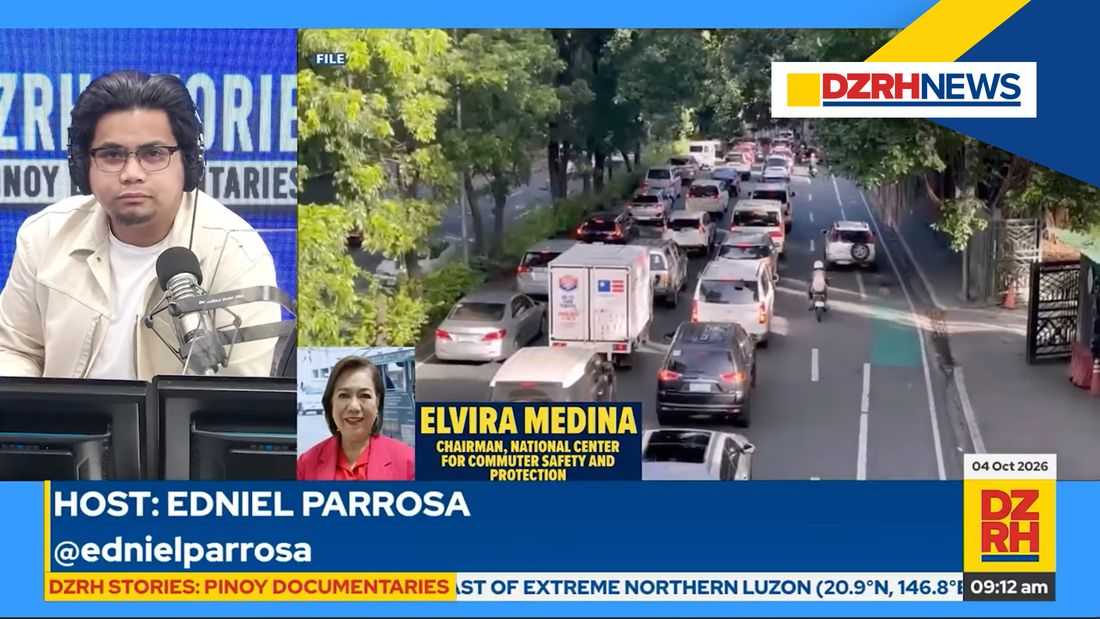
National Center for Commuter Safety and Protection (NCCSP) Chairman Elvira Medina defended the implementation of the No Contact Apprehension Policy (NCAP), rejecting calls from transport groups to suspend or reconsider the system amid the ongoing fuel crisis.
In an exclusive interview on DZRH Stories: Pinoy Documentaries, Medina responded to concerns raised by various transport and commuter protection groups regarding the lack of stakeholder consultations and the additional financial burden that NCAP penalties could impose on public utility vehicle (PUV) drivers and operators.
Medina said the argument that the fuel crisis makes NCAP penalties an unfair burden should not be used to justify traffic violations.
“Ibig sabihin gusto nilang mag-violate? Ang ibig nilang sabihin, payagan n’yo kaming mag-violate,” Medina said.
She argued that commuters should be given priority when it comes to road safety, noting that taxpayers contribute to the government's efforts to maintain safety and security on public roads.
“The commuters are the [ones] who [run] and give the money to run the safety and security dahil sa buwis namin pinagsisimulan ’yan,” she said.
Medina maintained that motorists and public transport operators should comply with traffic regulations regardless of the circumstances, emphasizing that road safety measures are intended to protect commuters and other road users.
Meanwhile, Medina also addressed concerns raised by the Lawyers for Commitment to Safety and Protection (LCSP) regarding the possible involvement of private-sector entities in the implementation of NCAP and whether private contractors could benefit from the penalties collected.
She said such concerns should first be examined through the government's established procurement and bidding processes.
“Kailangan busisiin muna nila. Tingnan muna nila dahil kung may private sector na makikinabang ’yan, siguro ’yung nag-ooperate. Dahil dumadaan naman lahat ’yan sa bidding,” Medina said.
According to Medina, government agencies and local government units (LGUs) cannot simply award contracts without following the required procedures. She stressed that any technology used for traffic enforcement should also be properly evaluated to ensure that it is appropriate, transparent, and capable of clearly identifying traffic violations.
Among the factors that should be examined, she said, are whether the system can clearly capture the vehicle's plate number and properly identify the person involved.
“Kung ang technology, appropriate ba? Malinaw ba? Nakikita ba nang ayos, pati plate number, pati ’yung tao?” Medina said.
Medina's remarks come amid continuing discussions among transport groups, commuter advocates and other stakeholders over the implementation of NCAP, particularly its impact on public transport operators and the need for greater transparency and consultation in the enforcement of traffic regulations.
Watch the full exclusive interview here:
