By Steve Gorman
Nov 3 (Reuters) - An aging NASA satellite telescope that a robotic spacecraft was sent to retrieve on a failed rescue mission this summer was headed for a fiery re-entry into Earth's atmosphere early on Wednesday, nearly 22 years after it was launched into orbit.
The Neil Gehrels Swift Observatory, weighing roughly 3,200 pounds (1,452 kg), was expected to tumble out of orbit and burn up in the atmosphere at about 3:30 a.m. EST (0830 GMT), with fragments surviving re-entry unlikely to threaten populated areas, according to NASA.
The US Space Force has put the odds of harm coming to anyone on Earth at one chance in 2,100, NASA said in an online statement.
NASA's prized $500 million Swift satellite, a first-of-its-kind multi-wavelength space observatory, has been studying gamma-ray bursts and other cosmic phenomena since 2004, using its array of three telescopes.
The observatory, which has no onboard propulsion system of its own, has been drifting toward an expected demise for months.
Astronomers had hoped to extend Swift's mission for a number of years by somehow giving the satellite telescope a lift.
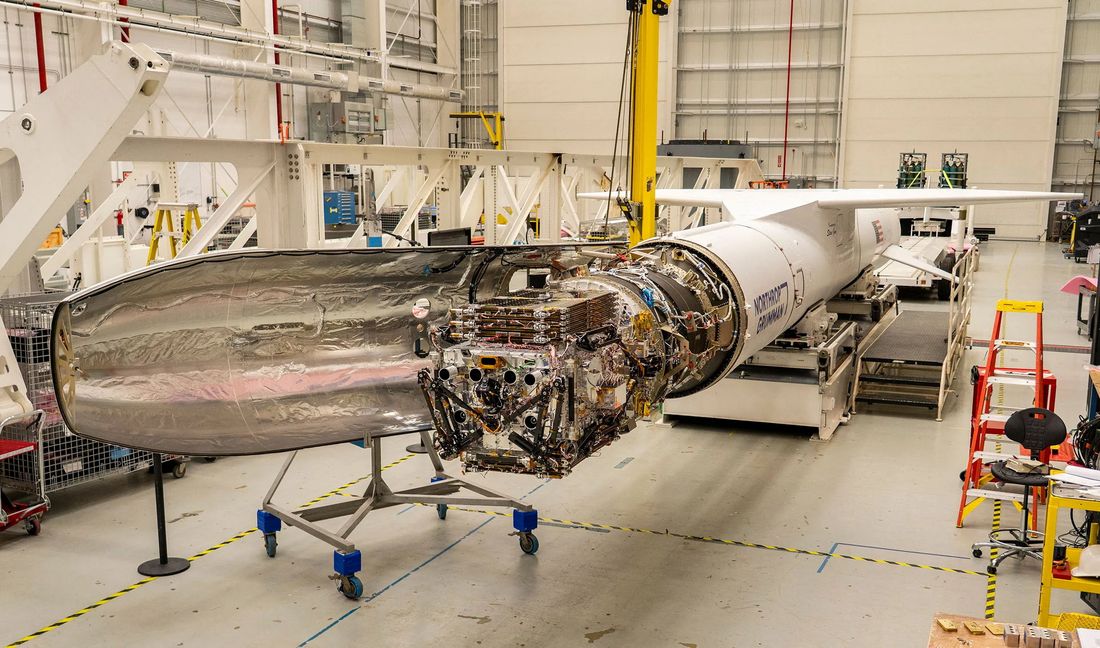
In July, NASA and Arizona-based startup Katalyst launched a specially built rescue vehicle called LINK on a mission to rendezvous with Swift, latch onto the satellite and tug the observatory back into a higher, more sustainable orbit.
But the LINK spacecraft itself began spinning uncontrollably soon after reaching space, and by mid-August, mission managers abandoned the effort, resigned to letting Swift continue to meet its fate.
The aborted rescue attempt, the first US mission of its kind, took on heightened significance as a demonstration of a new orbital grappling technology seen as pivotal to the outcome of the US-China space race.
The LINK effort was closely watched as a trial run of a key satellite-maintenance technology with potential dual-use military space applications.
Katalyst touted the mission as a historic endeavor that designed, built and tested the LINK rescue vehicle on an unprecedented nine-month production schedule under a $30 million NASA contract.
Swift was launched more than two decades ago to explore the most powerful known explosions in the universe, bursts of gamma-ray radiation emanating from the cores of distant galaxies.
Originally designed for a two-year prime mission, Swift remained in operation far longer with observations of a wide range of cosmic objects, from galaxies powered by supermassive black holes and stars emitting X-ray flares, to comets and asteroids streaking through our own solar system.
(Reporting by Steve Gorman in Los Angeles; Editing by Jacqueline Wong)