
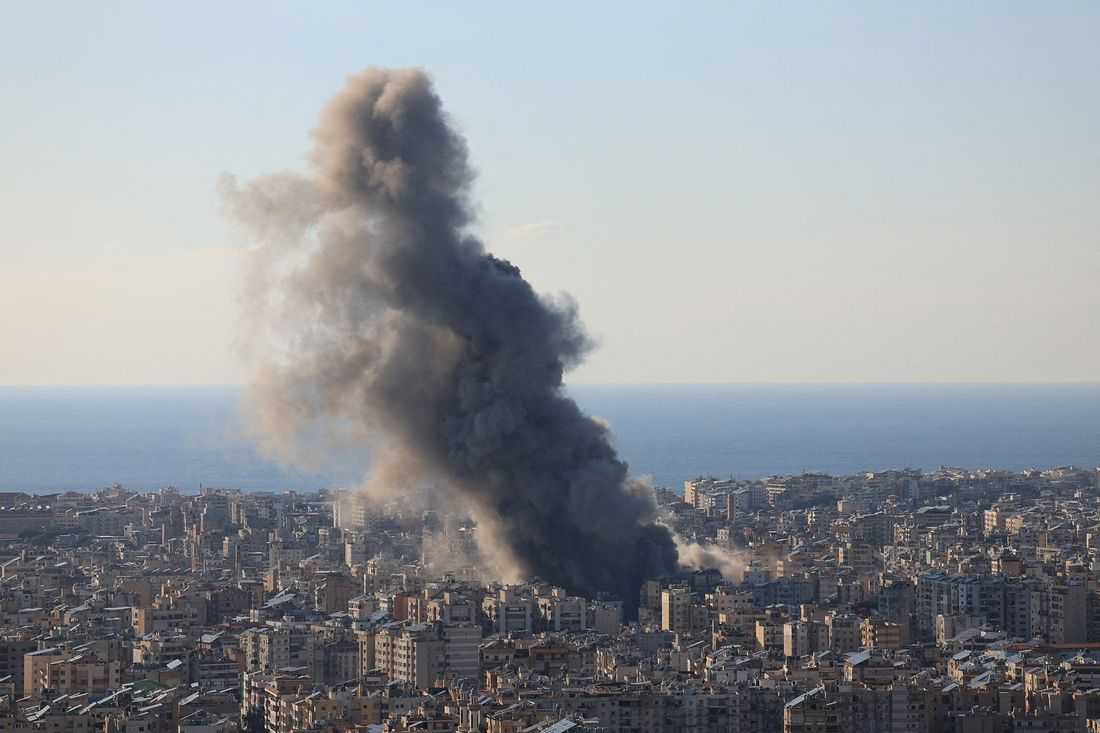
The conflict in the Middle East could last another four to eight weeks, according to the Department of Foreign Affairs (DFA), based on reports from various Philippine foreign posts in the region.
During a hearing of the Senate Committee on Foreign Relations Chaired by Sen. Erwin Tulfo, Foreign Affairs Assistant Secretary in the Office of Middle East and African Affairs Germinia Usudan said the projection came from updates received by Philippine embassies and consulates monitoring the situation.
Usudan said reports indicate that the United States is sending additional missiles to Iran, signaling a possible escalation in the conflict involving Iran, the United States, and Israel.
“Based on the reports from the various posts, we were informed that the U.S. is trying to send more rockets to Iran. And then the President is also trying to have a say on who will be the next leader of Iran,” Usudan said.
“So the projection from the reports that we received, it will take four weeks to eight weeks. It's not like the previous Israel-Iran war, which only took 12 days,” she added.
Usudan also said there were reports that Iran was open to negotiations, but these were reportedly rejected by the Iranian government. She added that U.S. President Donald Trump had recently expressed greater readiness for war.
“We received reports that Iran would like to negotiate, but it was discounted by the Iranian government. And [U.S. President Donald] Trump has said yesterday that he's more ready for war this time,” she said.
Despite the grim projection, Usudan said Philippine officials are hoping the conflict will end soon to avoid worsening the situation of overseas Filipino workers (OFWs) in the region.
“So we hope it will end soon, but based on the situation, I think it will be a protracted war. And this is an unconventional war. That's why we are doing unconventional also assistance to our OFWs,” she added.
Meanwhile, Department of Migrant Workers (DMW) Secretary Hans Leo Cacdac assured the public that preparations for the repatriation of OFWs are already underway.
Cacdac said the government is planning to begin repatriation efforts by land due to the closure of airports in affected areas.
At least five countries have been identified as possible destinations where OFWs may be temporarily relocated during the evacuation process.
“Meron po tayong at least five countries na tinitingnan ngayon kung saan magsisimula ang repatriation effort. We have identified designated meeting points, exit points, and temporary relocation points,” Cacdac said.
“Exit points, because the airports are closed, will be by land. So we identified every land border crossing per five countries and we have prepared the logistical aspects of relocation and repatriation,” he said.
More than 1,400 OFWs have already registered for repatriation, but their immediate evacuation has been delayed due to airport closures caused by the ongoing conflict.
Cacdac said President Ferdinand 'Bongbong' Marcos Jr. has instructed concerned agencies to ensure close coordination with host governments and to prioritize the safety of Filipinos during the repatriation process.
