
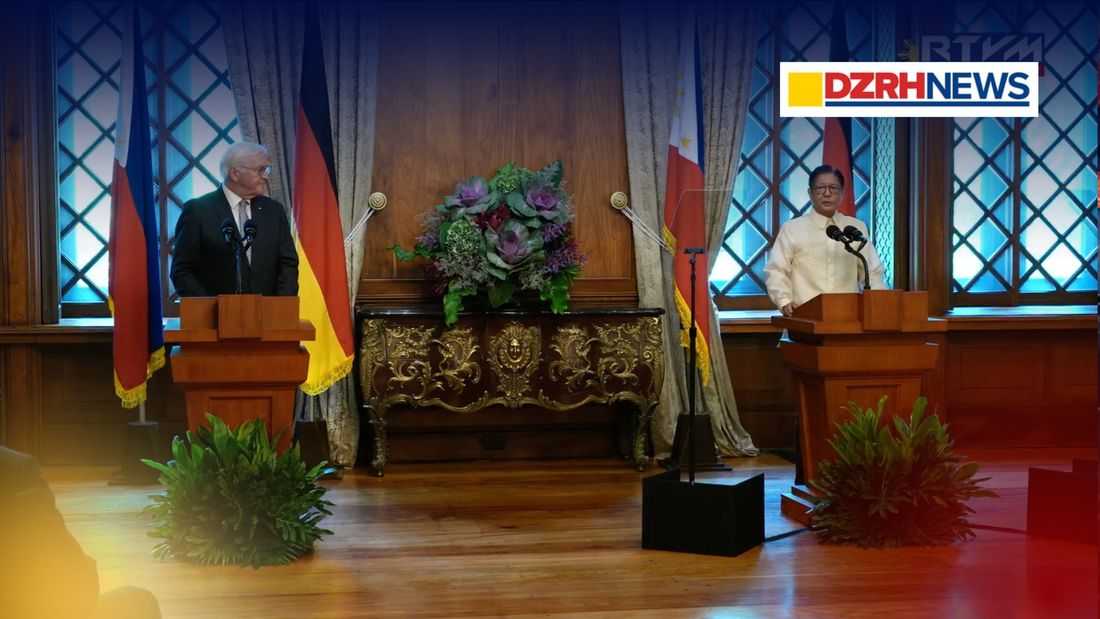
President Ferdinand R. Marcos Jr. and German President Frank-Walter Steinmeier underscored the strong ties between the Philippines and Germany in skilled labor migration and workforce cooperation during a joint press conference at Malacañang Palace on Tuesday, June 16.
The two leaders made the remarks following the presentation and exchange of signed agreements between both countries, reaffirming their commitment to strengthening bilateral relations in labor, trade, and development cooperation.
Responding to a question on skilled labor migration and concerns over brain drain, Marcos pointed to the positive experiences of Filipinos already working in Germany, saying their feedback highlights safe and stable working conditions.
"Well, I think the first point that I would make is to point to the experience of already our nationals who are in Germany and who have made a good life for themselves. They have identified opportunities in Germany. They have taken the big step of actually moving there," Marcos said.
He added that Filipinos in Germany have integrated well into society and continue to maintain strong ties with the Philippines.
"They are very comfortable in every way while they're staying in Germany... It is a stable and orderly society and that makes for a good place not only to work and live but even to raise a family as many of them have," he said.
Marcos emphasized that the experience of approximately 40,000 to 45,000 Filipinos in Germany serves as a strong indicator of favorable working conditions for prospective migrant workers.
German President Steinmeier, for his part, highlighted the long-standing tradition of Filipino labor migration and Germany’s reliance on skilled workers from the Philippines, particularly in key sectors such as healthcare.
"We have a long tradition with [the] Philippines labor and the Philippines too have a long tradition with migration, labor migration," Steinmeier said, adding that Filipino workers in Germany help promote the country as a favorable destination due to safe conditions and professional opportunities.
He noted that Germany has been working to improve and streamline processes for foreign workers to facilitate smoother integration into the labor market.
The exchange comes amid continued efforts by both countries to deepen cooperation in labor mobility, economic development, and people-to-people ties.
