
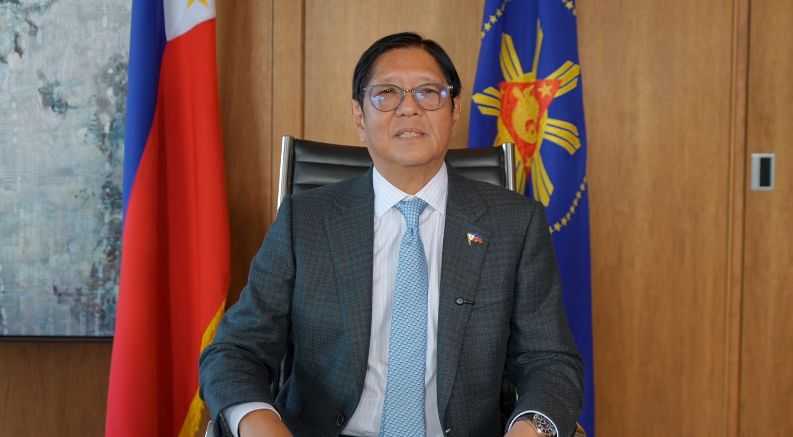
President Ferdinand Marcos Jr. on Thursday welcomed the Philippines' upgrade to upper-middle-income country status by the World Bank, calling it a "vote of confidence" in the country's future.
In a video statement, Marcos said the country’s reclassification will attract more investments, generate better-paying jobs, and expand opportunities for Filipinos.
"It is also a vote of confidence in our country's future. Greater confidence means more investments," Marcos said.
"More investments means more businesses, better quality jobs, and more opportunities for Filipino families."
The World Bank announced on July 1, 2026, that the Philippines had been reclassified as an upper-middle-income economy after its gross national income (GNI) per capita reached $4,850 in 2025, surpassing the institution's upper-middle-income threshold of $4,636.
According to the World Bank, the country's upgrade was driven by broad-based economic expansion, with the Philippine economy posting an average annual gross domestic product (GDP) growth of 5.8% over the past five years.
Based on estimates by the Department of Economy, Planning, and Development (DEPDev), the country's GNI per capita exceeded the required threshold, paving the way for the reclassification.
Marcos said the development marked a significant milestone after the Philippines remained a lower-middle-income country for nearly four decades.
"After nearly four decades as a lower-middle-income country since 1987, this milestone affirms that the economic policies that we have pursued over the past four years have been effective," he said.
"Our steady economic growth, broadly stable currency, and long-term reforms have strengthened our economy even amid global uncertainties. It validates the progress that we have made and the resilience of the Filipino people," he added.
The Philippines first entered the World Bank's second income group in 1976, when its gross national product (GNP) per capita reached $330. However, it had been classified as a lower-middle-income economy since 1987, following the ouster of former President Ferdinand Marcos Sr.
Marcos said the country's improved economic standing should translate into tangible benefits for ordinary Filipinos.
"This is worth celebrating because economic progress is not meant to stay on paper. It is meant to open doors, put food on the table, and give every Filipino the chance to build a better life," he said.
"That is the work that we will continue to do until every family feels the benefit of our country's progress," he added.
