
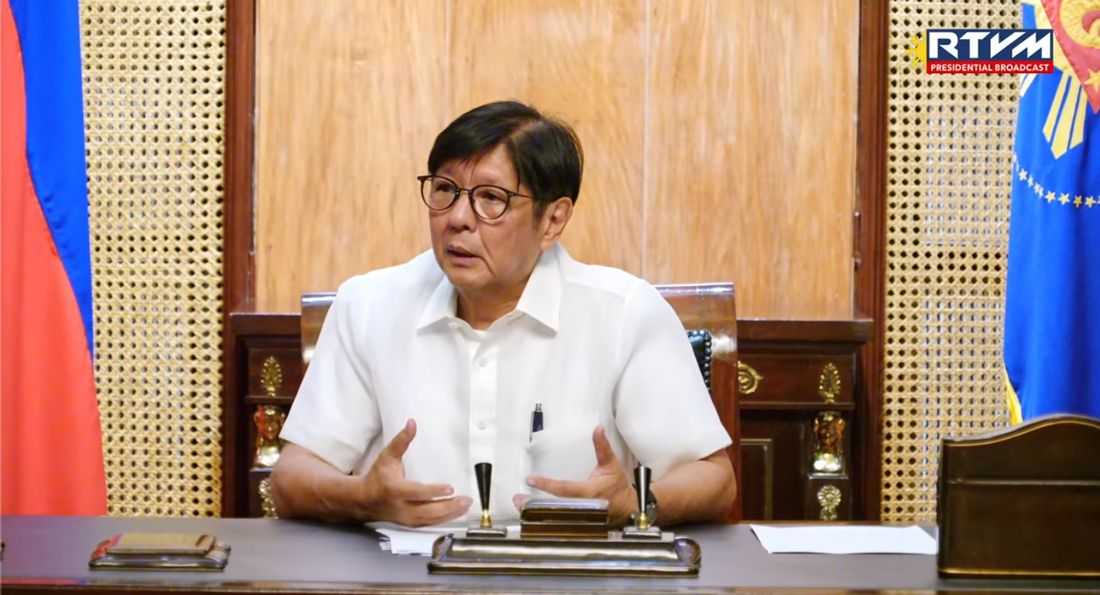
President Ferdinand “Bongbong” Marcos Jr. expressed confidence that the Philippine economy will continue to recover and remain stable despite global challenges, particularly the ongoing tensions in the Middle East.
According to a report by RH Leth Narcos on Rapido Hataw Balita, speaking to Japanese media at Malacañang, Marcos said the government is maintaining steady economic activity and continuing its investment programs even as external risks persist.
He emphasized that the administration is implementing policies aimed at attracting investors, including the provision of incentives.
Marcos said the government is recalibrating its approach to strengthen and stabilize the country’s fuel supply amid global oil supply concerns. He added that the Philippines is coordinating with Southeast Asian neighbors and international partners to improve energy security mechanisms, including emergency response systems, supply coordination, and possible joint stockpiling arrangements.
“We will continue to do so, because we are really redefining the way that we do things when it comes to oil, when it comes to petroleum, when it comes to petroleum products. The effects are, as everybody knows, are widespread,” Marcos said.
He also raised concerns about economic stagnation, describing it as a situation where gross domestic product (GDP) growth slows while inflation continues to rise. He said government efforts are focused on preventing this scenario and maintaining balanced economic growth.
“As to the economy, the concern that we have is the concern about stagnation, which is when the GDP growth is stagnant, but inflation continues to increase. And so this is what we have been trying to control,” he added.
The President also underscored the importance of government spending measures aimed at cushioning the impact of rising fuel prices on ordinary Filipinos.
He said these interventions are intended to provide direct relief to households and consumers affected by inflation.
Marcos further highlighted the role of micro, small, and medium enterprises (MSMEs), noting that they make up a significant share of businesses and employment in the country.
He said supporting MSMEs remains a key part of the government’s economic strategy to sustain growth and job creation.
