


UPDATED: Philippine inflation surged to 4.1% in March 2026, marking a sharp increase from 2.4% in February, the Philippine Statistics Authority reported Tuesday, as rising fuel and food costs drove price pressures higher.
The latest figure exceeded the government’s target range and brought the average inflation rate for the first quarter of 2026 to 2.8%, significantly higher than the 1.8% recorded in March last year.
Transport costs were the biggest driver of the spike, reversing to a 9.9% annual increase in March from a 0.3% decline the previous month, reflecting a sharp rise in domestic fuel prices. Food and non-alcoholic beverages also contributed heavily, with inflation accelerating to 3.0% from 1.8% in February.
Rice prices posted a notable turnaround, climbing 3.6% after contracting by 3.4% a month earlier. Other food items that recorded faster price increases included corn at 12.4%, vegetables at 6.9%, and fruits at 5.1%.
The PSA identified the top contributors to March inflation as food and non-alcoholic beverages, accounting for 28.2%; housing, water, electricity, gas, and other fuels at 22.5%, with inflation rising to 4.5%; and transport at 22.1%.
Core inflation, which excludes volatile food and energy items, also edged higher to 3.2% from 2.9% in February, indicating that price pressures are becoming more widespread across the economy.
In a statement, the Bangko Sentral ng Pilipinas said the March inflation outturn of 4.1% exceeded its forecast range of 3.1% to 3.9%, highlighting growing upside risks largely stemming from the global oil price shock.
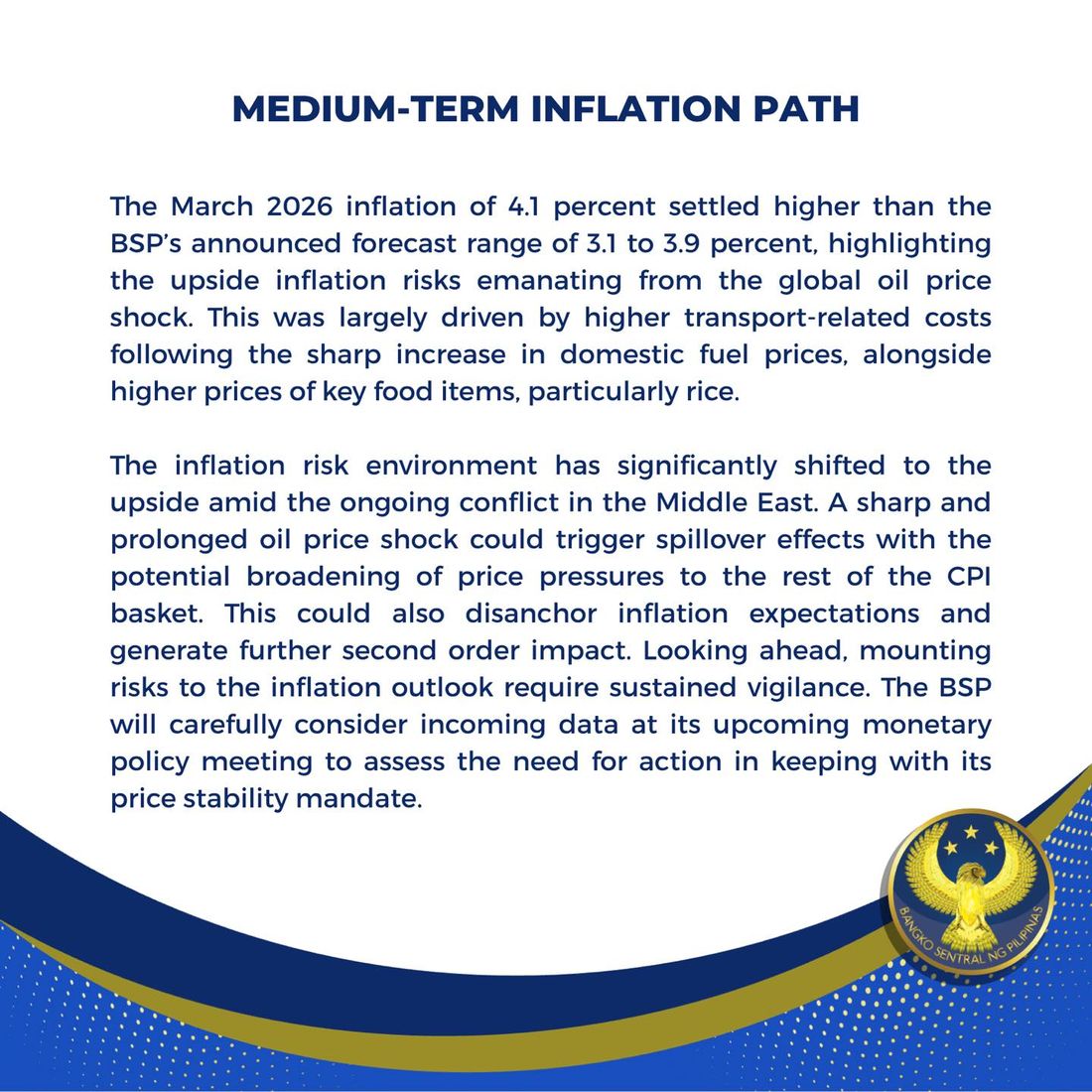
The central bank noted that higher transport costs, driven by rising fuel prices, along with increased prices of key food items such as rice, were the main contributors to the inflation surge.
It also warned that the inflation risk environment has “significantly shifted to the upside” amid the ongoing conflict in the Middle East, raising the possibility of a prolonged oil price shock that could spill over into other sectors and broaden price pressures across the consumer basket.
The BSP cautioned that such developments could further elevate inflation expectations and trigger second-round effects, potentially complicating efforts to maintain price stability.
“Mounting risks to the inflation outlook require sustained vigilance,” the central bank said, adding that it will closely assess incoming data in its upcoming monetary policy meeting to determine whether further action is needed to fulfill its mandate of keeping prices stable.
